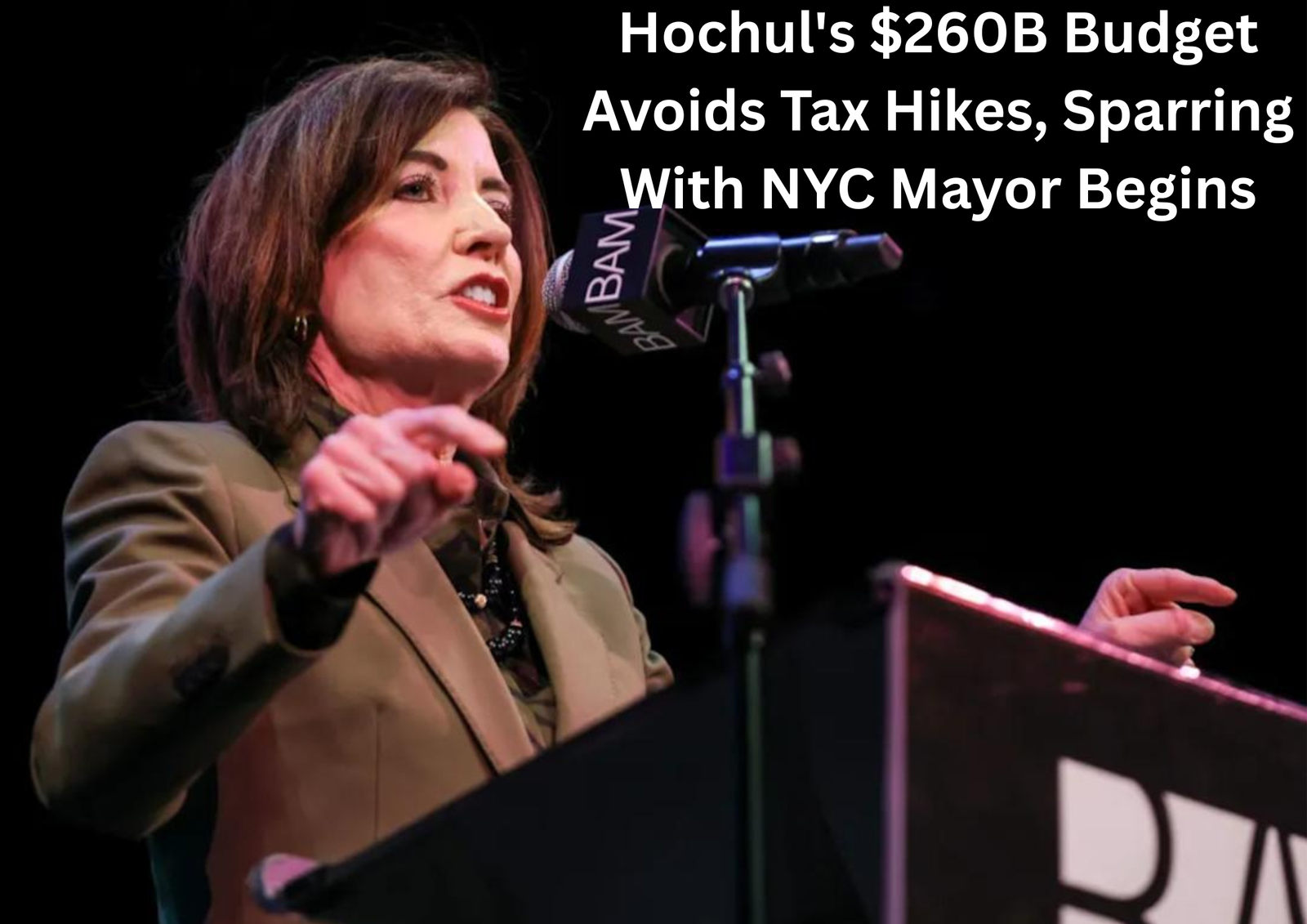
New York Governor Kathy Hochul has released a historic $260 billion state budget that avoids increasing income or corporate tax rates, putting her on a collision course with New York City Mayor Zohran Mamdani and progressive lawmakers who are pushing for higher taxes on the state’s wealthiest residents to ease the city’s projected fiscal shortfall.
Revenue Strength Helps Sidestep Tax Hikes
The spending plan marks a roughly 2% increase over last year and comes during a competitive election year, where economic affordability has emerged as a major campaign theme. Hochul credited stronger-than-anticipated financial performance – including gains on Wall Street, wage growth, and steadier business activity – for allowing the state to boost funding without new tax burdens. State officials estimate nearly $10 billion in additional revenue over the next two years, plus a separate surge of $3.7 billion for the fiscal year ending in March.
The proposal allocates more than $157 billion for the state’s operating budget, nearly $22 billion for capital investments, and over $80 billion in pass-through federal dollars.
Tax Debate Sparks Political Tension
While the administration is keeping current income tax rates in place, it is seeking to extend the higher corporate franchise rate for an additional three years and expand state tobacco excise rules to synthetic nicotine products.
But the most intense debate unfolded around what the budget did not include. Mamdani, who campaigned on taxing the rich and currently faces a multi-billion-dollar budget gap at City Hall, criticized the absence of progressive revenue measures and argued that the wealthiest New Yorkers must contribute more. Hochul countered that raising taxes risks accelerating the flight of residents and businesses already burdened by high living costs.
Major Funding Boosts for Child Care, Schools, and Transit Security
A large chunk of new spending focuses on early childhood and education initiatives. Hochul outlined more than $1.2 billion to expand access to childcare vouchers and about $500 million to broaden pre-K availability for 3- and 4-year-olds statewide. School aid would hit a record $39 billion, while Medicaid spending would climb to more than $38 billion to compensate for recent federal reductions.
The plan also directs tens of millions to public safety and transit, including funds to place more officers in New York City’s subway system and cover personnel costs for National Guard service members assigned to correctional facilities.
Smaller allocations include grants for farmers affected by shifting trade policy, community park improvements, World Cup-related soccer youth programs, and a series of economic development investments in Rochester.
Mixed Reaction From Political Spectrum
Reaction to the proposal was fragmented. Centrists and business groups praised Hochul for resisting new taxes, calling the move important for competitiveness. Progressive activists argued it sidesteps structural budget challenges and caters to wealthy donors. Republicans blasted the budget as bloated spending without relief for homeowners or small businesses.
Legislative leaders offered cautious optimism, framing the rollout as the opening step in what is likely to be a contentious negotiation process ahead of the April deadline.
Uncertain Outlook Beyond 2026
Fiscal analysts warn that the state’s heavy dependence on high-income earners and Wall Street performance could pose long-term risks. A slower economy or financial market downturn could sharply reduce revenue, leaving New York exposed to gaps later in the decade.
State budget officials are already projecting a multibillion-dollar deficit for the 2027-2028 fiscal year. Meanwhile, legal battles with the federal government over blocked grants and immigration-related healthcare funding create additional uncertainty for both state and city finances.
As lawmakers begin budget hearings, New York’s broader debate – whether to lean on wealth taxes or ride out economic momentum – is set to become a defining issue for the 2026 election season.
“U.S. Citizen’s Detention by ICE in Minnesota Sparks Public Outcry, raising urgent questions about due process – read this full blog for important details you shouldn’t miss.”