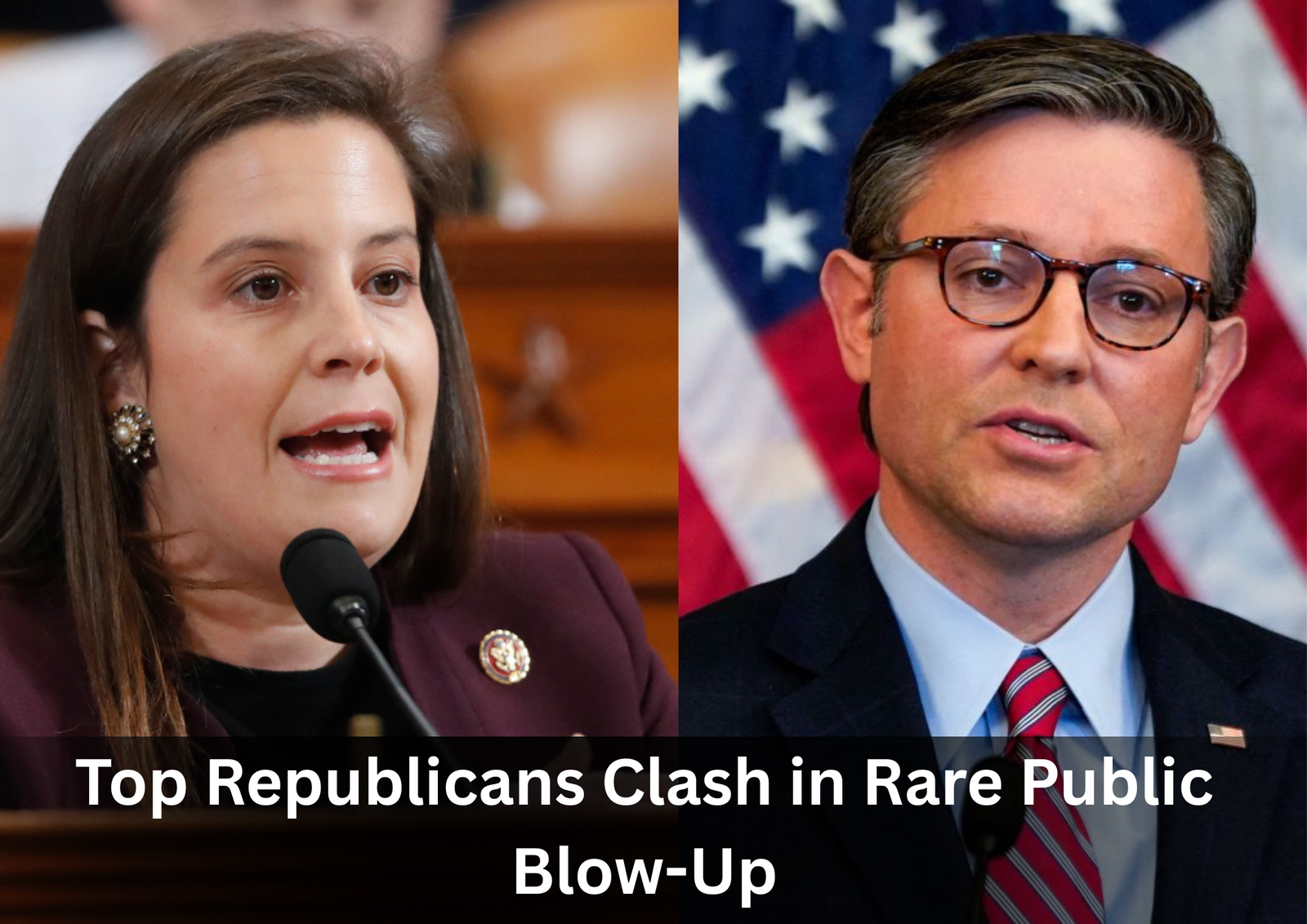
A major dispute inside the House Republican leadership has erupted over the annual defense policy bill, exposing widening fractures in the party at a critical moment in the legislative calendar. The clash-centered on language restricting FBI investigations – has placed Speaker Mike Johnson and GOP Rep. Elise Stefanik on opposing sides of an increasingly public conflict.
At the heart of the dispute is a provision added to the House-passed version of the National Defense Authorization Act (NDAA). The measure, championed by Stefanik, would block federal funding for any FBI investigation deemed to “unconstitutionally target” Americans based on political or religious expression. Supporters argue the language is designed to protect First Amendment rights; critics warn it could hinder legitimate federal investigations.
Tensions escalated after reports surfaced indicating Johnson might be willing to remove Stefanik’s provision during private negotiations with the Democratic-controlled Senate. Stefanik, accusing the Speaker of breaking a promise to House conservatives, publicly charged that Johnson had misled both lawmakers and the public. She stated that the Speaker had “failed to stand by his commitment” to preserve the provision in the final version of the legislation.
Johnson’s office sharply denied the accusation, calling claims of a secret agreement “absurd.” His staff stressed that negotiations are still underway and that no final decisions have been made regarding which provisions will survive Senate talks.
Several conservative lawmakers, including Representative Chip Roy have publicly aligned themselves with Stefanik’s account. They argue that removing the FBI-related language would represent a betrayal of commitments made during the House drafting process. Roy, calling the provision a “red line,” criticized what he described as Washington’s familiar pattern of closed-door dealmaking.
The timing of the feud complicates efforts to pass the NDAA before year’s end. The defense bill-considered essential legislation-is often one of the few bipartisan measures to clear Congress annually. However, with Democrats insisting on removing or softening the FBI restrictions, and conservatives insisting they remain intact, Johnson faces the difficult task of uniting his narrow majority while still crafting a bill acceptable to the Senate.
Stefanik has also warned she may use procedural tools, including a potential “blue slip” objection, to block the bill’s advancement if the disputed language is altered. Such a move could stall progress on the legislation, raising the stakes even further.
The broader policy fight reflects long-standing Republican grievances toward the FBI over investigations tied to the January 6th attack and allegations of political bias within the bureau. The provision has been a priority for conservative lawmakers who argue that federal law enforcement must be more tightly constrained.
As year-end deadlines approach, the high-profile clash underscores deep divisions within the GOP conference-and leaves the fate of the defense bill uncertain. Whether the party can resolve its internal disputes in time to pass the NDAA will determine not only the future of the FBI provision but also the stability of House Republican leadership heading into the new year.