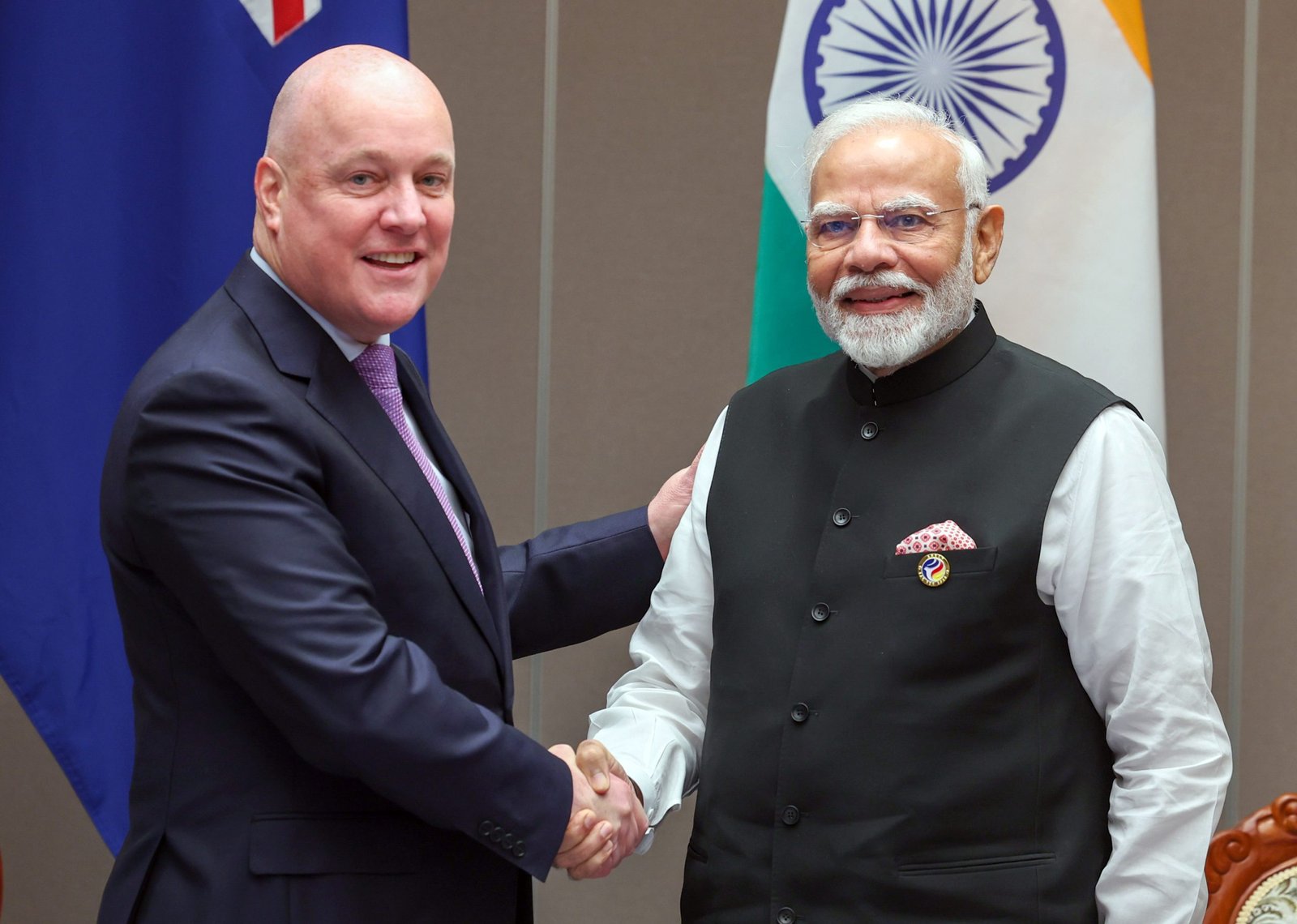
India and New Zealand have concluded negotiations on a long-awaited free trade agreement, marking a significant step toward closer economic cooperation between the two countries. While officials from both sides have described the deal as a gateway to expanded commerce and investment, the agreement has sparked political debate within New Zealand, highlighting divisions over market access and migration policy.
According to officials familiar with the agreement, the trade pact is designed to substantially reduce tariffs on a wide range of goods traded between the two nations. Indian exporters are expected to gain broader access to New Zealand’s market for products such as textiles, manufactured goods, auto components, and handicrafts. In return, New Zealand exporters will benefit from reduced duties on agricultural commodities, raw materials, and forestry-related products entering the Indian market.
The agreement is also intended to strengthen supply chains and encourage long-term investment. New Zealand has signaled interest in increasing capital inflows into India over the coming years, particularly in sectors such as renewable energy, infrastructure development, and food processing. Trade officials say the pact offers predictability for businesses on both sides and creates opportunities for small and medium-sized enterprises to expand internationally.
However, the deal has not been universally welcomed in Wellington. Members of New Zealand’s political opposition have raised concerns over exclusions affecting sensitive agricultural sectors, particularly dairy. Critics argue that limited access for certain high-value exports could weaken the agreement’s overall economic impact for New Zealand farmers. Questions have also been raised about labor mobility provisions, with some lawmakers warning that immigration-related clauses should be carefully reviewed to ensure they align with domestic workforce priorities.
Despite the political pushback, government representatives maintain that the agreement reflects a balanced outcome and preserves protections for sensitive industries. Officials emphasized that trade negotiations with India required a phased and selective approach, given the size and complexity of the Indian market.
Bilateral trade between India and New Zealand has remained relatively modest compared to other major trading relationships, but both governments believe the new framework could significantly accelerate growth. Analysts note that India’s expanding consumer base and New Zealand’s export-driven economy make the partnership strategically attractive in the long term.
A formal signing of the agreement is expected in the coming months following legal review and parliamentary procedures. Once ratified, the deal will be subject to periodic evaluation to assess its economic performance and implementation.
As global trade patterns continue to shift, the India–New Zealand agreement underscores a broader effort by both countries to diversify economic partnerships and strengthen ties across the Indo-Pacific region.