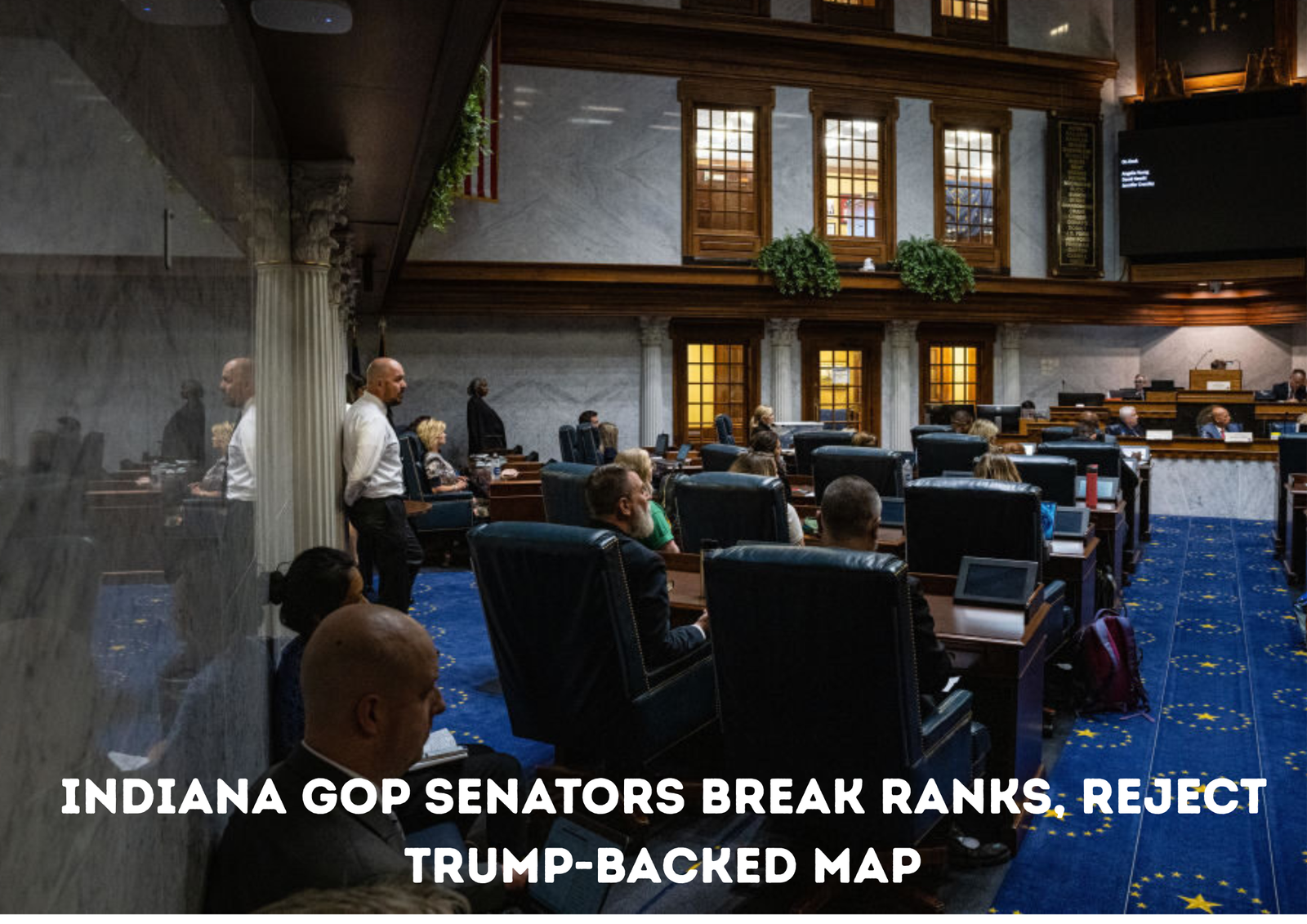
In a striking display of internal party independence, Indiana’s Republican-controlled Senate on Thursday voted down a proposal strongly supported by President Donald Trump to overhaul the state’s congressional boundaries. The outcome marks one of the most visible setbacks to the president’s nationwide push for GOP-favorable redistricting ahead of next year’s midterm elections.
The vote was 31 to 19, with 21 Republicans and 10 Democrats united in opposition. Senate Republicans broke ranks with Trump, opting not to advance the revised congressional map that the White House had been advocating for over several months. The effort was championed as a way to fortify Republican advantages across multiple districts.
State Senate President Pro Tempore Rodric Bray, who presides over the chamber, emerged as the leading voice against adopting the new map. His stance drew immediate attention from Trump, who criticized Bray publicly and hinted at backing a primary challenger.
Political analysts say the outcome reflects long-standing attitudes unique to Indiana’s political environment. Observers note that voters and lawmakers alike often emphasize local autonomy and resist interventions that appear driven by national agendas. “Hoosier politics has always valued independence,” one political scientist explained, adding that the vote underscores the state’s preference for maintaining control over its own legislative processes.
The decision represents a meaningful blow to Trump’s broader strategy, which has focused on reshaping congressional lines in Republican-led states to secure additional U.S. House seats. Indiana’s rejection underscores the difficulties of applying uniform political pressure across diverse state landscapes, even within the same party.
While GOP leaders in other states continue deliberating over map changes, Indiana’s vote highlights growing tensions between state officials and national party expectations-tensions likely to influence the political narrative as the midterms approach.