Introduction
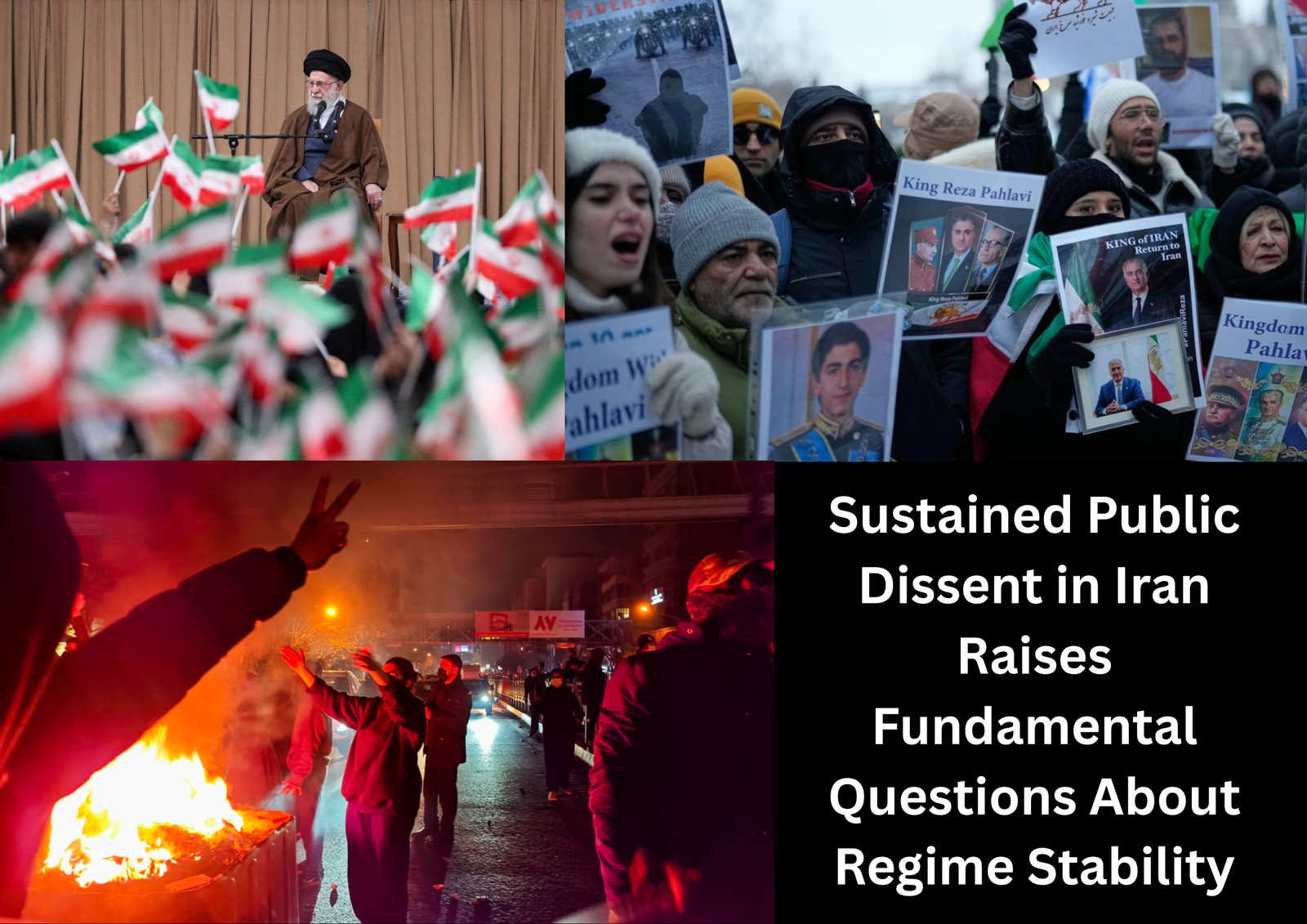
Iran has witnessed one of the most turbulent periods in years, as widespread demonstrations from late 2025 into early 2026 reignited debate over the durability of the Islamic Republic’s political order. What initially emerged as frustration over rising living costs rapidly escalated into sweeping criticism of the country’s leadership and direction.
Protest Triggers and Scale
The latest unrest began after the government eliminated subsidies on key goods, causing abrupt spikes in fuel and food prices. This policy shift landed on a population already grappling with longstanding inflation, unemployment, and financial instability. Demonstrations soon spread from Tehran into numerous provincial cities, with crowds chanting bold slogans rejecting state authority and challenging senior officials. Security forces responded with force, employing riot units, detentions, and in some cases live ammunition. Casualty figures remain contested, though rights groups report significant arrests.
State Security and Countermeasures
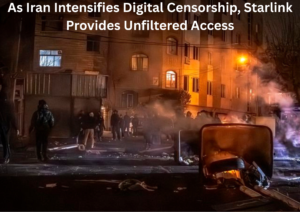
Authorities quickly moved to contain the situation through their well-established network of security institutions, including the IRGC and the Basij paramilitary. State media attributed the turmoil to foreign interference and hostile factions. Internet blackouts, bandwidth restrictions, and platform disruptions were also implemented to hinder mobilization and prevent footage from circulating internationally. Courts issued heavy sentences to some detainees, with charges linked to national security and religious offenses.
Structural Drivers of Public Frustration
Experts note that the roots of discontent extend far beyond recent subsidy reforms. Iran’s economy remains constrained by a combination of sanctions, government mismanagement, and elite corruption. Social and political restrictions further contribute to pressure among citizens, particularly younger Iranians who express little ideological connection to the revolutionary generation that established the system. Many also criticize the state’s financial commitment to regional military projects, arguing these initiatives divert resources from domestic welfare and infrastructure.
Regime Sustainability and Opposition Landscape
Despite the depth of public anger, analysts emphasize that Iran’s ruling structure retains critical advantages. The security apparatus remains cohesive and willing to use force to defend the system. Organized opposition within the country remains limited and fragmented, lacking unified leadership or a coordinated political strategy. The government also maintains support within specific demographics and continues to benefit from oil revenues. However, researchers argue the state now faces an ongoing legitimacy crisis, centered on a deteriorating social contract where economic welfare has eroded without accompanying political reform. While few predict an imminent collapse, many warn that unresolved pressures may threaten the regime’s viability over time.
Global Reaction
The resurgence of protests has drawn strong responses from Western governments and human rights organizations, which have condemned the use of force against demonstrators. Meanwhile, Iran’s nuclear activities and regional posture continue to occupy the international diplomatic agenda, reinforcing sanctions that further strain the domestic economy.
Starlink gives Iranians unfiltered Internet access as the government tightens its digital blockade, and this topic is explored in detail-read the full blog for deeper insights.