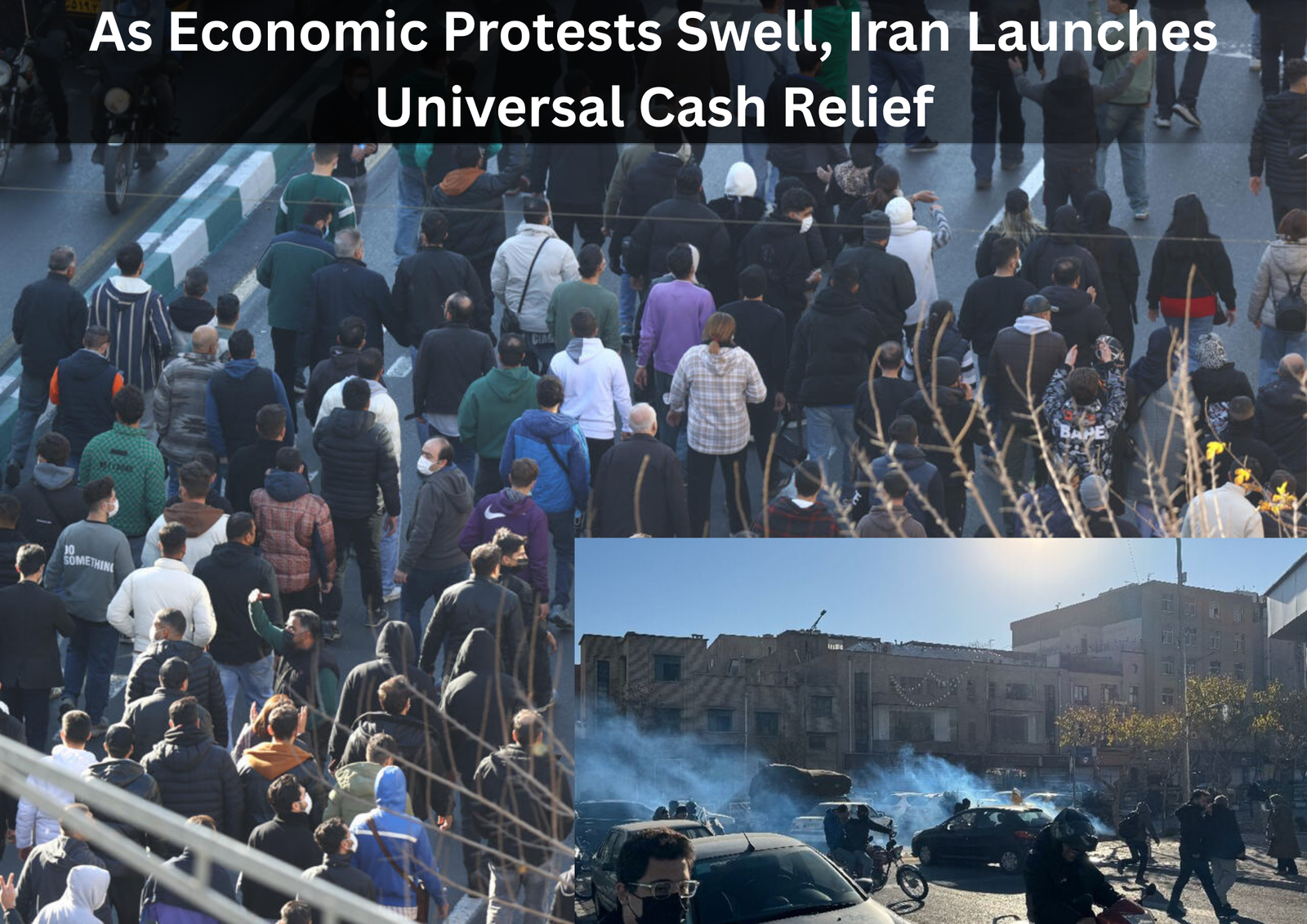
Iran’s government has unveiled a nationwide program to issue monthly purchasing credits to most citizens, as widespread protests fueled by economic hardship continue to expand across the country. The move marks a major policy shift aimed at easing public anger amid soaring inflation and a collapsing currency.
Under the new initiative, eligible residents will receive the equivalent of roughly $7 per month in the form of government-backed credit usable for essential goods. Officials say the plan will cover nearly the entire population and is intended to replace costly import subsidies that critics argue have long benefited intermediaries rather than households.
Shift From Import Subsidies to Direct Support
Government spokesperson Fatemeh Mohajerani, speaking on state television, described the program as an effort to protect household purchasing power, curb inflationary pressure, and safeguard food access. Funding for the initiative will come from redirecting approximately $10 billion annually that had previously been used to subsidize imported goods through preferential exchange rates.
President Masoud Pezeshkian defended the change, stating that subsidies are not being eliminated but rather delivered “directly to final consumers.” Authorities have acknowledged that removing preferential currency rates could lead to short-term price increases, but argue the existing system was opaque and vulnerable to corruption.
Alongside the payment plan, lawmakers are reviewing broader budget adjustments, including proposed public-sector wage increases of up to 43%, a reduction in value-added tax, increased pension allocations, and continued state support for staple foods such as bread through guaranteed wheat purchases.
Protests Spread Nationwide
The announcement comes as demonstrations enter their ninth consecutive day, spreading from economic protests into broader expressions of political dissent. Merchants, traders, and students have staged walkouts, market closures, and campus rallies across dozens of cities.
Human rights organizations report that protests have occurred in a majority of Iran’s provinces, with arrests surpassing 1,000 people. Casualty figures vary, but multiple monitoring groups report dozens of deaths, including children. Iranian media has also acknowledged injuries among police officers and members of the Basij paramilitary force.
Judiciary chief Gholamhossein Mohseni Ejei warned that authorities would no longer tolerate unrest, accusing foreign governments of fueling instability. Security measures have intensified in several regions.
Deepening Economic Strain
Iran’s economic crisis remains severe. Over the past year, the rial has lost more than half its value against the U.S. dollar, while official inflation figures for late 2025 exceeded 40%, with some estimates rising above 50%.
President Pezeshkian has criticized the decade-old foreign exchange subsidy system, arguing it failed to protect low-income families while enabling corruption. However, economists and citizens alike question whether the new monthly credit-worth a fraction of estimated household expenses-will provide meaningful relief. Analysts estimate that basic living costs for an average family far exceed the value of the payment.
Global Attention and Domestic Criticism
International reaction has been swift. United Nations officials urged Iranian authorities to respect the right to peaceful assembly and avoid further loss of life. Statements from foreign leaders, including the United States and Israel, have drawn sharp rebuttals from Tehran, which has dismissed outside commentary as interference.
Domestically, reformist figures have called for investigations into reported incidents involving security forces and protesters, including allegations of violence in medical facilities. Critics within Iran warn that economic concessions alone may not be enough to calm unrest that is increasingly political in nature.
As the government attempts to stabilize the economy through sweeping reforms, it faces mounting pressure to address both the immediate financial struggles of citizens and the deeper grievances driving one of the most widespread protest movements in recent years.
Strong Earthquakes Jolt Western Japan, Authorities Urge Caution as Aftershocks Continue-read this blog for full details, expert insights, and timely updates you won’t want to miss.