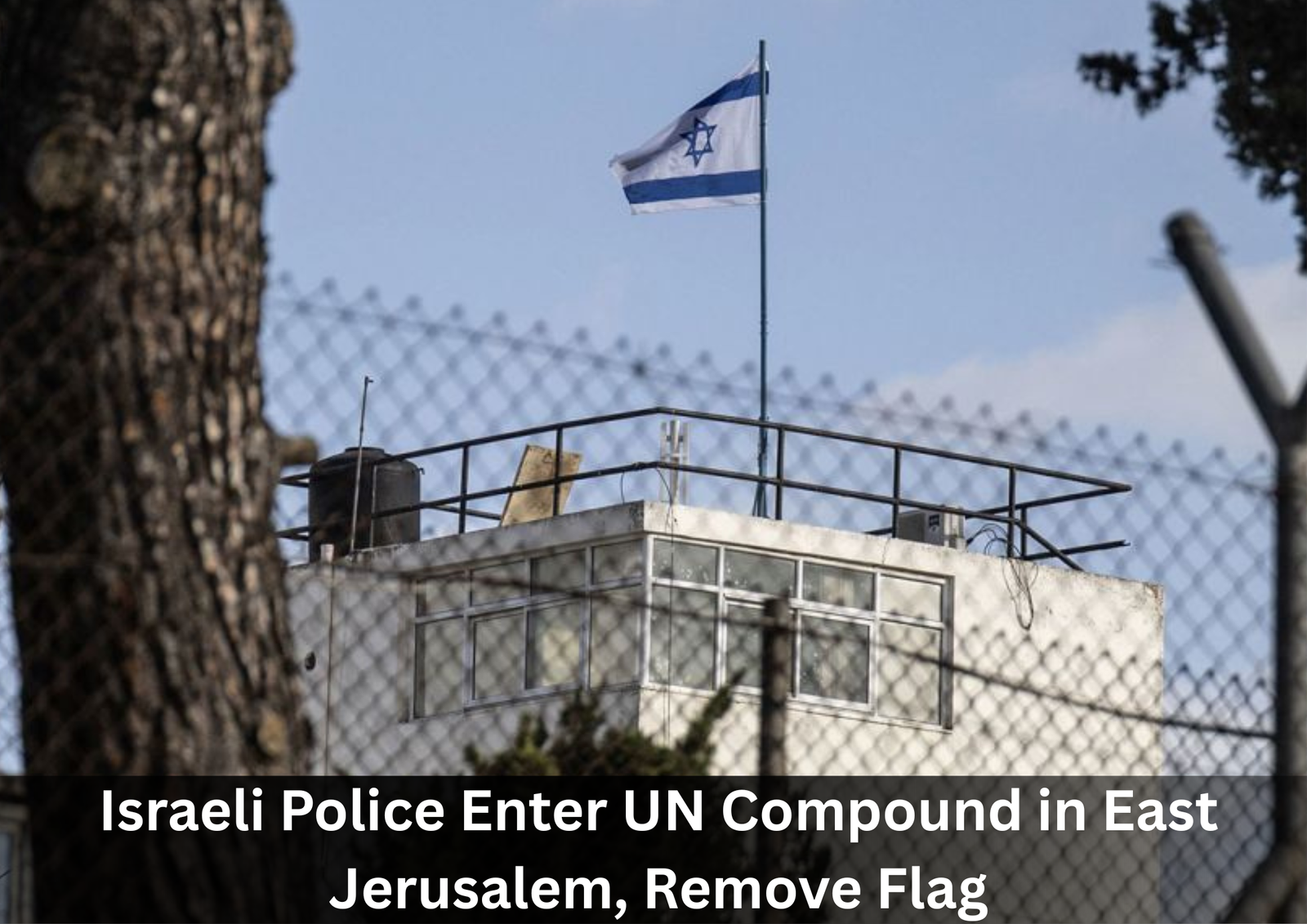
Israeli police carried out an operation on Monday at a compound used by a United Nations agency in the Sheikh Jarrah area of East Jerusalem, leading to international criticism after officers removed a UN flag from the premises.
Witnesses reported that multiple police vehicles arrived at the location in the early afternoon, accompanied by heavy equipment. Officers entered the compound after breaching a locked gate and climbing perimeter walls. During the operation, police were filmed taking down a United Nations flag from the main entrance and placing it on the ground. Authorities later said the flag had been displayed without official authorization.
Police officials stated the action was part of a court-approved enforcement operation targeting structures they described as unauthorized and unsafe. According to their statement, the goal of the raid was to address alleged building violations connected to municipal regulations rather than to target the aid organization operating inside the compound.
United Nations officials strongly objected to the operation. Representatives said staff members were inside the compound at the time but were not injured. However, visible damage was reported to the site’s gates and outer walls following the forced entry.
The Secretary-General of the United Nations issued a formal response, calling the incident deeply concerning and reaffirming the legal protections granted to UN facilities under international agreements. The statement emphasized that UN compounds are meant to remain protected from interference under international law.
Heavy criticism also came from regional and international leaders. Palestinian officials described the incident as a violation of international norms and warned it could further destabilize the already tense situation in East Jerusalem. Jordan and Egypt both released statements condemning the police action and urging restraint.
Across Europe, the European Union’s foreign policy leadership echoed calls for respect for UN operations and personnel. In the United Kingdom, political leaders from the opposition described the raid as an intimidation tactic that risks undermining humanitarian work in the region.
The property involved has long served as a base for humanitarian operations supporting Palestinian refugees. The agency operating there has provided education, health services, and emergency assistance across multiple territories for decades. Its presence has also been the subject of political disputes, particularly with Israeli authorities, who have accused the agency of political bias-claims the organization has consistently rejected.
The raid adds another flashpoint to the growing tensions in East Jerusalem, an area that has seen frequent confrontations tied to land use, residency rights, and international diplomacy. Observers warn that further actions involving humanitarian sites could intensify diplomatic pressure on Israeli authorities and complicate fragile regional relations.