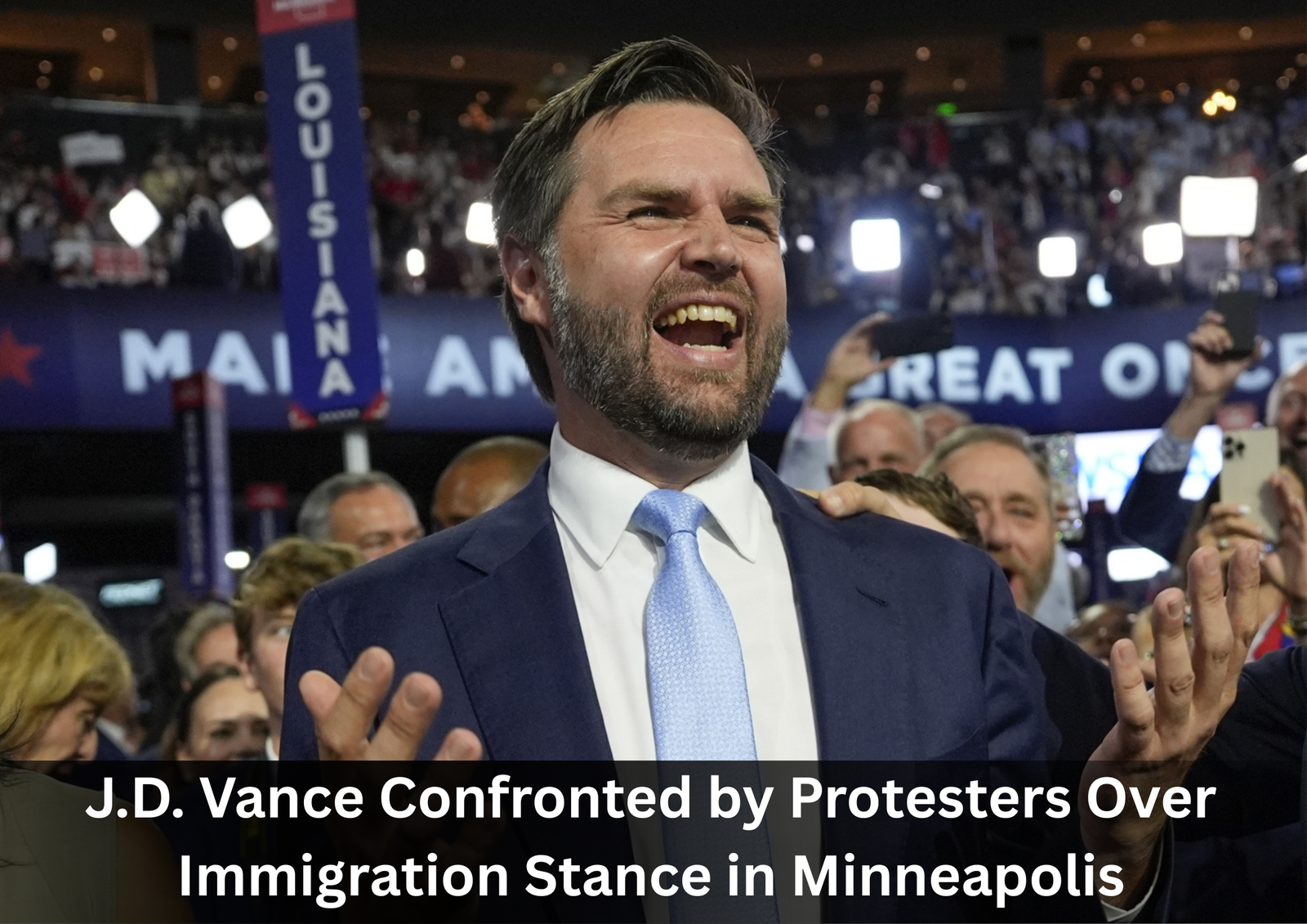
Vice President J.D. Vance made a closely watched visit to Minneapolis this week, arriving amid growing public unrest over recent immigration enforcement actions carried out by U.S. Immigration and Customs Enforcement (ICE). The trip came at a moment of heightened national attention on immigration policy, with demonstrations forming near the site of the Vice President’s public appearance.
The visit, which took place on Thursday, coincided with ongoing protests sparked by recent ICE operations in several major U.S. cities. In Minneapolis, demonstrators gathered outside the venue to express opposition to what they describe as aggressive enforcement tactics, holding signs and chanting slogans calling for reform and accountability. Law enforcement agencies implemented increased security measures, and the event was broadcast live by multiple television networks.
A Shift in Tone on Immigration Enforcement
During his remarks, Vice President Vance adopted a noticeably more measured tone than is often associated with the administration’s approach to immigration. While reaffirming support for border security and enforcement of federal law, he emphasized that ICE operations should be carried out with greater sensitivity.
Vance stated that immigration enforcement must align with “American values” and stressed the importance of compassion when dealing with affected families and communities. His comments appeared aimed at addressing public concern while attempting to ease tensions surrounding the agency’s recent actions.
Political observers noted that this language represents a rhetorical adjustment rather than a policy shift. No new directives or executive actions were announced during the visit, and the Vice President did not outline any immediate changes to ICE procedures.
Protests Highlight National Debate
Outside the venue, protesters from various advocacy groups voiced frustration with the administration’s immigration policies. Demonstrators cited fears within immigrant communities and called for limits on enforcement practices they believe disproportionately affect vulnerable populations.
Despite the protests, the event proceeded without major incident. Authorities reported no significant disruptions, though traffic restrictions and crowd-control measures remained in place throughout the Vice President’s appearance.
The demonstrations in Minneapolis mirror similar protests seen in other cities, underscoring the depth of national division over immigration enforcement. Analysts say these public responses are increasingly shaping political messaging as elected officials prepare for upcoming elections.
Domestic Politics Take Center Stage
The Vice President’s Minneapolis stop is widely viewed as part of a broader shift in the administration’s focus toward domestic issues. With the midterm election cycle approaching, immigration has emerged once again as a defining topic in national political discourse.
Several analysts have pointed out that recent weeks have seen a reduced emphasis on foreign policy initiatives, with senior officials instead prioritizing appearances and messaging tied to internal political challenges. Immigration enforcement, in particular, has become a focal point due to its emotional resonance and impact on local communities.
Within Republican circles, there are signs of internal debate over how aggressively immigration laws should be enforced and how those efforts are communicated to the public. Vance’s remarks in Minneapolis appeared to acknowledge this unease without signaling a departure from existing policy positions.
No Policy Changes Announced
While the Vice President addressed criticism and called for a more humane approach, he was clear that the administration remains committed to enforcing immigration laws. His speech avoided detailed discussion of specific ICE operations and instead focused on broader principles and values.
Administration officials later confirmed that the visit was intended as a listening opportunity rather than a policy rollout. The absence of new announcements suggests that any substantive changes to enforcement practices, if they occur, would come later through formal channels.
Ongoing Political Tensions
The Minneapolis visit highlights the continuing tension surrounding immigration policy in the United States. As protests persist and political leaders refine their messaging, the issue remains a central point of contention across party lines.
For now, Vice President Vance’s remarks represent an attempt to balance enforcement priorities with public concern, reflecting the complex political landscape the administration faces heading into a critical election period.
To understand the deeper implications behind “Child Taken Into Custody After Immigration Arrest at Minneapolis Hospital Raises National Concern,” read this blog for crucial context, reactions, and why the story is drawing nationwide attention.