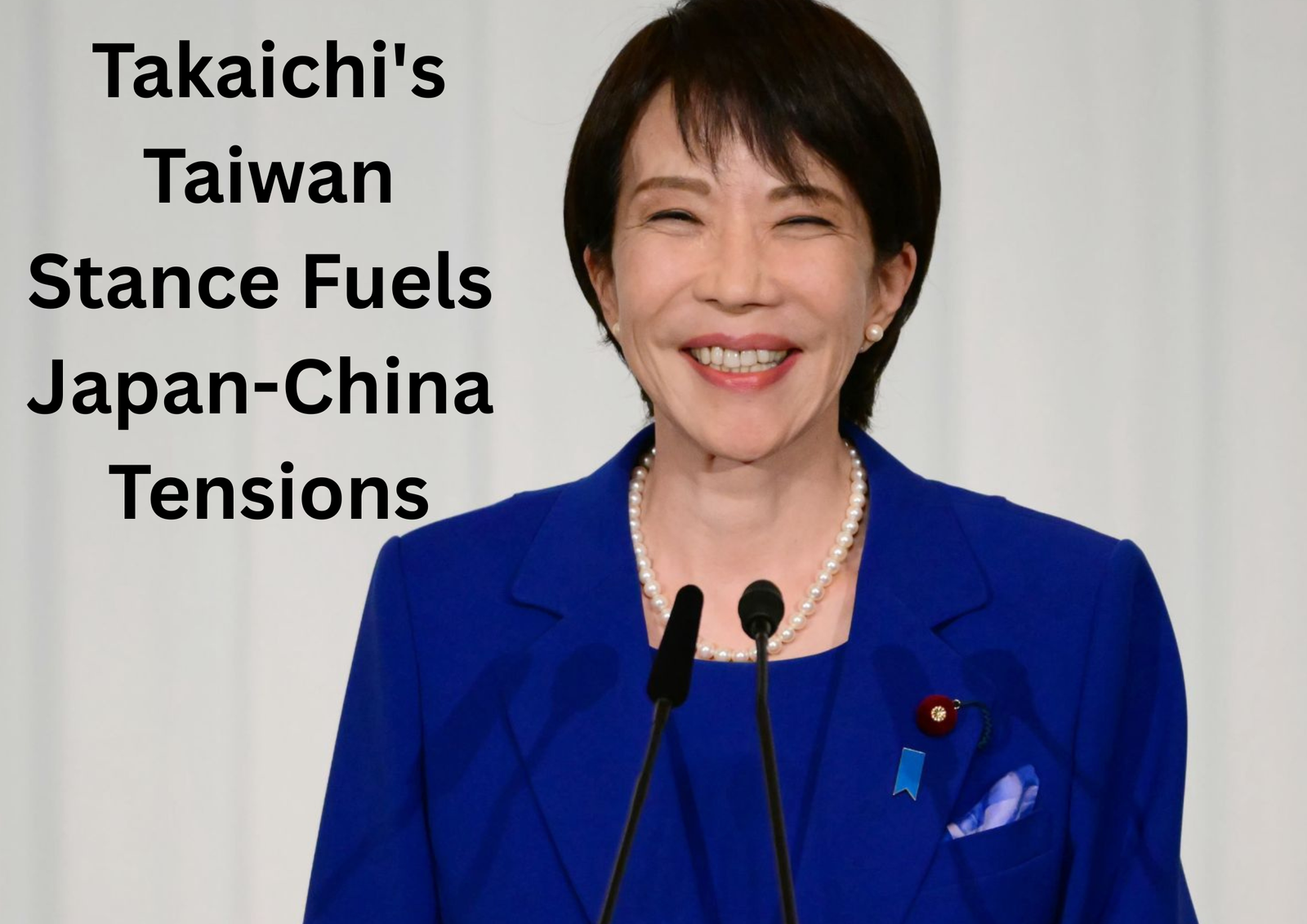
Japan’s Prime Minister Sanae Takaichi has dismissed Beijing’s demand to retract remarks she made about Taiwan, deepening already fragile relations between the two countries. China had summoned a Japanese diplomat in protest, accusing Takaichi of crossing a diplomatic red line and interfering in its domestic affairs. Despite the pressure, Takaichi insisted her stance remains firm and unchanged.
At the center of the dispute are her comments describing peace and stability in Taiwan as essential to Japan’s own security, along with her reference to Taiwan as a “democratic country.” Both statements directly contradict China’s long-standing “One China” position, under which Beijing views Taiwan as part of its territory.
The diplomatic disagreement comes at a moment of heightened military activity in the region. Analysts from the Center for Strategic and International Studies note that China’s People’s Liberation Army continues regular deployments of aircraft, drones, and naval vessels near Taiwan. These operations, which often intrude into Taiwan’s Air Defense Identification Zone, are viewed as part of a broader gray-zone pressure campaign meant to intimidate without launching open conflict.
Tensions have also made their way into cultural exchanges. Several Japanese music concerts scheduled in China were suddenly canceled with no official explanation. Although authorities did not link the cancellations to the political row, the timing has led many observers to interpret the move as a subtle form of cultural and economic retaliation.
With the situation escalating on multiple fronts, the United States has stepped in to encourage dialogue between Tokyo and Beijing. Washington hopes the discussions can restore stability and prevent the disagreement from damaging wider regional cooperation.
As both nations weigh their next steps, the episode highlights how quickly political rhetoric, security concerns, and cultural ties can collide – especially when Taiwan is involved.