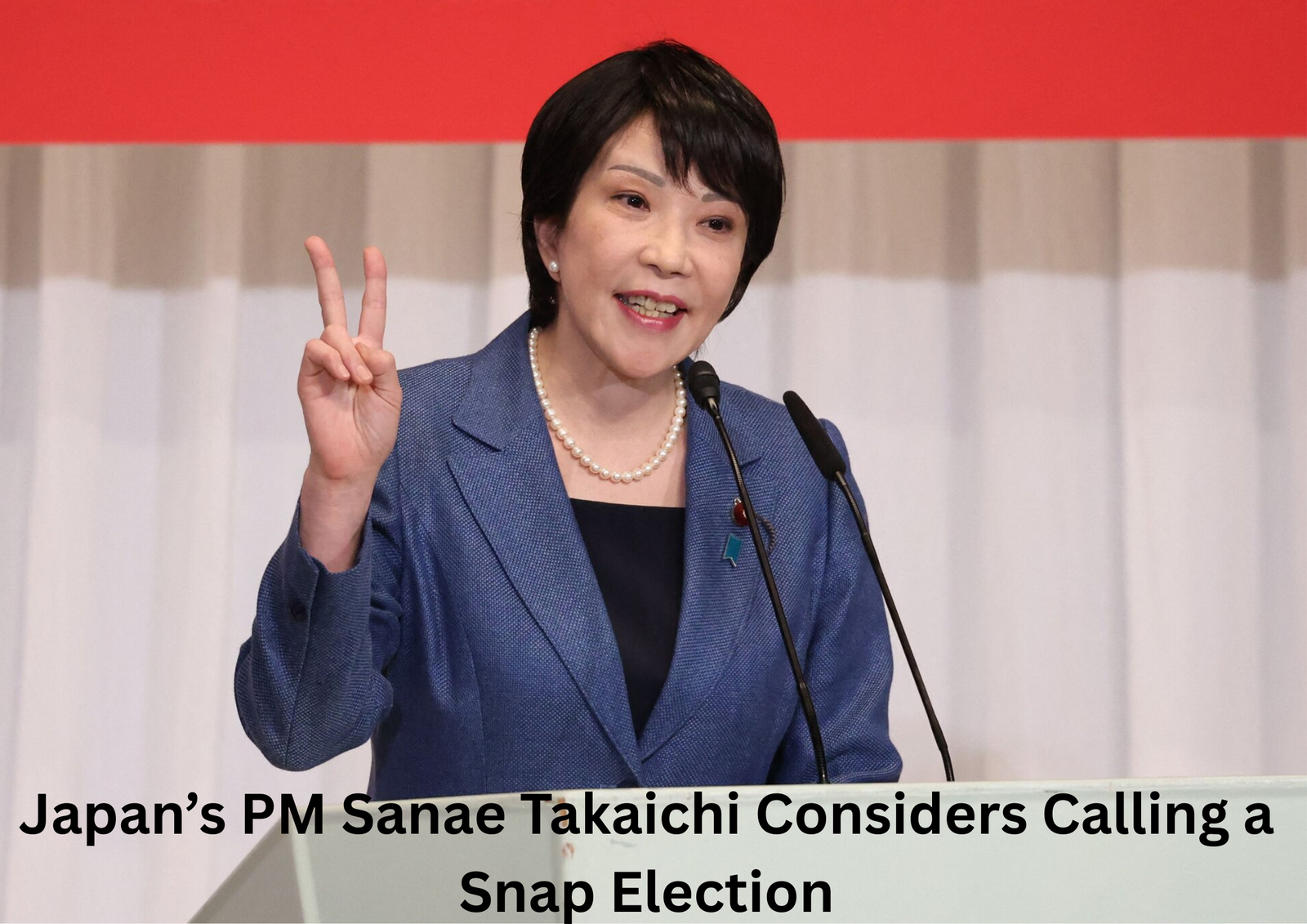
Japan is bracing for renewed political turbulence as Prime Minister Sanae Takaichi weighs calling a snap general election in February, a move that is already rattling financial markets and drawing caution from analysts over the country’s fiscal and geopolitical risks.
Election Timing Under Discussion
Multiple reports from Tokyo suggest the government is actively preparing for the possibility of dissolving the Lower House in early February, with February 8 and February 15 floated as likely dates. Hirofumi Yoshimura, leader of coalition partner Ishin, acknowledged earlier this month that he “would not be surprised” to see an early vote materialize, describing the political atmosphere as “fluid.”
Political Stakes Are High
Takaichi took the reins of the ruling Liberal Democratic Party (LDP) in October 2025 following a damaging slush-fund scandal that weakened the party’s standing and led to a major coalition split. The exit of the Komeito Party, historically influential in urban districts, left the LDP with a narrow governing majority and a strategic incentive to seek electoral reinforcement while Takaichi enjoys strong personal approval ratings near 70%.
Analysts say the prime minister’s aim is to consolidate control before opposition parties coordinate around fresh candidates and messaging. However, the LDP’s recent seat losses mean success is not assured.
Markets Respond With Unease
The early election chatter has not been warmly received on financial trading desks. The yen softened further following the reports, extending a decline that began in October when Takaichi assumed party leadership. Investors appear wary that a stronger mandate for the prime minister could clear the path for more aggressive fiscal stimulus policies.
Bond traders have likewise signaled discomfort over the prospect of additional government borrowing and spending, raising questions about how Japan will manage its already considerable public debt burden.
Fiscal Expansion and Inflation Concerns
Takaichi campaigned on a plan to revive consumer purchasing power and stimulate growth through elevated government outlays. Economists warn such measures risk stoking inflation and pushing up domestic borrowing costs, particularly if the yen continues to weaken and drives up the cost of imported goods.
Japan’s finance ministry has attempted to reassure markets, hinting at potential foreign-exchange support measures, but those signals have not yet halted currency volatility.
China Tensions Add Another Layer of Risk
Relations with Beijing have grown more strained since late 2025 after comments from Takaichi regarding Taiwan drew a sharp diplomatic rebuke. Since then, China has reduced outbound tourism to Japan and restricted shipments of rare earth materials essential to Japanese manufacturers. Industry groups fear broader retaliatory actions if voters endorse Takaichi’s stance at the polls.
Uncertain Road Ahead
With domestic politics unsettled, markets nervous, and foreign policy frictions intensifying, Japan is entering a period of high uncertainty. Whether Takaichi’s popularity can translate into expanded parliamentary strength-and whether that would stabilize or further disrupt Japan’s economic outlook-remains an open question.
Malaysia and Indonesia Block Elon Musk’s Grok AI Over Abuse Concerns, Prompting Global Debate – read this blog to understand why the issue is gaining massive attention.