North Korean leader Kim Jong Un marked the start of the New Year with a strong message underscoring Pyongyang’s growing military and strategic partnership with Russia, including a rare and direct acknowledgment of North Korean troops operating alongside Russian forces overseas.
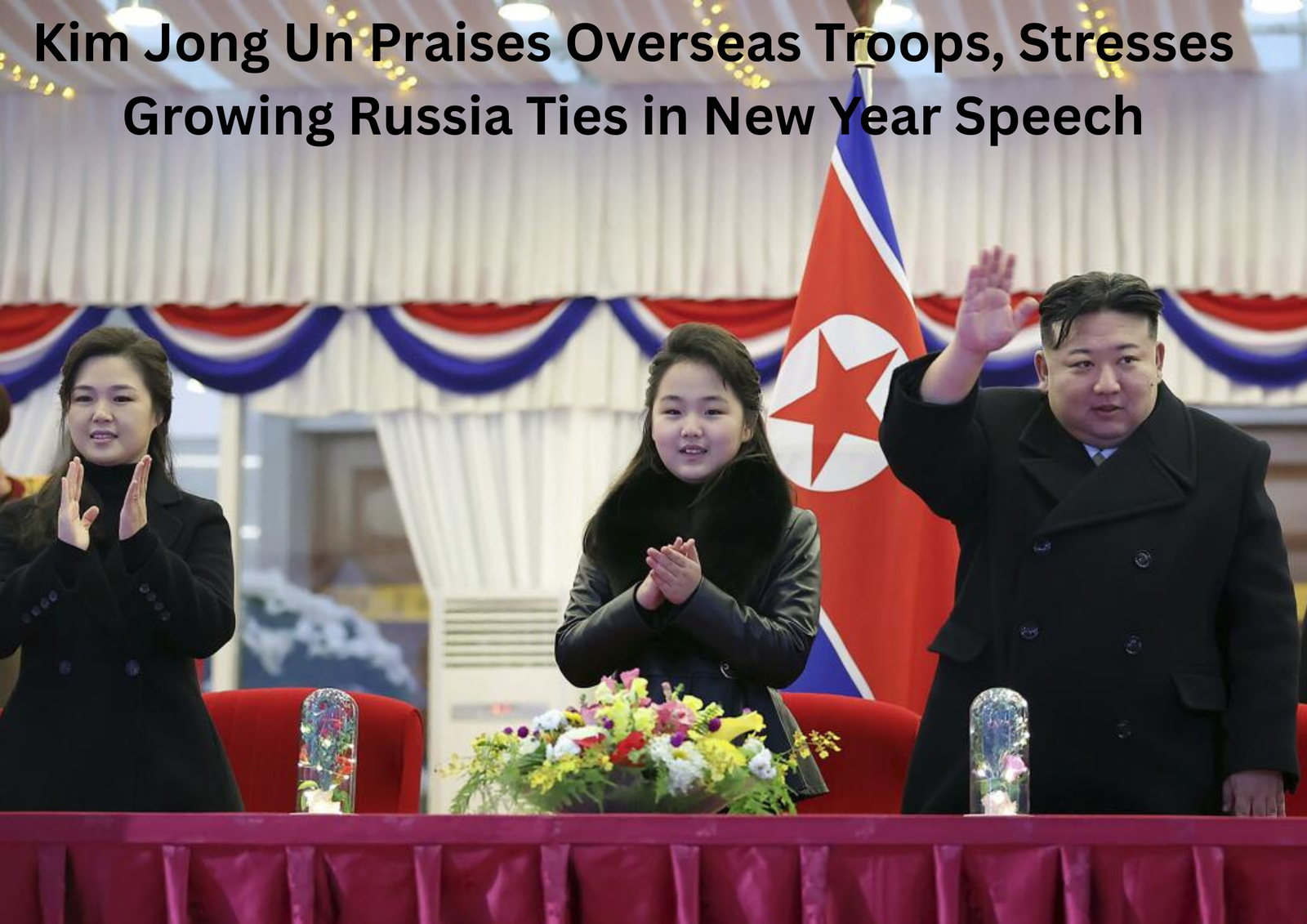
According to state media coverage released at the end of December, Kim attended a series of year-end national events in Pyongyang, including a formal political gathering and a large-scale cultural performance. These celebrations served as the backdrop for a New Year message that placed unusual emphasis on North Korea’s evolving role in global security dynamics and its alignment with Moscow.
In remarks reported by the Korean Central News Agency (KCNA), Kim described relations with Russia as having reached an unprecedented level of cooperation. He characterized the partnership as an “invincible alliance,” framing it as a strategic foundation capable of shaping regional and international stability. Observers note that such language reflects a noticeable shift toward more open political messaging about North Korea’s foreign military engagements.
One of the most striking aspects of the address was Kim’s explicit praise for North Korean soldiers whom he said were engaged in combat operations alongside Russian forces in what he referred to as an “alien land.” While Pyongyang has previously avoided public confirmation of overseas troop deployments, the statement is widely interpreted as a reference to the ongoing war in Ukraine.
Kim commended these forces for what he described as their discipline, resolve, and battlefield effectiveness, stating that their actions demonstrated the strength and readiness of North Korea’s armed forces beyond its borders. Analysts say this public recognition signals confidence from the leadership and may be intended to reinforce domestic support for expanded military cooperation with Russia.
The New Year remarks also suggested that ties between Pyongyang and Moscow had deepened significantly over the past year. Kim indicated that the partnership had entered what he called a “new high stage,” implying broader collaboration across military, political, and strategic spheres. He further claimed that the strengthened relationship contributes to long-term peace and security, both regionally and globally.
Such assertions come amid heightened international scrutiny of North Korea’s foreign policy direction. Many governments have expressed concern over the implications of closer coordination between North Korea and Russia, particularly as geopolitical tensions continue to rise in Eastern Europe and East Asia.
The New Year celebrations themselves were notable for their scale and symbolism. Kim attended a national meeting at the People’s Palace of Culture, accompanied by senior officials from the ruling Workers’ Party and top military leadership. The event was followed by a grand artistic performance titled “Glorious Motherland,” which featured music, choreography, and visual displays celebrating national unity and strength.
State media coverage portrayed the event as both a cultural tribute and a political statement, reinforcing themes of resilience, loyalty, and international solidarity. Images released by KCNA showed Kim applauding performers and engaging with high-ranking officials, emphasizing continuity and stability within the leadership.
International reactions to Kim’s remarks have been mixed. Some analysts interpret the speech as a calculated signal to both allies and adversaries, aimed at demonstrating North Korea’s willingness to play a more visible role on the global stage. Others suggest the statements may be designed primarily for domestic audiences, highlighting military prestige and reinforcing the legitimacy of the current leadership.
Despite differing interpretations, there is broad agreement that the address marks a notable moment in North Korea’s public diplomacy. Direct references to overseas troop involvement are rare in Pyongyang’s official messaging, making this acknowledgment particularly significant.
As the new year begins, attention is likely to remain focused on how North Korea’s relationship with Russia develops and what impact it may have on regional security, diplomatic relations, and ongoing international conflicts. For now, Kim Jong Un’s New Year message has clearly signaled that Pyongyang views its alliance with Moscow as a central pillar of its strategic outlook moving forward.
To understand why Saudi-UAE Tensions Surface in Yemen as Aden Airport Disruptions Raise Regional Concerns, read this detailed blog for clear context, key developments, and broader regional implications.