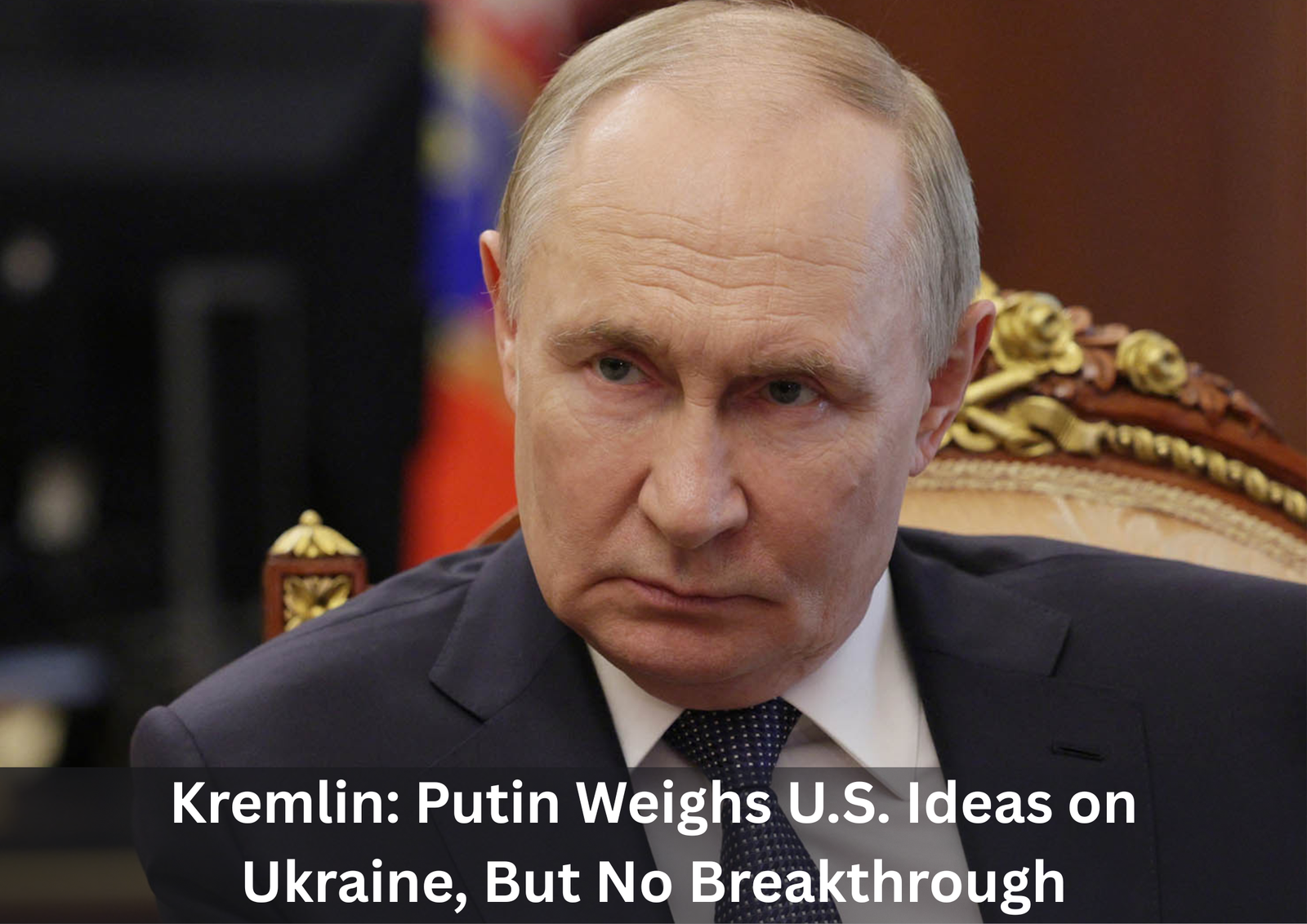
Russia confirmed this week that President Vladimir Putin has agreed to consider parts of a negotiation outline presented by the United States for ending the war in Ukraine. The announcement, delivered by Kremlin spokesperson Dmitry Peskov, signals that Moscow is willing to keep communication channels open even as the peace process shows little sign of progress.
Kremlin Indicates Conditional Openness
Speaking on December 4, Peskov said Putin had accepted certain elements within a package of proposals advanced by Washington. He did not specify which components Moscow viewed favorably but emphasized that Russia remains prepared to continue diplomatic dialogue. The acknowledgment comes as U.S. officials accelerate efforts to craft a settlement framework before their self-set early-2026 deadline.
Washington’s Outline: Ceasefire First, Territorial Questions Later
The United States has been promoting a plan designed to stop active combat and move both sides into structured talks. A central feature of the American proposal calls for a temporary ceasefire based on existing battlefield positions. Disputed territories-including Crimea and regions of eastern Ukraine occupied by Russian forces-would be addressed only in long-term negotiations.
Unlike previous Western initiatives, the plan does not require Russia to withdraw its troops beforehand. This approach, intended to create space for talks, has sparked debate within Europe about whether such terms would entrench Moscow’s gains.
Kyiv Rejects the Framework
Ukraine has firmly dismissed the proposal, arguing that negotiating on the basis of current front lines would legitimize nearly a decade of Russian territorial advances. President Volodymyr Zelenskyy has repeated that any political settlement must begin with the restoration of Ukraine’s internationally recognized borders, including Crimea.
Ukrainian officials have described the U.S. outline as incompatible with the country’s sovereignty and said they will not accept pressure to endorse an arrangement they consider a concession to Moscow.
Allies Voice Unease
Several European governments have expressed concern that the plan, if adopted, could amount to an informal partition of Ukraine. Ambiguity surrounding Ukraine’s long-term security posture-including its potential relationship with NATO-has also raised questions within Western policy circles. Diplomats worry that unclear commitments could leave Kyiv vulnerable while rewarding Russia with time and legitimacy.
Stalemate Continues
Despite limited signals of flexibility from the Kremlin, the positions of Russia and Ukraine remain far apart. Moscow is willing to engage selectively with the U.S. framework, while Kyiv categorically rejects its core premise. With both sides entrenched, U.S. officials acknowledge that a rapid breakthrough is unlikely.
As of December 4, the diplomatic landscape is effectively frozen. Washington continues pressing its initiative, Moscow signals conditional interest, and Kyiv maintains its refusal to negotiate under terms it considers unacceptable. With no compromise on the horizon, the conflict’s political resolution remains out of reach.