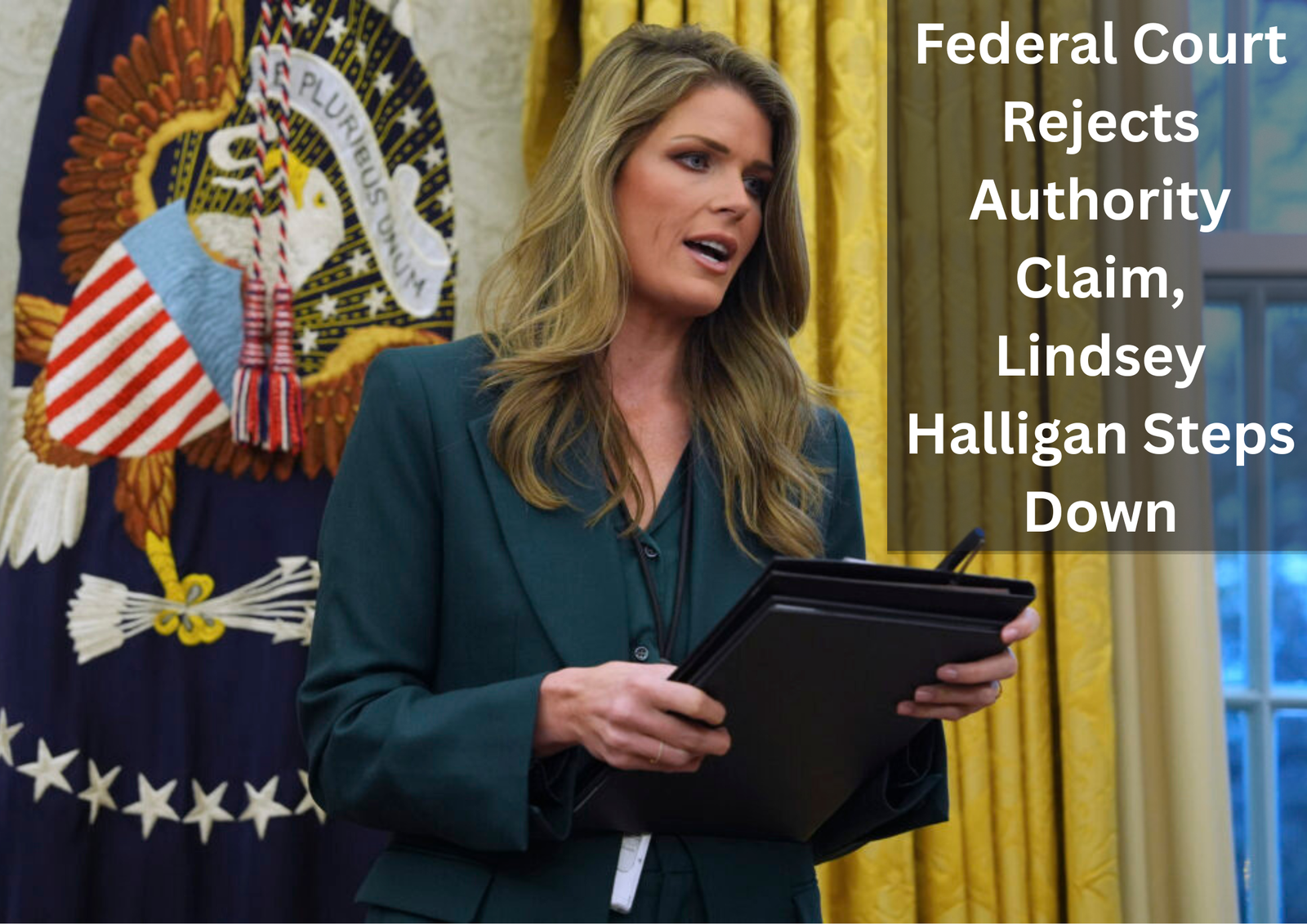
Attorney General Pam Bondi announced late Tuesday that Lindsey Halligan has left her position as the top federal prosecutor for the Eastern District of Virginia, ending a tenure marked by unusual legal disputes and political controversy. Her departure closely followed a judge’s order blocking her from presenting herself as the district’s U.S. Attorney.
Judge Rebukes Halligan’s Authority Claim
U.S. District Judge David Novak issued a detailed order this week stating that Halligan had no legal authority to use the title of U.S. Attorney. He wrote that the prolonged effort to portray her as the district’s lawful chief prosecutor needed to stop, warning that any official court filing using the title could lead to disciplinary consequences for those involved.
Judge Novak also criticized the tone of Halligan’s response to earlier court inquiries, describing it as confrontational and unnecessarily political. Despite this, he declined to refer her for immediate disciplinary review, saying her lack of prosecutorial experience merited restraint.
Legal Dispute Rooted in Earlier Ruling
The confrontation stemmed from a November 2025 decision by Judge Cameron Currie, who ruled that Halligan had been improperly installed as interim U.S. Attorney. Currie dismissed high-profile criminal cases Halligan brought against former FBI Director James Comey and New York Attorney General Letitia James, both of whom had been frequent targets of President Donald Trump. The Justice Department has appealed the ruling, but multiple federal judges in the district have since adopted the view that Halligan was never legally serving in the position.
Court Moves to Fill Vacancy
On Tuesday, Chief Judge M. Hannah Lauck issued an administrative order officially declaring the position vacant and directing the court clerk to solicit applications for an interim replacement. Candidates have until February 10, 2026 to apply. Under federal law, district courts may appoint an interim U.S. Attorney when the position is unfilled and no Senate-confirmed candidate is in place.
A Contentious Term
Halligan, who had no prior experience as a prosecutor, assumed the role in September 2025 after the departure of Erik Siebert. Reported tension between Siebert and the Trump administration over politically sensitive prosecutions preceded his exit.
Upon taking over, Halligan moved swiftly to bring cases against Comey and James before grand juries. The case against James was later dismissed due to Currie’s ruling, and subsequent efforts by the administration to indict her on financial allegations failed to secure grand jury approval – a rare outcome in federal criminal practice.
Just last week, a senior attorney in the office was reportedly dismissed after objecting to a renewed push to indict Comey, a move legal experts warned would run into statute-of-limitations barriers.
Statements from Officials
In a farewell statement, Halligan said she had been subjected to “baseless accusations” and claimed courts treated her as though she had been removed from office without providing a replacement. Attorney General Bondi described her exit as a loss for the department, while the Justice Department reiterated that it believed she had been properly appointed under internal legal guidance.
White House officials defended Halligan’s selection, and Deputy Attorney General Todd Blanche suggested online that President Trump could choose to remove any court-appointed interim successor.
Nomination Stalled in Senate
President Trump formally nominated Halligan for the permanent role on January 13, 2026, but the Senate has yet to advance the nomination. Her 120-day interim term expired Tuesday, effectively ending her claim to the position.
St. Paul Church Weighs Possible Lawsuit After Anti-ICE Demonstrators Interrupt Sunday Worship – a must-read update that reveals growing tensions, so make sure to check out this blog for full details.