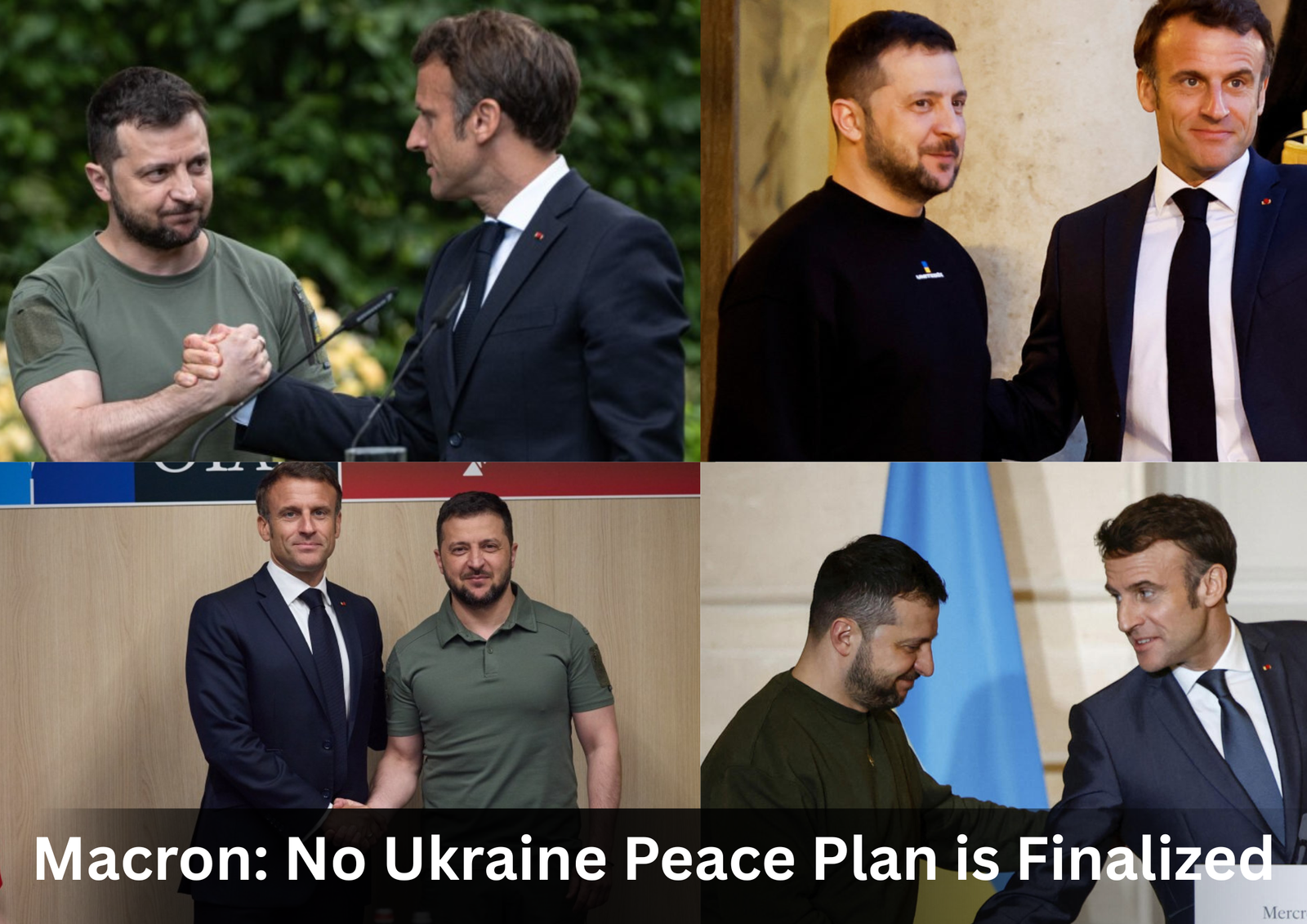
French President Emmanuel Macron and Ukrainian President Volodymyr Zelenskyy held extensive talks in Paris on Sunday, using their meeting at the Élysée Palace to explore a two-track strategy aimed at shaping Ukraine’s political and security future. The discussions combined an emerging French framework for negotiations with ongoing efforts to secure long-term Western defense commitments.
According to French officials, the private meeting centered on a newly circulated peace outline drafted in Paris. The document, described by diplomatic advisers as an evolving proposal, sketches a possible route toward ending the conflict through a staged ceasefire, a withdrawal of Russian forces, and an eventual nationwide referendum on Ukraine’s security orientation. The plan’s broader objective is to create political space for dialogue while avoiding a settlement that would lock Ukraine into a “frozen conflict.”
President Zelenskyy signaled cautious interest, noting that Ukraine remains open to examining diplomatic initiatives provided they do not compromise territorial integrity. He emphasized that any national vote on future status or guarantees would only take place after full restoration of Ukrainian control over its internationally recognized borders. Macron, speaking after the meeting, called the talks “constructive” and said both sides reviewed potential timelines and diplomatic next steps.
Parallel to the French effort, Ukraine is in the final stages of negotiating a significant bilateral security pact with the United States. The agreement, which officials on both sides hope to conclude soon, is expected to outline sustained military, intelligence, and industrial support designed to strengthen Ukraine’s long-term ability to deter future attacks. The initiative mirrors commitments endorsed by G7 nations in 2023 and is widely viewed as a stabilizing measure regardless of political changes in Washington.
Analysts say the combination of a potential peace framework and a long-term security pact reflects a dual-pronged strategy: creating an eventual political path toward de-escalation while reinforcing Ukraine’s military position. European diplomats have suggested that progress on either track could influence participation in a wider international peace conference, which France has floated as a possible forum involving major global actors, including China.
During his Paris visit, President Zelenskyy also paid tribute to Vadym Prystaiko, a prominent Ukrainian diplomat who recently passed away. He noted the profound human cost of the conflict, highlighting the loss of several of Ukraine’s pre-war ambassadors, many of whom joined military service after the full-scale invasion.
French officials stress that their proposal is not intended to replace Ukraine’s own peace initiatives but to complement ongoing international efforts. Macron reiterated France’s commitment to supporting Kyiv militarily while also encouraging discussions that could build the foundation for a lasting and enforceable peace.
As diplomatic work continues, both leaders acknowledged that neither side in the conflict is prepared for direct negotiations. Still, Sunday’s meeting marked one of the most coordinated attempts in recent months to align military support with emerging political concepts, laying groundwork that could shape the next phase of the war and its eventual resolution.