
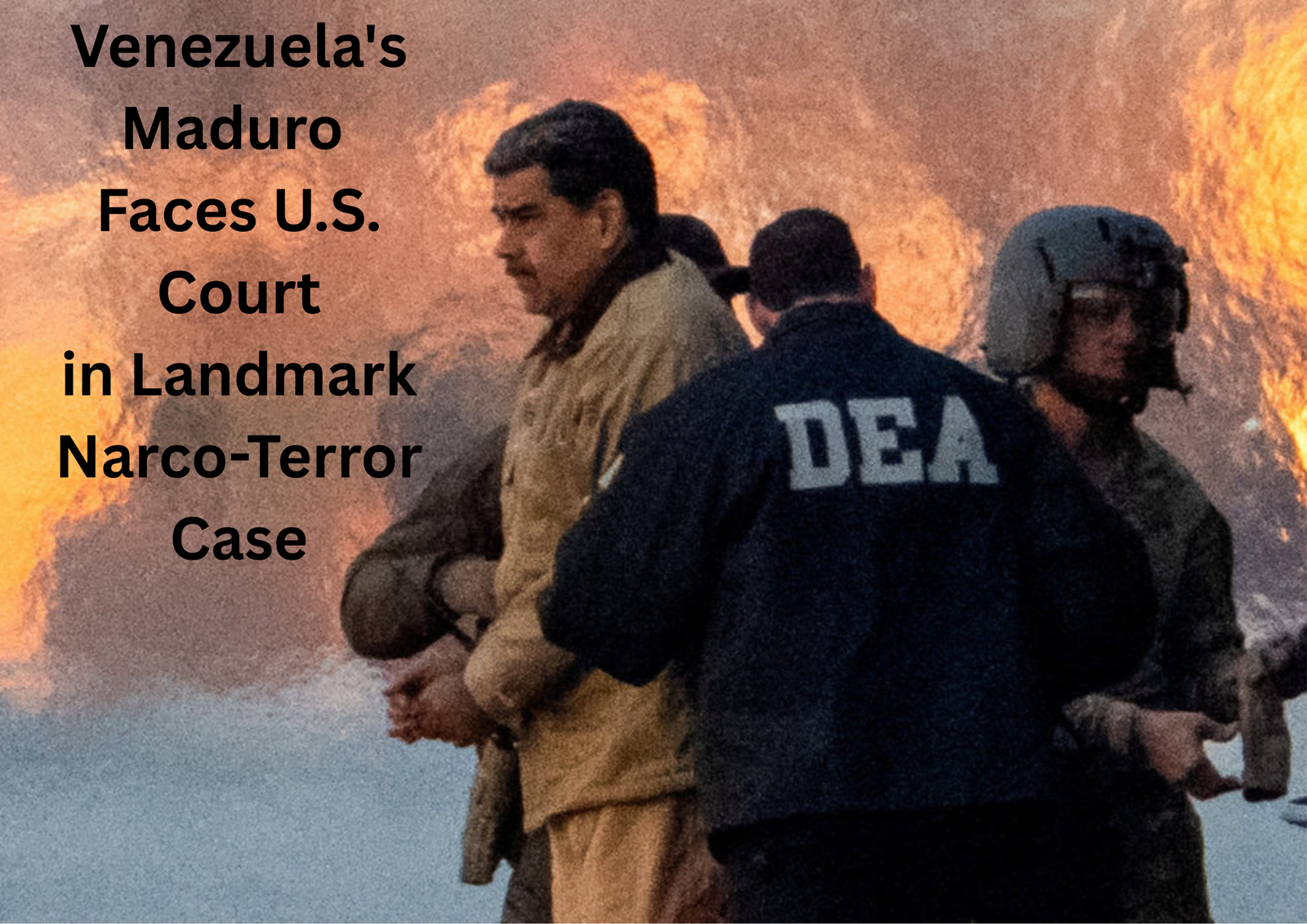
Former Venezuelan leader Nicolás Maduro made his first appearance before a U.S. federal judge on Monday, marking a dramatic step in a case that has been years in the making. The brief but closely watched hearing took place in a Manhattan courtroom under heightened security, reflecting the global attention surrounding the prosecution of a former head of state.
Maduro, appearing alongside his wife Cilia Flores, formally entered not-guilty pleas to multiple federal charges. Speaking through an interpreter, he rejected the allegations and maintained that the case against him is politically motivated. The judge focused the proceeding on procedural matters, confirming identities, outlining rights, and setting a framework for future filings rather than allowing extended statements.
U.S. prosecutors accuse Maduro of leading a criminal enterprise that allegedly coordinated with armed groups and international drug traffickers to move large quantities of cocaine toward the United States. The charges, first brought several years ago and recently expanded, include narco-terrorism, drug trafficking conspiracies, and weapons-related offenses. Authorities describe the case as one of the most significant prosecutions ever brought against a former foreign leader in a U.S. court.
Defense attorneys raised concerns about their clients’ health and treatment following their apprehension, prompting assurances from the court that appropriate medical care would be provided while they remain in federal custody. The judge scheduled the next hearing for mid-March, signaling that pretrial litigation could extend for months before any trial date is considered.
While the legal process unfolded in New York, political developments continued in Caracas. Venezuela’s vice president, Delcy Rodríguez, was sworn in as interim leader, a move that underscores the uncertainty surrounding the country’s leadership during Maduro’s absence and the ongoing international pressure on the Venezuelan government.
The case is being overseen by veteran U.S. District Judge Alvin K. Hellerstein, known for his firm courtroom management and experience handling complex, high-profile litigation. Legal analysts note that his approach could play a significant role in shaping the pace and tone of the proceedings.
Comparisons have already been drawn to rare historical precedents, including the U.S. prosecution of former Panamanian ruler Manuel Noriega in the early 1990s, a case that took years from arrest to verdict. Observers expect a similarly lengthy process as both sides prepare for what could become a landmark trial in international criminal justice.
As motions and evidence are set to be contested in the months ahead, the proceedings are likely to carry implications far beyond the courtroom, influencing diplomatic relations, regional politics, and debates over the reach of U.S. law in cases involving foreign leaders.
South Korea Mourns Film Icon Ahn Sung-ki, Dead at 74-read this in-depth blog to understand his legacy, career milestones, and lasting impact on Korean cinema and generations of fans.


