The conflict in Sudan has reached a horrifying new chapter as the Rapid Support Forces (RSF) captured El Fasher – the final major stronghold of the Sudanese army in the Darfur region. The fall of the city has triggered widespread reports of massacres, forced disappearances, and severe humanitarian suffering across the area.
City Falls Amid Widespread Violence
El Fasher’s takeover represents a decisive and deeply tragic moment in Sudan’s civil war. Within hours of the city’s collapse, eyewitnesses reported brutal house-to-house raids. Civilians described armed RSF units executing men in the streets, while local medics confirmed receiving dozens of bodies marked by gunfire. Some residents spoke of entire neighborhoods emptied overnight, with survivors fleeing on foot toward neighboring regions.
Reports of Mass Executions
Accounts emerging from the city indicate systematic violence. One humanitarian worker, now sheltering outside El Fasher, described the killings as “indiscriminate and relentless.” Multiple witnesses alleged that hundreds of men were executed over several days, their bodies left unburied or placed in hastily dug graves. Doctors at a nearby clinic said the death toll continues to rise as more remains are discovered on the outskirts of the city.
Thousands Missing After the Assault
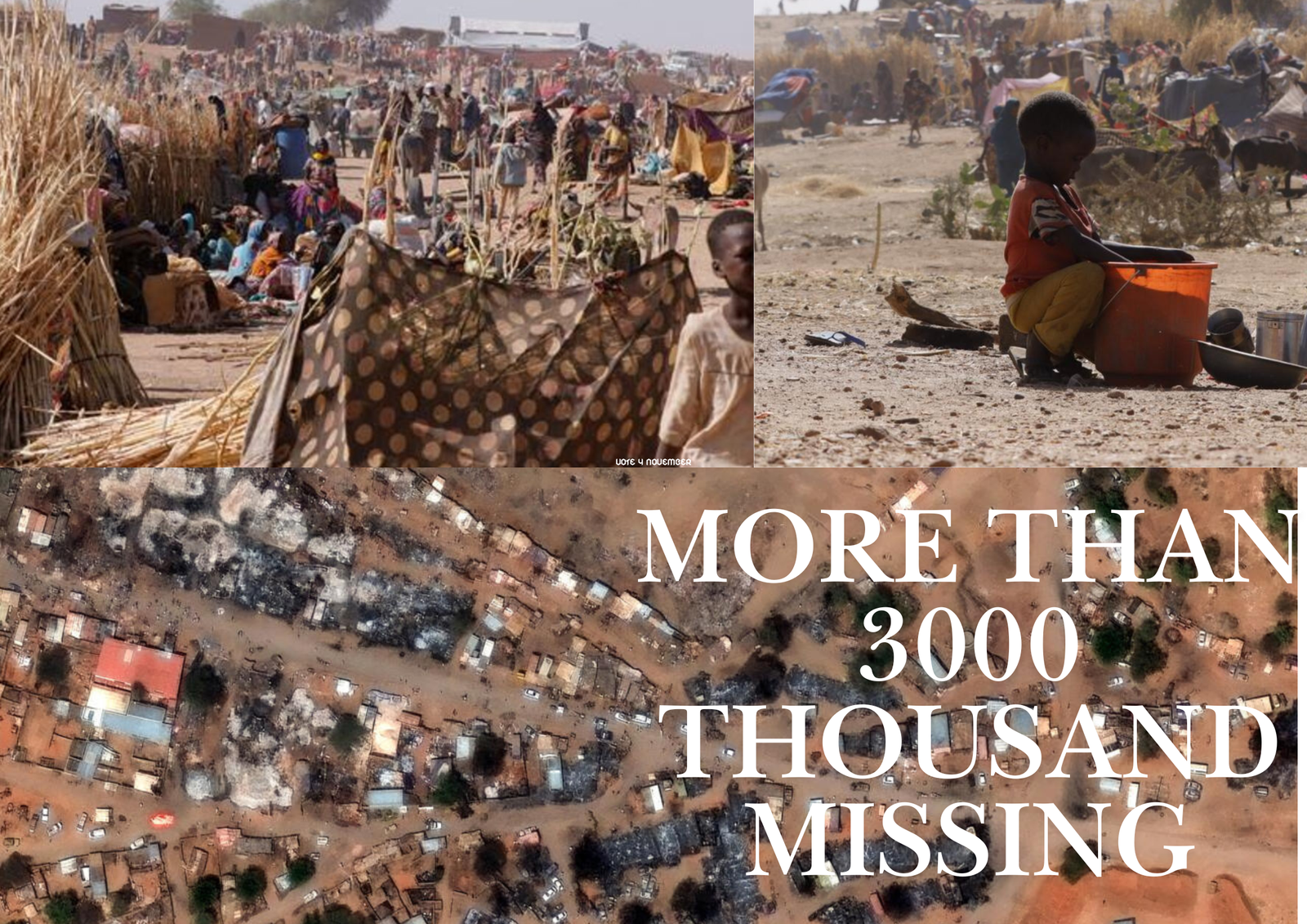
Human rights organizations warn that the number of missing persons could reach several thousand. Local unions and aid groups estimate that at least 3,000 people – mainly young men and boys – have vanished since the RSF entered the city. Families have been searching hospitals, mosques, and nearby villages, hoping for any sign of their loved ones. Satellite imagery reviewed by observers shows signs of possible mass burial sites, suggesting that many of the missing may never be found alive.
Ethnic-Based Violence Alleged
Community leaders and activists report that the attacks appear to target members of the non-Arab Masalit and other African ethnic groups. Survivors describe coordinated assaults that resemble earlier waves of ethnic cleansing in Darfur’s history. A displaced resident who managed to flee said, “They went door to door asking about tribes – those from Masalit families were taken away or shot immediately.”
Global Reaction and Condemnation
Governments and international organizations have condemned the atrocities. In Berlin, European diplomats called the situation in El Fasher “beyond comprehension,” urging immediate international intervention. The U.S. State Department denounced what it called “unacceptable and deliberate mass killings,” demanding an independent inquiry into the violence. The United Nations has also raised concerns that the acts could amount to crimes against humanity.
Humanitarian Conditions Deteriorate
The humanitarian outlook in El Fasher is dire. Before the assault, the city hosted hundreds of thousands of internally displaced people. Since the RSF takeover, access to food, water, and medical care has collapsed. The city’s main hospital is reportedly destroyed, and aid convoys have been unable to reach those in need. Relief organizations warn that famine and disease could spread rapidly unless secure humanitarian corridors are established soon.
A Region in Crisis
With most of Darfur now under RSF control, fears are growing that history is repeating itself. Twenty years after the genocide that scarred the region, survivors once again face persecution, hunger, and displacement on a massive scale. International observers warn that without urgent global action, the crisis in Sudan could become one of the worst humanitarian catastrophes of the decade.