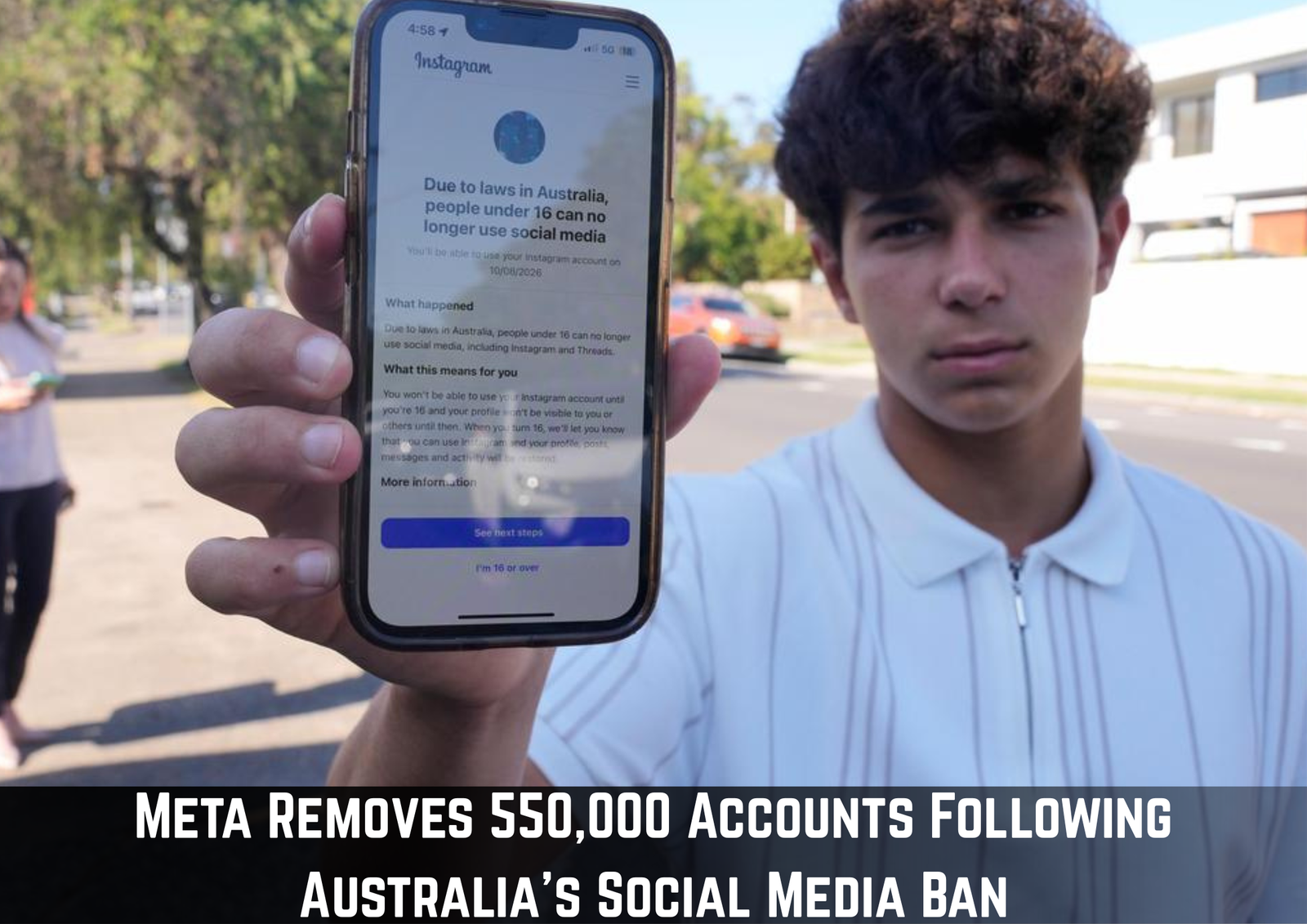
Meta has revealed that more than 550,000 accounts across its social platforms were taken offline in the first week of Australia’s new age-restriction law, which bars people under 16 from maintaining social media profiles. The law – introduced at the beginning of December 2025 – is currently the strictest of its kind anywhere in the world.
According to figures shared by the company, 544,052 accounts believed to be owned by teenagers were blocked between December 4 and December 11, 2025. Instagram accounted for the largest share, followed by Facebook and Threads.
The legislation initially applies to ten well-known platforms including Instagram, Facebook, TikTok, Snapchat, X, YouTube, Reddit, Twitch, Kick, and Threads. Unlike previous age-based policies implemented internationally, no parental consent loophole exists – children under 16 are disallowed entirely.
Australian lawmakers argue the measure is intended to safeguard minors from online grooming, inappropriate content, and mental health risks associated with heavy social media use. The government has also signaled interest in expanding the policy to additional platforms should minors shift to alternative services not originally covered.
Meta has publicly committed to complying with the mandate, but the company also questioned its long-term viability. It suggested that broader cooperation at the app-store level paired with standardized age-verification systems would be more effective than isolated bans on individual platforms. Without that, the company warned, teenagers will simply migrate to new or lesser-known apps.
Opposition figures voiced concerns that the rollout has been uneven. Critics pointed out that new accounts continue to be created by minors, and that existing accounts can sometimes evade automated verification systems. Some politicians described the current tools as too easy for tech-savvy teens to bypass.
Youth advocates and online safety experts remain split. Supporters say the ban gives children a healthier buffer before entering social media ecosystems, while others fear it may cut off vulnerable teens from supportive communities – especially those in regional areas or in LGBTQ+ spaces – where online communication often plays a vital role.
Australia’s eSafety office has begun requesting deactivation data from each platform, but official government figures have not yet been released. Officials acknowledged that the law will take time to fully solidify and expect that enforcement methods will continue to evolve as technology and online behavior change.
For now, the policy has placed Australia at the center of a global debate on how online safety, digital rights, and youth mental health should be balanced – with other nations watching closely to see how the experiment unfolds.
Family Seeks Transparency After Costa Rican Man Dies Following Deportation in Critical Condition, and the details are striking enough that you should absolutely read the full story in my blog.