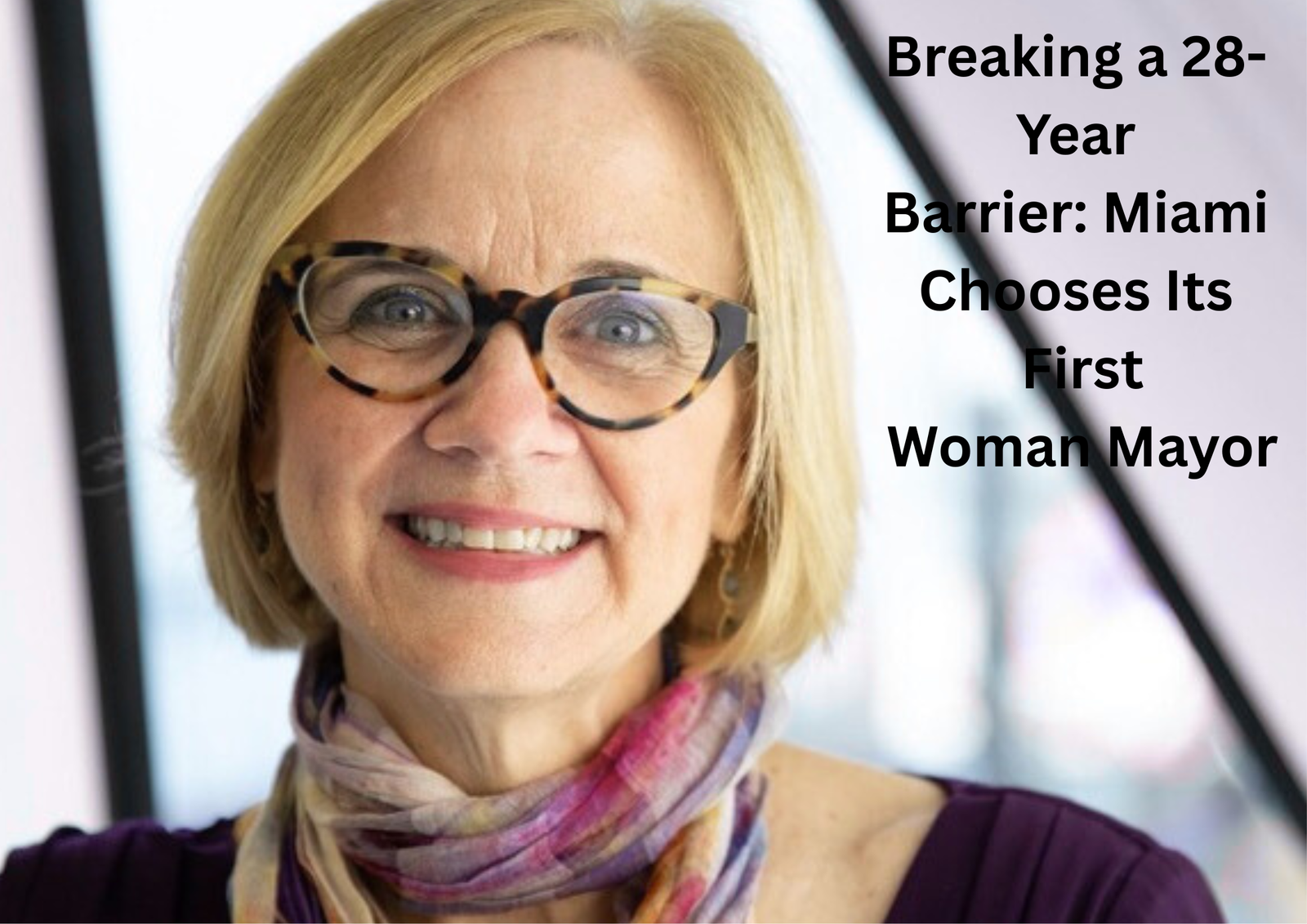
Miami marked a turning point in its political history this week as voters elected Eileen Higgins-longtime civic leader and former county commissioner-as the city’s first female mayor. Her victory also ends a 28-year stretch in which Republicans held the city’s highest office, signaling a notable change in Miami’s political landscape.
Higgins secured roughly 60% of the vote in the December 9 election, outperforming former city manager Emilio González in a race that, while officially nonpartisan, drew sharp national attention. High-profile Republican figures, including President Donald Trump and Florida Governor Ron DeSantis, had endorsed González, adding a partisan edge to a contest traditionally centered on local issues.
In her first remarks after the win, Higgins credited her campaign’s success to a strategy of broad, neighborhood-focused outreach. She described weeks of door-to-door conversations across Miami’s diverse communities, emphasizing her effort to appeal not only to Democrats, but also to Republicans and independent voters. Higgins pointed to her earlier service in a right-leaning county district as evidence of her ability to build bipartisan trust.
Throughout the campaign, Higgins focused heavily on housing affordability, one of the city’s most urgent concerns. She highlighted her previous role in expanding affordable housing options for seniors and working families and pledged to continue that work at the city level. Alongside housing, she promised to tackle Miami’s persistent flooding challenges, population growth pressures, and financial transparency issues-topics that consistently topped voter concerns during the race.
Immigration also emerged as a deeply personal subject in the campaign’s final stretch. Higgins described meeting residents whose loved ones had been detained without clear information about their whereabouts. While asserting her support for strong border enforcement, she criticized past federal actions that she characterized as harmful to families and economically damaging to South Florida’s workforce.
Democratic leaders across Florida quickly celebrated the win as a sign of renewed voter engagement. They noted that Democrats not only maintained their registration advantage in Miami, but also achieved higher turnout than Republicans-an encouraging indicator ahead of the 2026 elections. GOP officials, however, offered mixed interpretations. Some dismissed the outcome as predictable in a Democrat-leaning city, while others questioned whether nationalizing a local race ultimately backfired.
Despite the political backdrop, both Higgins and González agreed that the contest remained unusually civil. González publicly commended the tone of the race, saying it reflected a welcome shift away from the hostility often seen in modern campaigns.
As she prepares to assume leadership, Higgins reaffirmed her intention to govern beyond party boundaries. Although proud of her Democratic identity, she emphasized that campaigning is different from governing-and that her responsibility now is to serve the entire city.
Her administration will face immediate challenges: stabilizing the housing market, guiding Miami through rapid development, and safeguarding neighborhoods threatened by rising costs. For many residents, Higgins’ election represents not only a historic milestone, but also a chance to reset the city’s direction during a period of dramatic change.