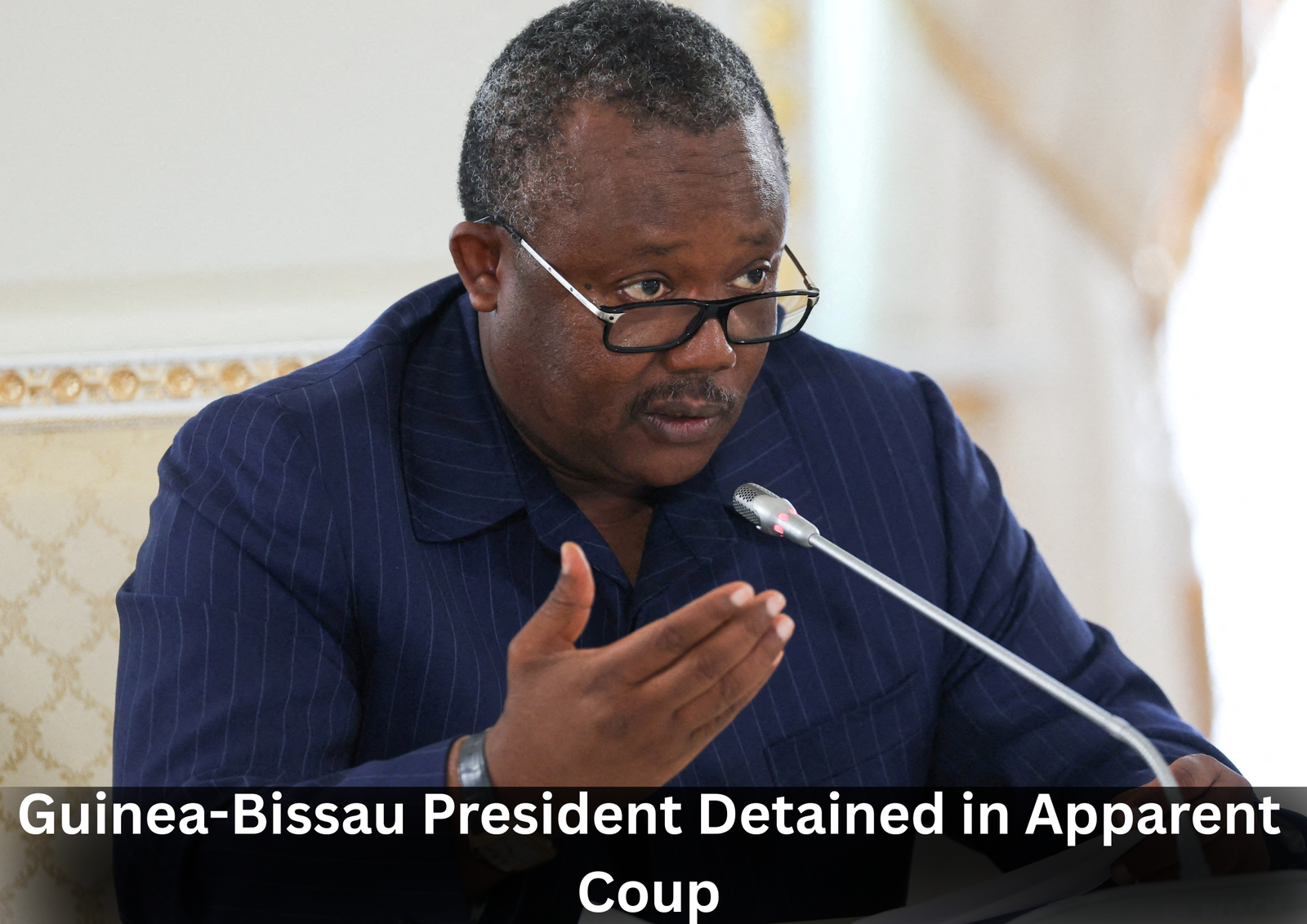
Guinea-Bissau was thrust into fresh political turmoil on November 27, 2025, after President Umaro Sissoco Embalo was detained by members of the country’s military in what regional leaders are calling an attempted coup. The dramatic confrontation unfolded in the capital, Bissau, and quickly triggered regional alarm as communication networks across the nation abruptly collapsed.
According to officials familiar with the events, armed members of the national guard entered the government palace and took the president into custody while additional units surrounded his private residence. For several tense hours, the country’s leadership appeared effectively paralyzed, with internet and phone lines severely disrupted, leaving citizens with little clarity about unfolding events.
Embalo was later released from custody and transported out of the country. By Thursday evening, he had arrived in Dakar, Senegal, though his exact circumstances and next steps remained uncertain. Senegalese authorities have not yet commented publicly on the conditions of his arrival or on whether he requested asylum.
The Economic Community of West African States (ECOWAS) swiftly condemned the developments, calling for the “immediate and unconditional restoration of constitutional order.” The bloc, which has dealt with a wave of military takeovers across the region in recent years, urged Guinea-Bissau’s armed forces to step back from political intervention. The African Union and United Nations are also monitoring the situation closely, though their formal responses are still pending.
The crisis marks another chapter in Guinea-Bissau’s fraught political history. Since gaining independence in 1974, no president has served a full term, and military interference has been a recurring feature of national politics. Embalo, a former army general who took office in 2020, previously claimed to have survived an attempted coup in 2022. Analysts have long warned that deep-seated corruption, power struggles within the political elite, and the outsized influence of the military continue to destabilize governance. The country also faces international scrutiny as a transit hub for Latin American cocaine traffickers, adding further pressure on state institutions.
As of now, it remains unclear who is effectively leading the country. No senior military commander has appeared on national television to announce a takeover-an unusual silence in a region where coups typically follow a predictable script. The whereabouts of several senior government officials are also unknown.
With uncertainty hanging over Bissau, diplomatic observers warn that the situation could escalate quickly if negotiations fail or if rival factions within the military pursue control. For now, Guinea-Bissau’s political future remains suspended, with citizens and international partners watching closely for the next move.