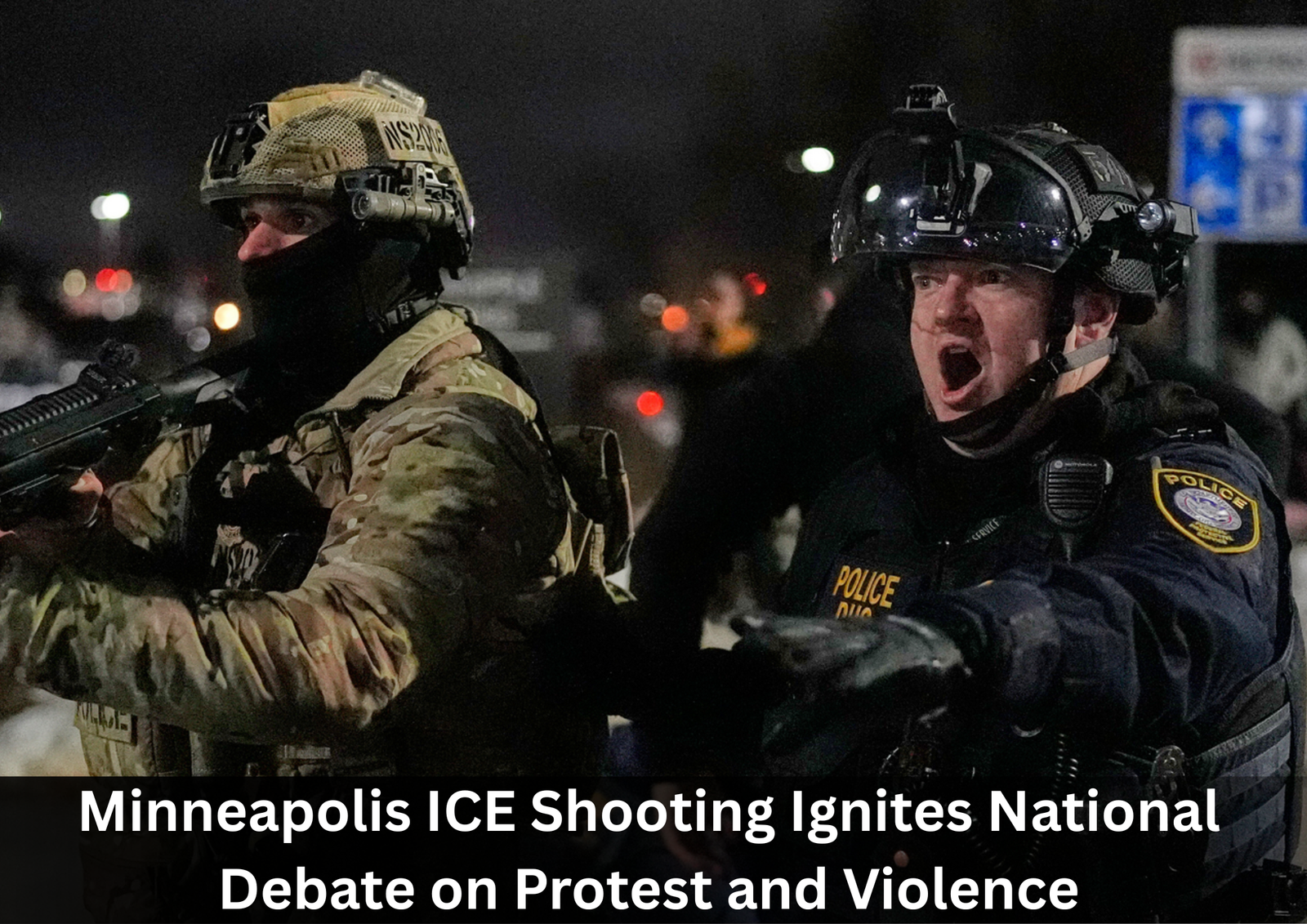
A shooting at a U.S. Immigration and Customs Enforcement facility in Minneapolis has intensified a nationwide conversation about political violence, civil protest, and the resilience of democratic institutions in the United States.
The incident occurred Monday at the ICE facility on Minnehaha Avenue during a demonstration opposing federal immigration enforcement policies. Authorities identified the suspect as Alex Pretti, who was reportedly carrying a handgun at the time of the confrontation. Law enforcement officials said Pretti was shot and subdued by responding officers. While injuries were confirmed, officials have not released detailed information regarding the number of victims or the seriousness of their conditions.
The protest in Minneapolis was part of a broader wave of demonstrations held across multiple cities, reflecting mounting opposition to current immigration practices. What began as a political gathering escalated rapidly, transforming the site into a focal point for a much larger national debate.
Public reaction to the shooting has been sharply divided. Some commentators and political observers argue the event reflects deeper systemic pressures within American society. They contend that rising tensions, particularly surrounding immigration enforcement and civil liberties, have contributed to an environment where frustration and alienation are increasingly visible. From this perspective, the violence is viewed not as an isolated act, but as a warning sign of broader democratic strain.
Others strongly reject that framing. Government officials and public safety advocates have labeled the shooting an act of domestic extremism, stressing that political grievances cannot justify violence. They argue that such incidents undermine lawful protest movements, threaten public safety, and weaken democratic discourse.
The shooting has also revived questions about how democratic governments should respond to mass opposition against their own policies. Analysts note the challenge lies in preserving public order while safeguarding constitutional rights, particularly during moments of heightened political polarization. The Minneapolis incident has brought renewed attention to the fine line between maintaining security and addressing the grievances that fuel public unrest.
As investigations continue, the event is increasingly viewed as more than a local criminal case. For many Americans, it has become a symbol of the growing friction within the political system and a reminder of the urgent need to confront escalating divisions before further violence occurs.
Don’t miss this important read-Federal Judge Stops ICE From Deporting 5-Year-Old U.S. Citizen in Minnesota reveals alarming details that demand attention and understanding right now.