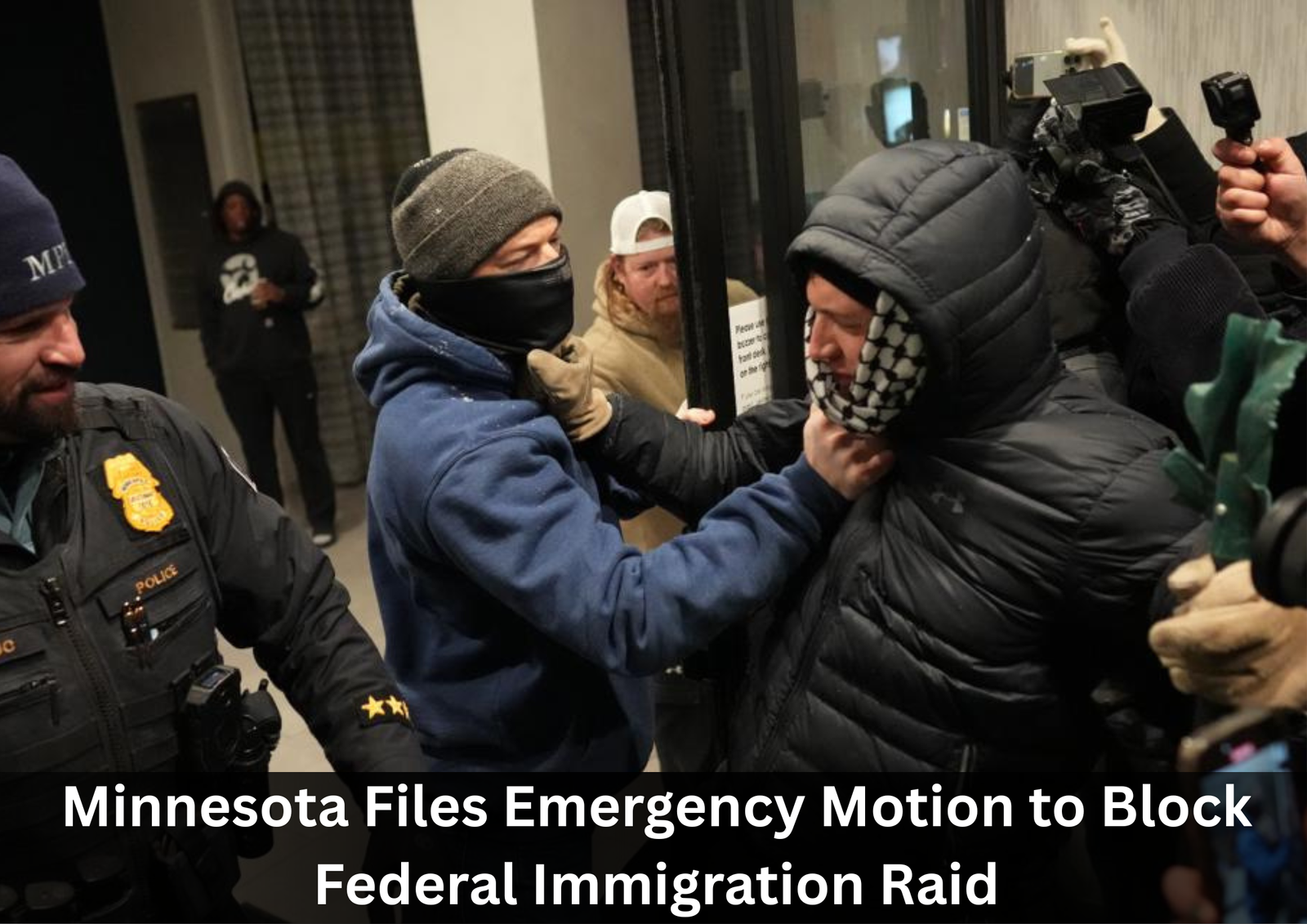
The State of Minnesota has initiated an emergency legal effort to stop a proposed federal immigration enforcement operation, filing a lawsuit and requesting a temporary restraining order in U.S. District Court in Minneapolis on Monday.
The action challenges a reported plan by the federal government to deploy immigration enforcement agents to Minnesota, including the Minneapolis area. A federal judge heard arguments from both sides on the same day the filing was submitted, but no immediate ruling was issued.
State Raises Constitutional Concerns
In its court filings, Minnesota argues that the planned deployment oversteps federal authority and infringes on state sovereignty. The lawsuit asserts that forcing cooperation from state or local agencies would violate constitutional principles that limit federal power, particularly those related to federalism and the Tenth Amendment.
State attorneys also claim the operation may represent retaliation against Minnesota for its immigration-related policies, including local measures designed to limit cooperation with federal enforcement. Such actions, the state argues, could raise additional constitutional concerns if found to be politically motivated.
Claims of Improper Purpose and Procedure
Beyond jurisdictional issues, Minnesota contends the proposed operation lacks a legitimate public safety justification. The filing alleges the plan could disproportionately target immigrant communities and was not developed through required administrative processes. According to the state, these factors raise serious legal questions that warrant immediate judicial review.
Minnesota officials emphasized that the state retains the right to determine how its own resources are used and to prioritize community safety in ways it deems appropriate.
Federal Government Pushes Back
During the court hearing, attorneys representing the federal government argued that the lawsuit is premature. They maintained that the executive branch has broad authority over immigration enforcement and that states cannot block federal actions before they are carried out.
The government also asserted that the court may lack jurisdiction at this stage, noting that the enforcement activity has not yet occurred and should be treated as a routine exercise of federal law enforcement powers.
Judge Takes Matter Under Review
U.S. District Judge Nancy Brasel did not issue an immediate decision following oral arguments. Instead, she indicated the matter would be reviewed further, with a written ruling on the request for a temporary restraining order expected at a later date.
Broader Implications
Legal analysts say the case could have wider implications for the ongoing debate over immigration enforcement and state-federal relations. A ruling in favor of Minnesota could clarify the limits of federal authority when states decline to participate in immigration operations, while a rejection of the request could reinforce federal discretion in enforcement decisions.
For now, the proposed deployment remains on hold as the court considers its next steps.
Don’t miss this deep dive on “Trump Raises Tariffs on South Korean Goods to 25% Over Trade Deal Delays”-read the full blog to understand the global trade impact and what comes next.