
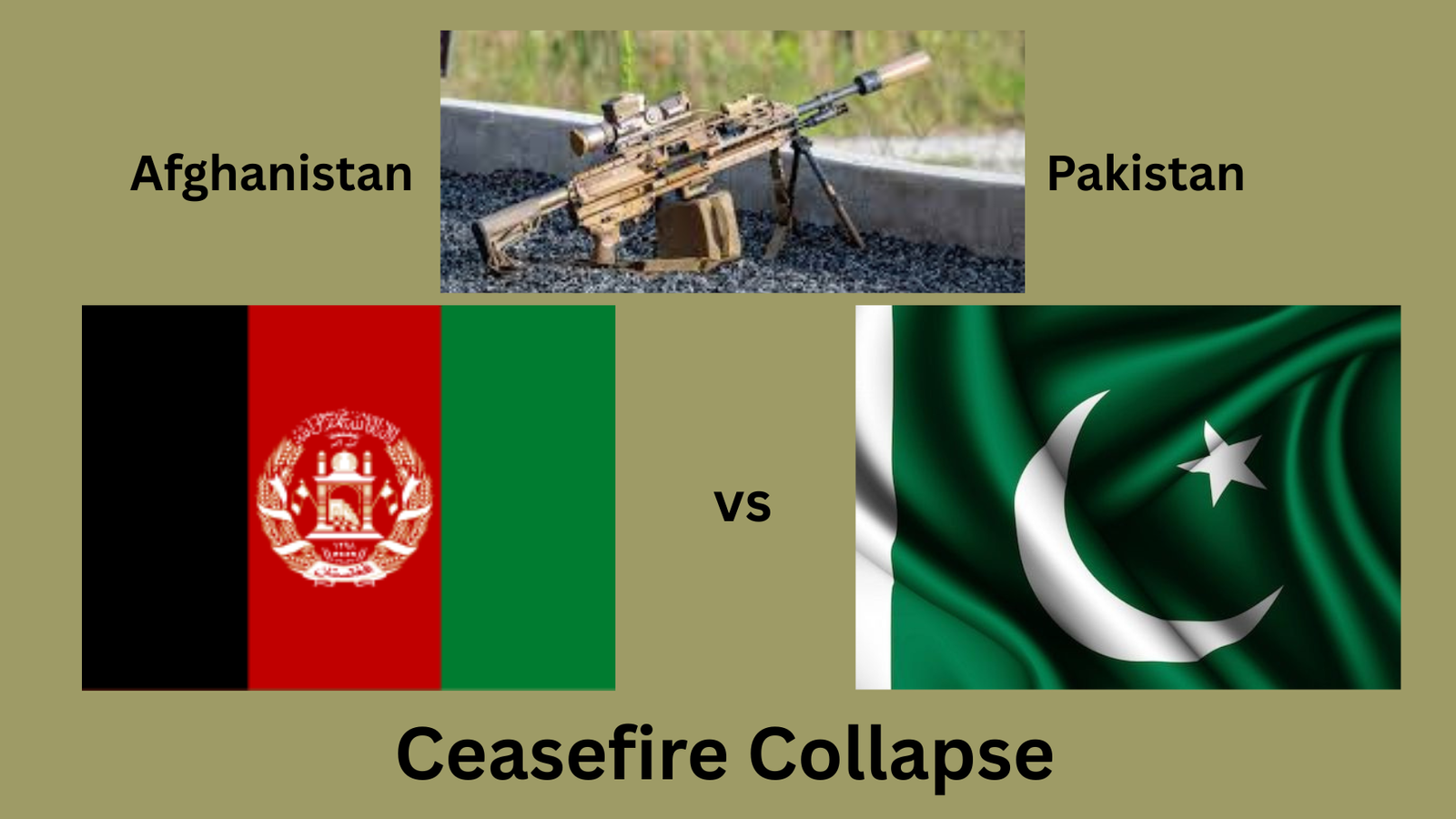
ISLAMABAD / KABUL – The latest round of peace negotiations between Pakistan and Afghanistan’s Taliban-led government has broken down, ending a short-lived ceasefire and reigniting border hostilities along the volatile Durand Line. The discussions, held in Istanbul under the mediation of Turkey and Qatar, were aimed at halting weeks of escalating cross-border attacks but concluded without progress.
Pakistan’s Interior Minister, Mohsin Naqvi, confirmed on October 28 that “the talks did not produce the expected outcome,” signaling the end of the fragile truce that had only lasted two days. Within hours of the announcement, reports surfaced of renewed artillery exchanges near the Khost and Kurram regions, forcing civilians on both sides to flee their homes.
Taliban’s Warning to Pakistan
Tensions escalated further after Afghan Interior Minister Sirajuddin Haqqani released an audio message condemning Pakistan’s recent actions. “Pakistan, you are making a big mistake. This will cost you dearly,” Haqqani declared, accusing Islamabad of targeting Afghan civilians and deflecting blame for its own domestic insecurity. He warned that while Afghanistan prefers peace, the Taliban would “defend its sovereignty and land with full determination” if provoked.
Afghan officials have repeatedly claimed that Pakistani military strikes are killing and displacing innocent civilians in eastern provinces. Pakistan, however, insists that its operations target militants from Tehrik-e-Taliban Pakistan (TTP) – a group Islamabad says operates from Afghan soil and carries out attacks across the border.
The Deepening Border Crisis
The collapse of the talks comes amid some of the deadliest confrontations along the border since the Taliban regained power in 2021. The Durand Line, a 2,600-kilometer frontier demarcated during the British colonial era, remains a historic flashpoint between the two neighbors. Afghan authorities have never officially recognized the border, and frequent skirmishes have worsened relations that were already strained by mutual accusations of harboring insurgents.
Local sources report that dozens of homes in Afghanistan’s Khost and Paktika provinces have been damaged by recent shelling. Humanitarian groups are warning of a growing refugee crisis as families flee to safer areas, adding new challenges for both governments already struggling with economic instability and public unrest.
Global Calls for Calm
Despite the breakdown, Turkey, Qatar, and the United States have urged both countries to exercise restraint and return to dialogue. A Turkish Foreign Ministry statement described the situation as “deeply concerning” and emphasized that continued confrontation “will only worsen humanitarian suffering and regional instability.”
Diplomats involved in the Istanbul process remain hopeful that quiet backchannel communications could resume in the coming days, but analysts warn that neither side appears ready to make concessions.
As tensions mount, border residents fear that the renewed fighting could spiral into a wider regional conflict. For now, the ceasefire has collapsed, and the fragile hope for peace between Pakistan and Afghanistan remains uncertain – overshadowed by gunfire and growing mistrust on both sides of the Durand Line.


