
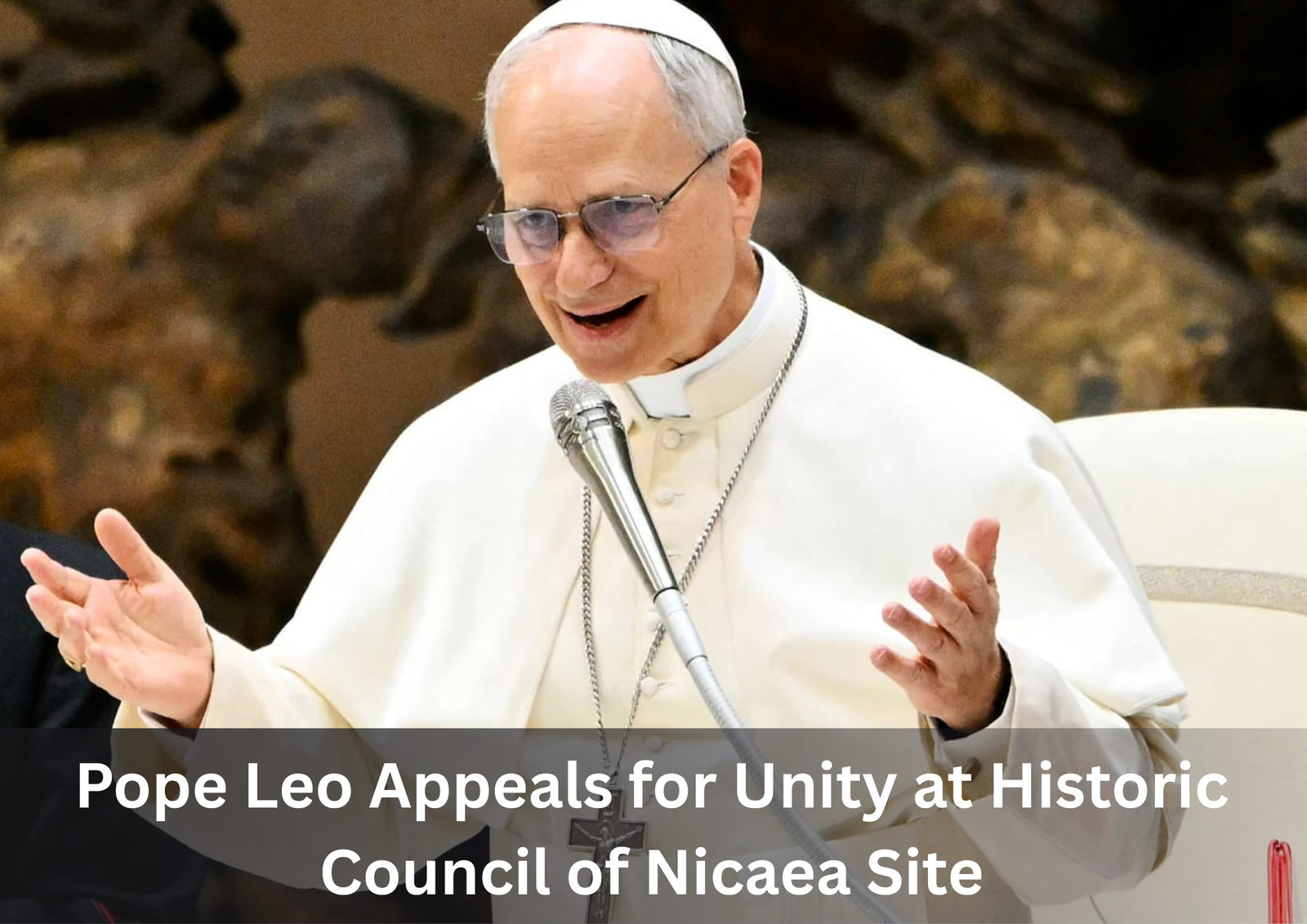
Pope Leo’s first journey abroad since his election became a powerful moment of history and faith on Friday, as he traveled to the town of Iznik-ancient Nicaea-to visit the site where Christian bishops gathered nearly 1,700 years ago for the First Council of Nicaea. The visit, filled with symbolism, highlighted the Pope’s intention to strengthen Christian unity and deepen interfaith dialogue.
Prayers at the Basilica Ruins
Standing among the submerged remains of a fourth-century basilica on the shores of Lake Iznik, Pope Leo paused for prayer at a place many scholars believe hosted the famous council of 325 AD. He was joined by two major Orthodox leaders: Ecumenical Patriarch Bartholomew I and Patriarch Theophilus III of Jerusalem.
Together, the three leaders recited the Nicene Creed, reaffirming beliefs that shaped the foundation of Christianity. Pope Leo called the historic site “sacred ground where the early Church stood firm in proclaiming the divinity of Christ.”
A Moment of Ecumenical Unity
The gathering marked one of the most visible displays of cooperation between the Catholic and Orthodox churches in recent years. Relations between the two branches have slowly improved after centuries of division that began with the Great Schism of 1054. During his remarks, Pope Leo emphasized the shared roots of both traditions, saying that Christians “must walk forward as guardians of the same ancient faith.”
Religious observers noted that the event echoed the efforts of previous popes while signaling that the new pontiff intends to prioritize healing old fractures within global Christianity.
Why Nicaea Matters
The First Council of Nicaea, convened by Emperor Constantine I, addressed a major theological dispute sparked by the teachings of the priest Arius, who argued that Jesus was created by God and therefore not fully divine. After weeks of debate, the council rejected the teaching and produced the original form of the Nicene Creed, asserting that Christ is “of one substance with the Father.”
Historians regard the council as one of the most pivotal moments in Christian development-establishing teachings still professed in churches today.
Diplomatic and Interfaith Efforts
The Pope’s schedule also included a meeting with Turkish President Recep Tayyip Erdoğan in Ankara. Their discussion reportedly included the humanitarian crisis in Gaza amid continuing conflict in the region. Later, Pope Leo visited the Haci Bayram Mosque, where he offered prayers for peace and called for cooperation among religions to counter violence carried out in the name of faith.
The visit underscored the Vatican’s increasing efforts to promote dialogue with Muslim communities, especially at a time of global tension.
A Trip Setting the Tone for a New Papacy
By choosing Nicaea as the setting for his first international appearance, Pope Leo delivered a clear message about his priorities-honoring the foundations of Christian belief, extending a hand to Orthodox brothers, and building bridges with world leaders and other faiths.
The journey, both spiritual and diplomatic, is expected to shape the early identity of his papacy and may influence future efforts toward unity and global peace.


