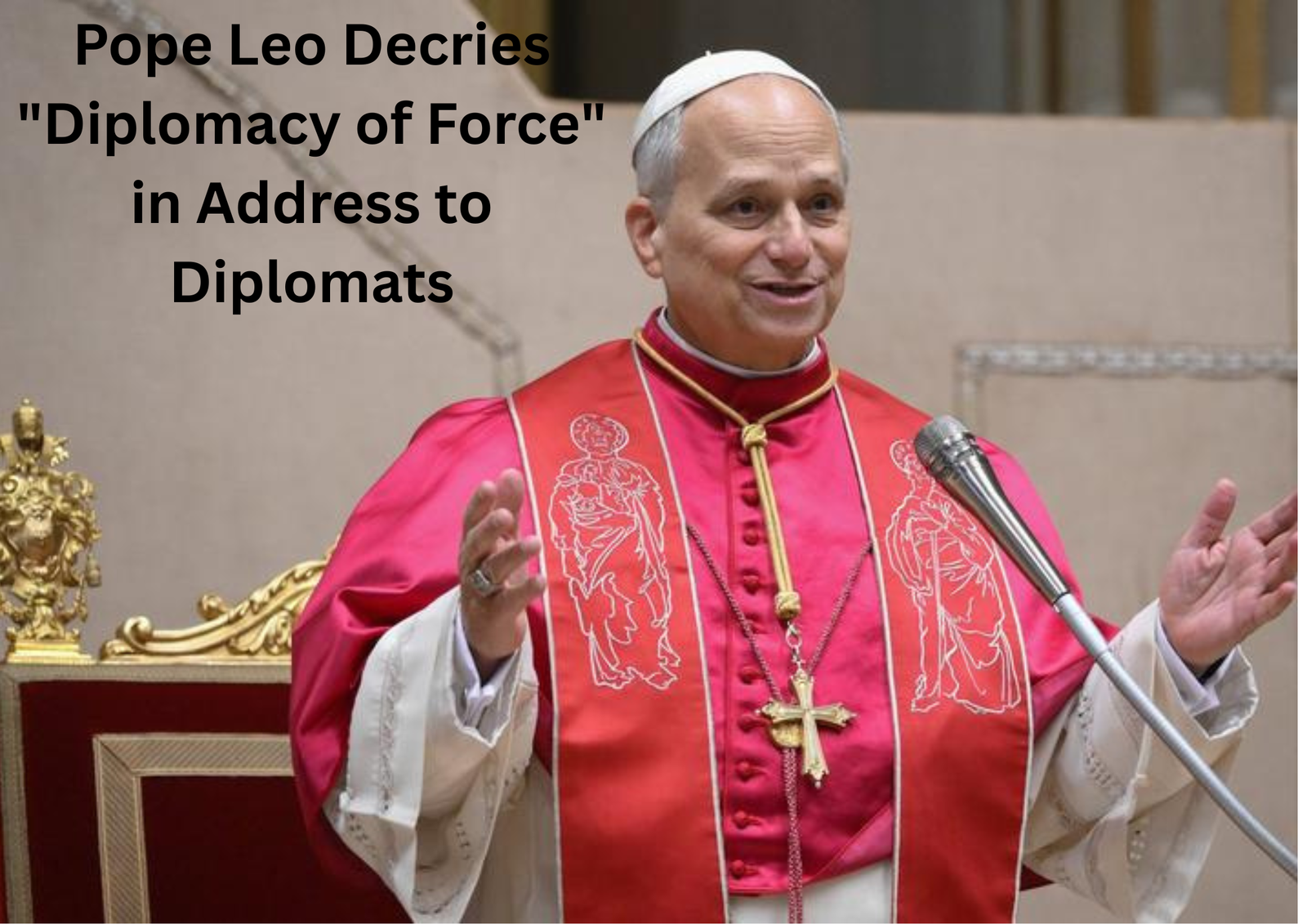
Pope Leo used his annual briefing to diplomats at the Holy See on Friday to issue an appeal for world powers to abandon military-centered diplomacy in favor of dialogue, law, and negotiated peace. Speaking from the Vatican’s Hall of Blessings, the Pope described international reliance on force as a “dangerous path” that undermines global stability and humanitarian values.
During the speech, considered one of the most important diplomatic events on the Vatican calendar, the Pontiff drew attention to several active international crises. He criticized what he called a fragmented or “piecemeal” approach to global peace, arguing that isolated regional solutions fail to address the broader pressures fueling conflict and instability.
One of the key concerns raised was the ongoing war between Russia and Ukraine. Pope Leo urged Moscow to halt military operations and commit to a cease-fire, while calling for the withdrawal of Russian forces from Ukrainian territory. He said the conflict illustrated a troubling shift in world affairs, where “the dynamics of power overshadow the dynamics of law.” Diplomats and analysts described his words as the Vatican’s clearest public intervention on the war to date.
The Pope also highlighted the humanitarian situation in Venezuela, describing the suffering of citizens as “unacceptable” and urging the international community to accelerate efforts toward a peaceful outcome to the country’s political and economic turmoil. He insisted that diplomatic pressure should focus on alleviating human suffering rather than escalating tensions.
Across his remarks, Pope Leo stressed that authentic peace cannot be secured through intimidation or coercion. Instead, he argued that durable stability requires justice, legal norms, and sustained dialogue between conflicting parties. According to Vatican observers, the speech reaffirmed the Holy See’s long-standing stance against militarism and its preference for negotiated settlements in diplomatic disputes.
The annual address has traditionally served as a roadmap for the Vatican’s foreign policy priorities for the year ahead and is attended by ambassadors from dozens of nations accredited to the Holy See. This year’s edition comes at a time of heightened geopolitical strain, with armed conflicts, migration crises, and economic shocks continuing to shape the international landscape.
As Pope Leo concluded his remarks, he reminded attendees that diplomacy grounded in the “force of law” remains the most reliable path toward a peaceful world, calling on governments to resist policies that rely on military dominance or coercion. The message was received as both a critique of prevailing geopolitical trends and a renewed appeal for collective responsibility in resolving global disputes.
EU Greenlights Landmark Trade Pact With Mercosur After Decades of Negotiations – make sure to read this full blog to understand its global impact.