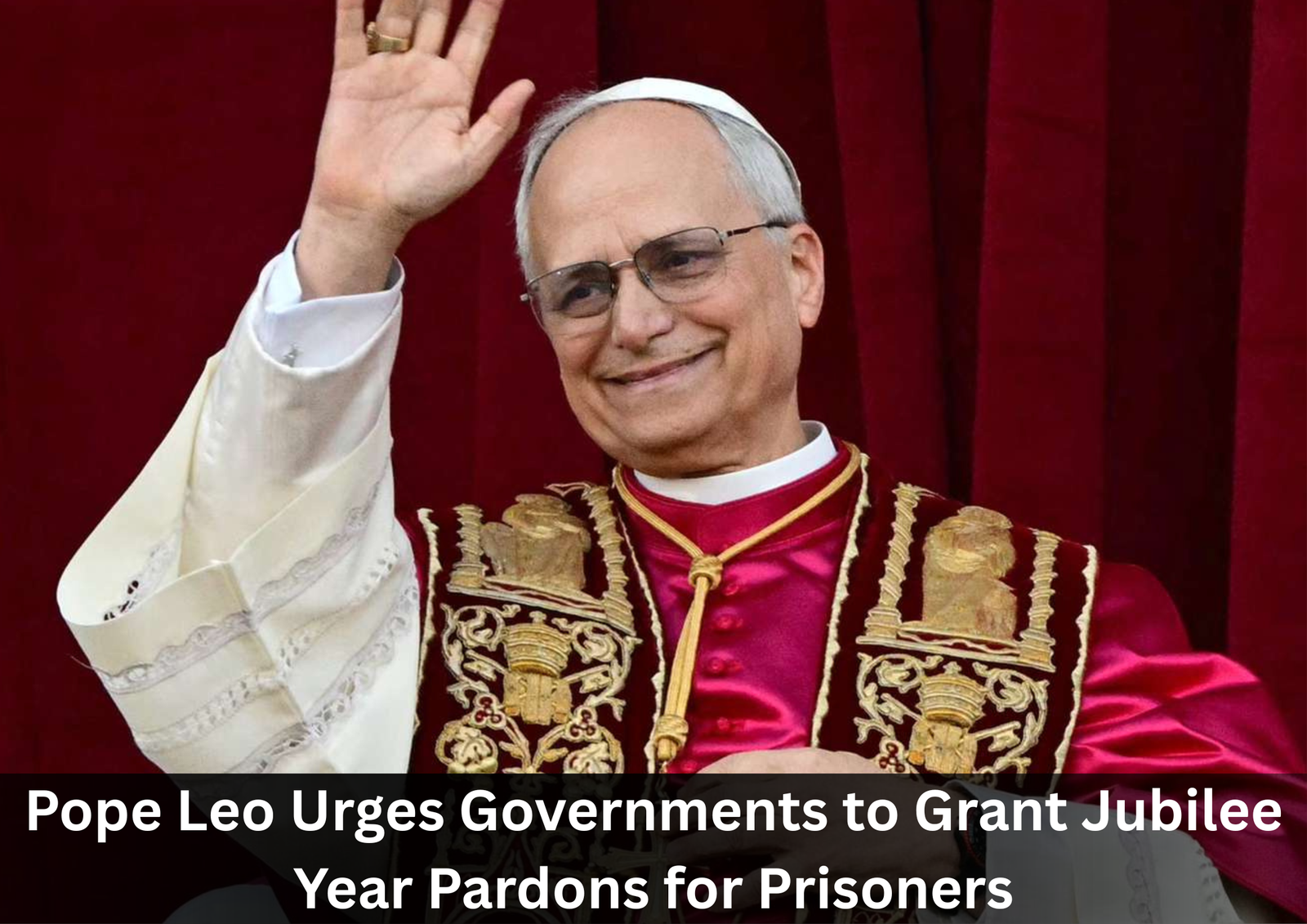
Pope Leo XIV on Sunday marked the final major event of the Holy Year with a powerful appeal for compassion, rehabilitation, and reform within global justice systems. Presiding over a special Jubilee Mass dedicated to prisoners and those who work within correctional institutions, the pontiff called on governments to consider pardons and amnesties, stressing that human dignity must never be reduced to past mistakes.
The Mass, held at St. Peter’s Basilica, brought together around 6,000 participants from nearly 90 countries. Those present included inmates, former detainees, family members, prison chaplains, correctional officers, police officials, and prison administrators. Delegations arrived from across Europe, Africa, Asia, the Americas, and Oceania, reflecting the global scope of the Jubilee of Prisoners and the universal message at its core.
In his homily, delivered on Gaudete Sunday-the Third Sunday of Advent traditionally associated with joy-Pope Leo reminded the congregation that the Holy Year may be ending, but the responsibility to build humane and hopeful justice systems continues. He echoed a message first emphasized by his predecessor, Pope Francis, who had opened the Holy Door of the Holy Year inside Rome’s Rebibbia prison in late 2024. That symbolic act, Pope Leo said, was a reminder that hope must reach even the most forgotten places.
“No human life is defined only by wrongdoing,” the Pope said, urging societies to move beyond purely punitive models of justice. According to him, true justice must always leave room for healing, reconciliation, and new beginnings. He emphasized that punishment alone cannot restore individuals or communities, and that lasting peace requires opportunities for change and reintegration.
A central focus of the Pope’s address was a renewed call for mercy at the national level. Referring to the biblical meaning of a Jubilee as a time of restoration and freedom, he expressed hope that governments would adopt measures allowing prisoners to rebuild confidence in themselves and reconnect with society. Amnesty and pardon initiatives, he said, can serve as meaningful steps toward social healing when paired with responsibility and support.
Pope Leo also addressed the practical realities facing prison systems worldwide. He pointed to chronic overcrowding, limited access to education, and insufficient job training as major barriers to rehabilitation. Without addressing these issues, he warned, prisons risk becoming places of despair rather than transformation. At the same time, he acknowledged the emotional burdens carried by those behind bars, including guilt, broken relationships, and the temptation to lose hope.
Despite these challenges, the Pope highlighted the potential for growth even in the harshest environments. Acts of kindness, forgiveness, and solidarity, he noted, can take root even within prison walls. Such efforts, he said, are essential not only for prisoners but also for those entrusted with their care and supervision. While faith allows room for miracles, Pope Leo added that change more often comes through everyday human compassion, patience, and wisdom.
The Mass also featured a symbolic element reflecting this message of dignity through work. The Communion hosts used during the liturgy were produced by inmates participating in a long-running social project that provides prisoners with skills, responsibility, and meaningful employment. The initiative now involves hundreds of inmates each year and supplies religious communities both in Italy and abroad.
As he concluded the celebration, Pope Leo returned to a central theme of his papacy: that no one should be written off. He encouraged everyone involved in the justice system to persevere, even when progress seems slow. Hope, he said, is sustained by the belief that change is always possible and that no life is beyond redemption.
“The Lord is near,” the Pope told those present, offering reassurance to prisoners and prison workers alike. With faith, cooperation, and commitment to human dignity, he said, even places marked by suffering can become spaces where something new and life-giving begins.
The Jubilee of Prisoners brought the Holy Year to a close, but its message-mercy over exclusion, rehabilitation over despair-now moves beyond the walls of the Vatican, challenging societies worldwide to reflect on how justice is practiced and lived.