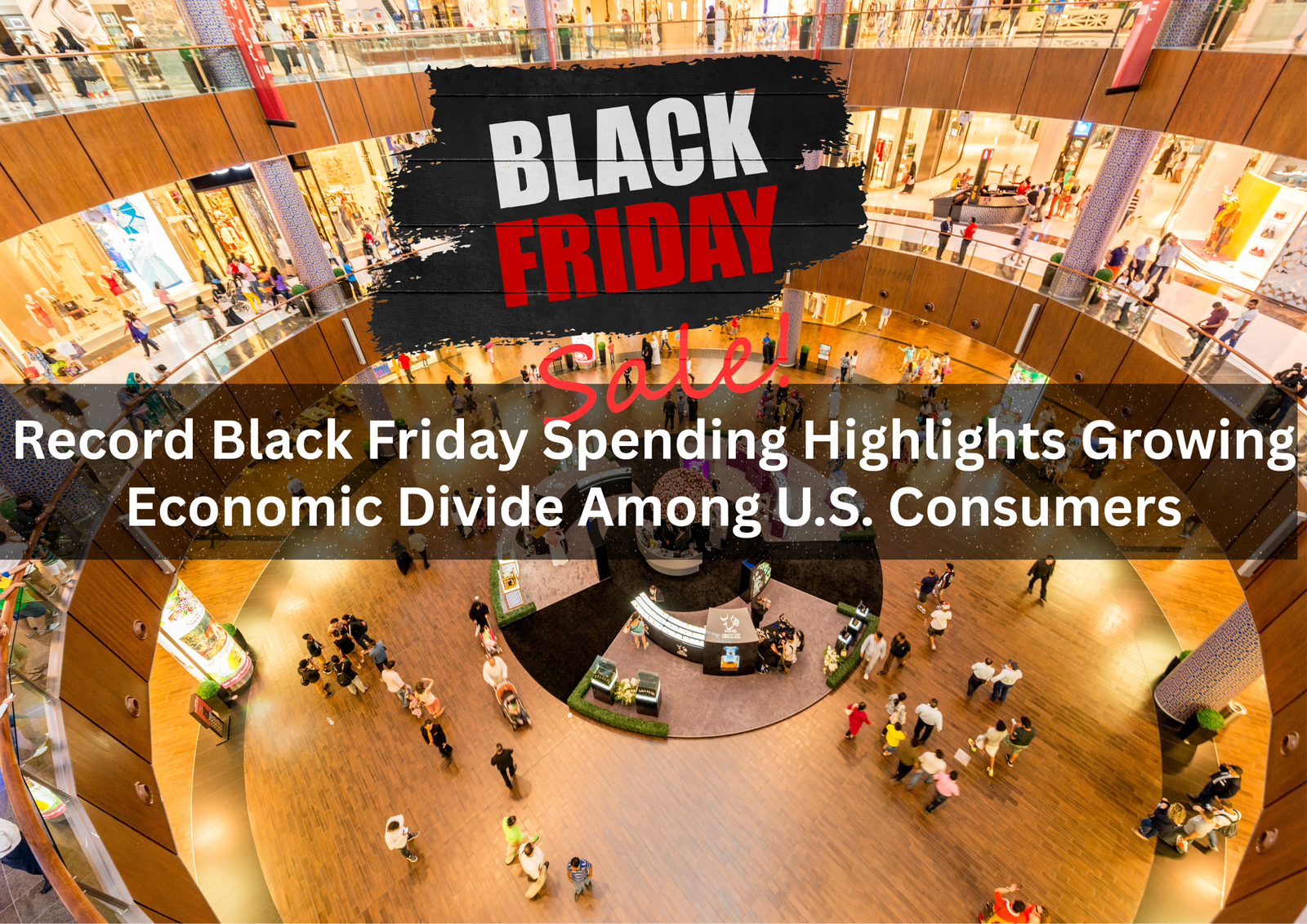
Black Friday online spending in the United States reached an unprecedented level this year, climbing to an estimated $40 billion and marking one of the strongest starts to a holiday shopping season. But while the headline numbers point to robust consumer activity, analysts say the data also reveals a widening divide in how Americans are experiencing the economy.
Preliminary retail figures show online spending rose about 7% from last year, with total digital sales from November 1 through Black Friday surpassing $175 billion. Traditional retailers also saw an uptick in in-person activity, as national foot-traffic measurements indicated a 3.2% year-over-year increase.
A Clear Split in Shopping Behavior
Despite strong overall numbers, retail analysts say the results reflect a “K-shaped” pattern one in which higher-income shoppers continue to spend freely, while many middle- and lower-income households are stretching budgets and limiting purchases.
Luxury retailers and upscale department stores reported some of the strongest growth of the season so far, boosted by affluent shoppers buying premium goods. Meanwhile, discount chains and big-box stores saw more cautious spending, with customers focusing heavily on necessities, doorbuster deals, and the lowest-priced items.
Rising costs of living, high interest rates, and the restart of student loan payments have forced many shoppers to carefully plan holiday purchases, leading to a sharp contrast in consumer behavior across income levels.
AI Becomes a Mainstream Shopping Tool
One of the most notable developments this year was the widespread use of AI-powered shopping tools. Consumers increasingly relied on artificial intelligence to compare prices, track product availability, uncover deals, and receive personalized recommendations.
Retailers themselves leaned heavily on AI technologies, using them to:
Tailor promotions to individual shoppers
Adjust discounts dynamically
Provide customer service support through automated chat systems
Industry experts say these technologies played a significant role in boosting online conversion rates and simplifying decision-making for consumers.
What Shoppers Bought
The biggest sales spikes were seen in electronics, including:
Laptops
Televisions
Smartwatches and wearable devices
Other strong categories included toys, kitchen and home appliances, clothing, and early holiday decorations.
Analysts say the momentum from Black Friday continues a trend seen during last year’s historic Cyber Monday, indicating that the most critical stretch of the holiday shopping season is now underway with significant consumer energy—albeit unevenly spread across economic groups.