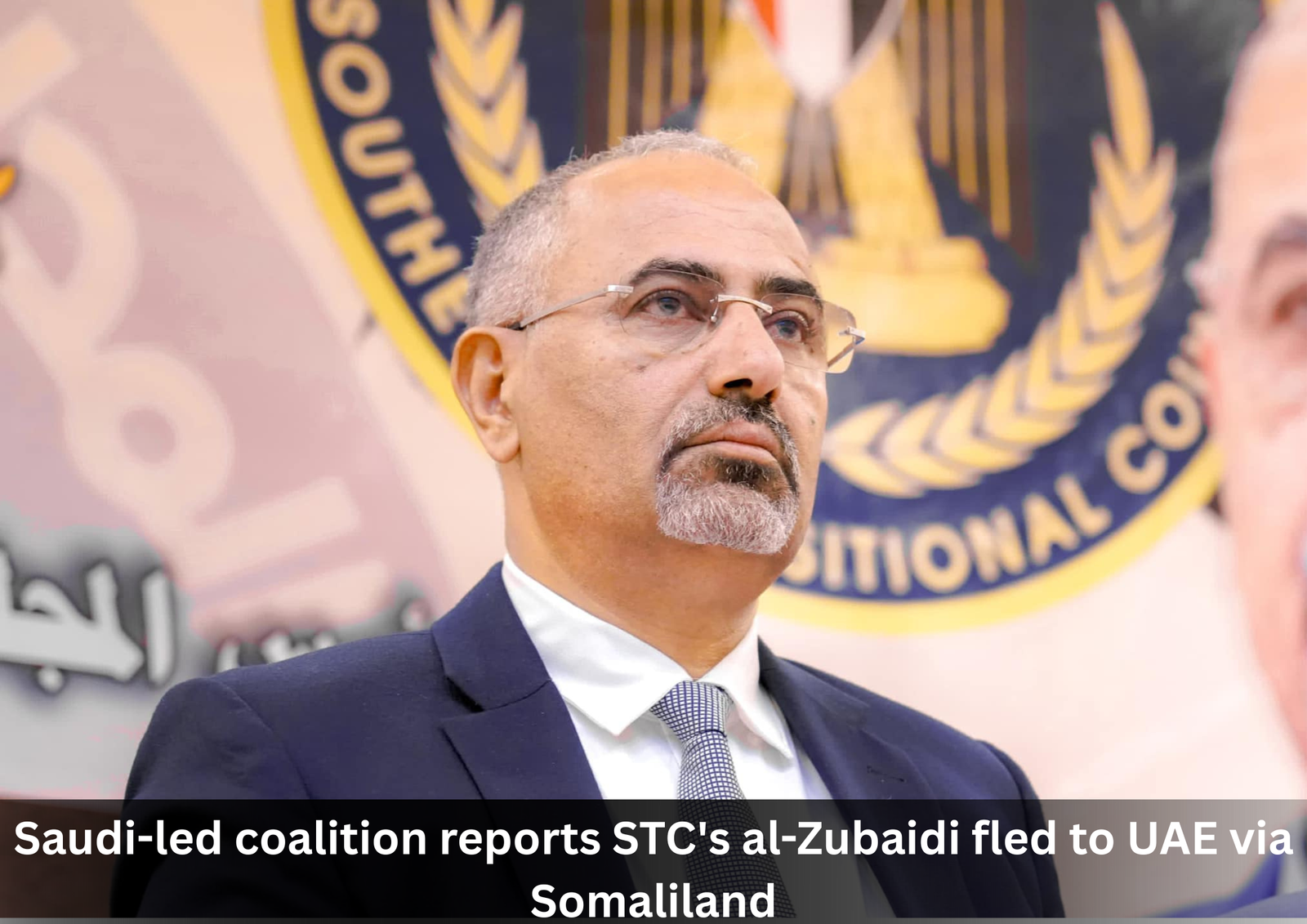
Tensions inside Yemen’s anti-Houthi alliance escalated this week after Aidarous al-Zubaidi, a senior figure in the Southern Transitional Council (STC), departed from the city of Aden and entered the United Arab Emirates following a brief stop in Somaliland, according to public statements from the Saudi-led coalition.
Al-Zubaidi, who also serves as Vice Chairman of Yemen’s Presidential Leadership Council (PLC), reportedly left Aden on Monday amid heavy political friction between factions nominally united against the Houthi movement. Sources affiliated with the Saudi-backed coalition said his departure was facilitated by the UAE, a claim that quickly intensified diplomatic friction within the bloc.
The UAE is the principal supporter of the STC, while Saudi Arabia has championed the broader PLC framework. The two approaches-one backing southern separatist ambitions and the other emphasizing centralized governance-have periodically clashed throughout the conflict.
Security Crisis in Aden
Fighting between STC-aligned units and pro-government forces intensified in recent days, prompting fears of a renewed local conflict in the south. After Al-Zubaidi’s exit, STC-linked forces reportedly moved to secure several state institutions in Aden, including the presidential palace in Maashiq and the Central Bank building, strengthening the group’s hold over the city.
Saudi forces deployed troops and armored vehicles to Aden on Tuesday in what officials described as an effort to stabilize key facilities and prevent further deterioration in security. Witnesses reported increased patrols around strategic locations.
Coalition Friction Comes to the Surface
The Saudi-led coalition publicly criticized the UAE over the circumstances surrounding Al-Zubaidi’s travel, characterizing it as a breach of the Riyadh Agreement, a Saudi-brokered power-sharing pact designed to keep various anti-Houthi actors working in coordination.
The STC has not confirmed the leader’s exact whereabouts but stated that his travel was necessary due to “security concerns.”
Impact on the Anti-Houthi Campaign
Analysts note that the latest developments signal a rare and serious public split between coalition partners who have long cooperated militarily against the Houthis, who continue to control northern Yemen including Sanaa.
While all major factions maintain they remain committed to countering the Houthis, the dispute in Aden underscores enduring questions over authority, governance, and the future political structure of Yemen. Southern factions have long pushed for eventual statehood, a goal not shared by the internationally recognized government.
Diplomats warn that the widening rift could complicate ongoing international efforts to secure a durable settlement to Yemen’s long conflict, especially at a moment when negotiations with the Houthis remain fragile.
Trump Team Weighs Cash Incentives for Greenland Residents as Bid to Secure Arctic Territory Intensifies – read this full blog, you’ll definitely want to check out my other site too!