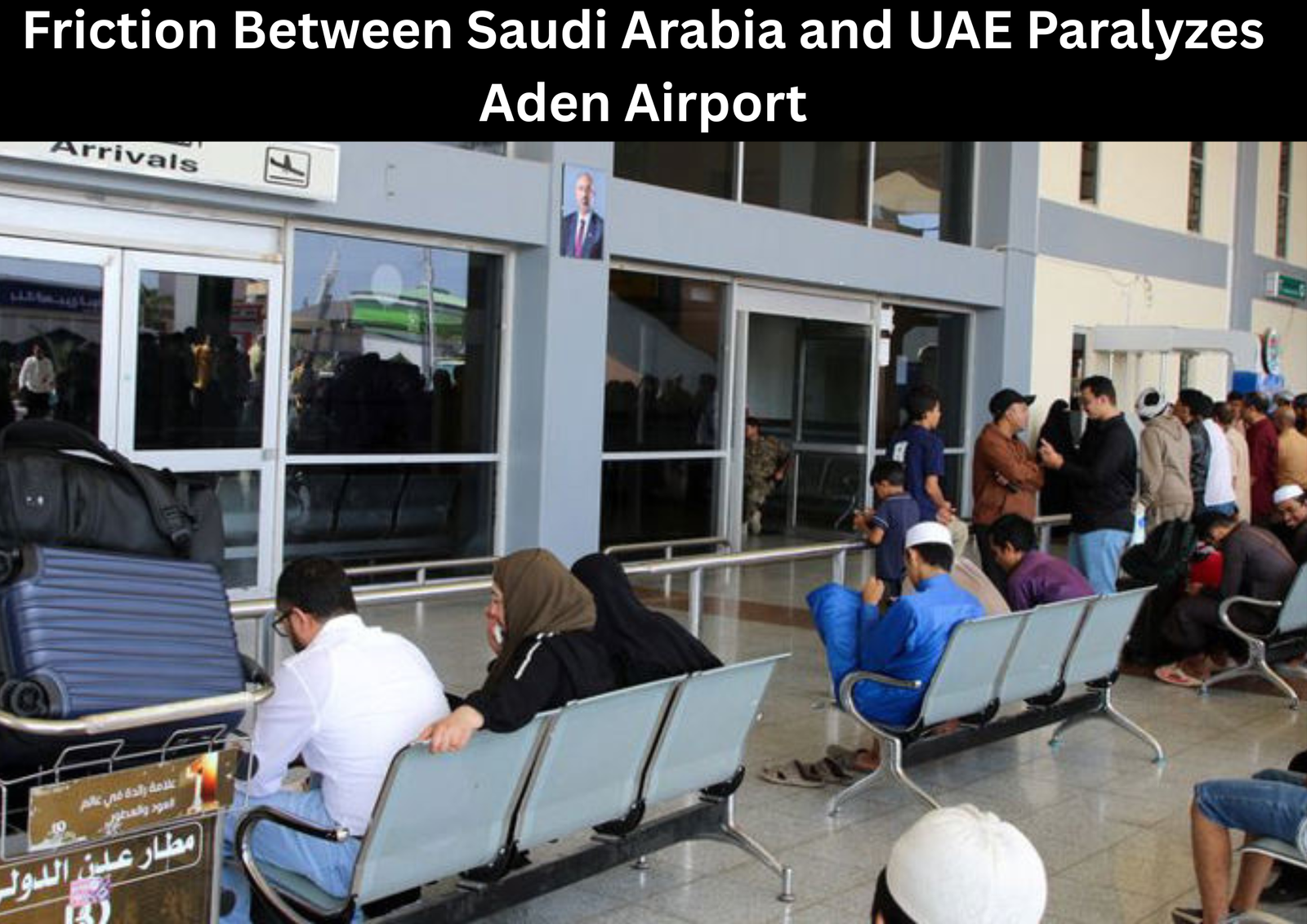
A growing divergence between Saudi Arabia and the United Arab Emirates over Yemen’s political future became more visible this week after flight disruptions at Aden International Airport and renewed disagreements over territorial control in the country’s east.
The developments highlight the fragile nature of alliances within the long-running Yemen conflict, where former partners now appear increasingly at odds over strategy, governance, and regional security priorities.
Flight Disruptions Add Pressure to an Already Fragile Situation
Operations at Aden International Airport, a key travel hub for southern Yemen, were temporarily suspended amid confusion over new flight restrictions. The halt affected commercial passengers, medical travelers, and aid-linked movements, raising humanitarian and economic concerns.
Conflicting explanations emerged regarding the decision. Officials aligned with southern authorities suggested the suspension followed new inspection requirements for certain international routes. Others indicated that the broader shutdown went beyond the original scope of the restriction and was not officially endorsed by Yemen’s internationally recognized leadership.
While airport services have since begun gradual normalization, the episode exposed deeper political tensions behind the scenes.
Strategic Disagreements in Yemen’s Eastern Provinces
At the center of the dispute are Yemen’s eastern provinces, including Hadramout and al-Mahra-areas of major economic and strategic importance. These regions border Saudi Arabia and contain key infrastructure assets, including oil facilities and potential energy transit routes.
The Southern Transitional Council (STC), which advocates for an autonomous southern state, recently expanded its presence in these territories. In response, Saudi Arabia reiterated concerns that any unilateral military control near its border could pose long-term security risks.
In a move described by observers as a compromise, the STC announced it would permit the presence of Saudi-aligned government forces in parts of the region. However, analysts note that the arrangement stops short of a full withdrawal and does little to resolve fundamental disagreements over governance.
Former Allies, Diverging Goals
Saudi Arabia and the UAE initially entered the Yemen conflict with aligned objectives, but their priorities have gradually shifted. Riyadh continues to emphasize national unity and centralized governance, while Abu Dhabi has shown greater support for local power structures in the south.
This divergence has reshaped the balance of influence on the ground. Southern factions now control significant territory, while the internationally recognized government operates with limited physical authority inside the country.
Meanwhile, the Houthi movement maintains control over large parts of northern Yemen, including the capital, further complicating diplomatic efforts.
Regional and International Reactions
The latest developments have drawn attention from international observers, who warn that internal divisions could undermine already fragile peace initiatives. Diplomatic voices from the United Nations and Western partners have emphasized the importance of restraint and dialogue to prevent further escalation.
The UAE has also confirmed a continued reduction of its military footprint in Yemen, framing the move as part of a broader regional realignment rather than a response to any single incident.
What Comes Next
While immediate tensions have eased, the underlying political rift remains unresolved. Control over territory, security coordination, and Yemen’s future governance model continue to divide key regional players.
As Yemen enters another critical phase, analysts suggest that long-term stability will depend not only on ceasefire efforts but also on reconciling the competing visions held by its most influential external stakeholders.
Economic Pressures Ignite Fresh Wave of Protests Across Iran-read this detailed blog to understand the causes, public response, and wider implications shaping the country’s current economic and social landscape.