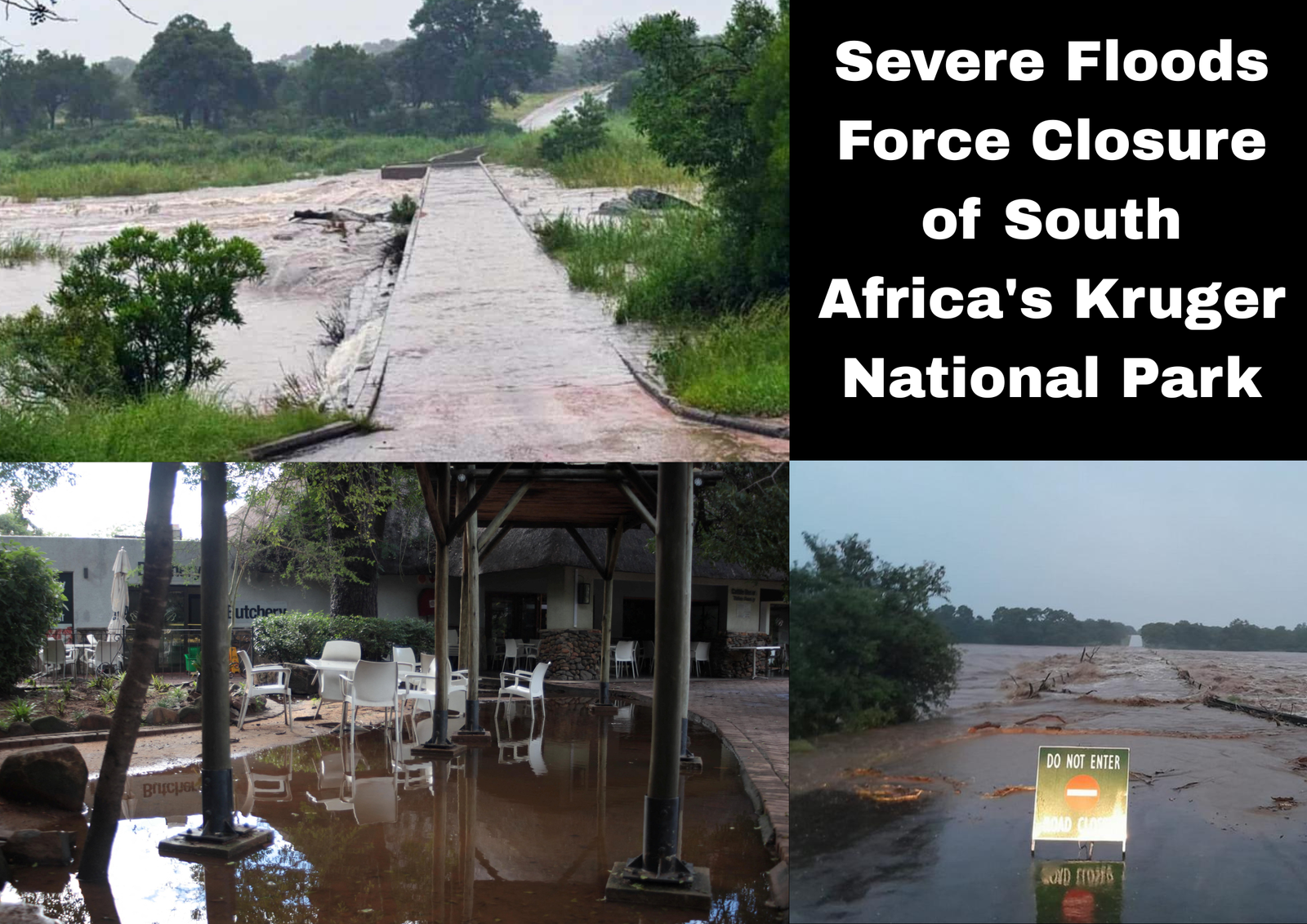
Torrential rains and intensified flooding across parts of South Africa and Mozambique have forced South Africa’s iconic Kruger National Park to shut its gates, marking one of the most disruptive weather events to hit the region in recent years. Key river systems burst their banks, communities were inundated, and authorities issued escalating weather alerts as emergency teams scrambled to assess damage.
Officials from South African National Parks (SANParks) confirmed on Thursday that the entire park was temporarily closed to visitors after days of relentless rainfall left internal road networks unsafe. The announcement included the closure of several rest camps inside the reserve, with management citing safety concerns and the continued threat of rising water levels.
Regions in the Lowveld recorded some of the heaviest impacts. Footage from the town of Hoedspruit, situated near the park’s western boundary, showed homes, vehicles, and small businesses partially submerged as runoff from swollen river systems engulfed streets. Travel throughout the area was severely disrupted, with authorities urging residents to avoid flooded zones.
Meteorologists attribute the extreme conditions to a powerful low-pressure system sweeping in moisture from the Indian Ocean. Weather trackers reported that certain areas received more than 200 millimeters of rain within a single 24-hour period – an amount described by analysts as exceptionally high for the month of January.
Major watercourses such as the Limpopo and Olifants rivers overflowed as upstream volumes surged, sending floodwaters further downstream toward Mozambique. In response, Mozambican officials issued a red alert – the country’s highest flood warning category – signaling the potential for displacement, agricultural losses, and infrastructure damage.
South Africa’s weather service has warned that heavy rainfall could persist in several provinces, raising the likelihood of further flooding and possible evacuations. While no serious tourist injuries have been reported inside the park, the closure represents a major operational setback for one of the region’s largest wildlife tourism destinations.
SANParks stated that reopening will only occur once conditions stabilize and safety inspections have been completed. In the meantime, emergency crews and government departments in both countries remain focused on public safety, recovery planning, and storm-related damage assessments as the system continues to move along its projected path.
“No Evidence Linking Acetaminophen Use in Pregnancy to Autism, Landmark Review Concludes – read this blog to understand why this topic matters right now.”