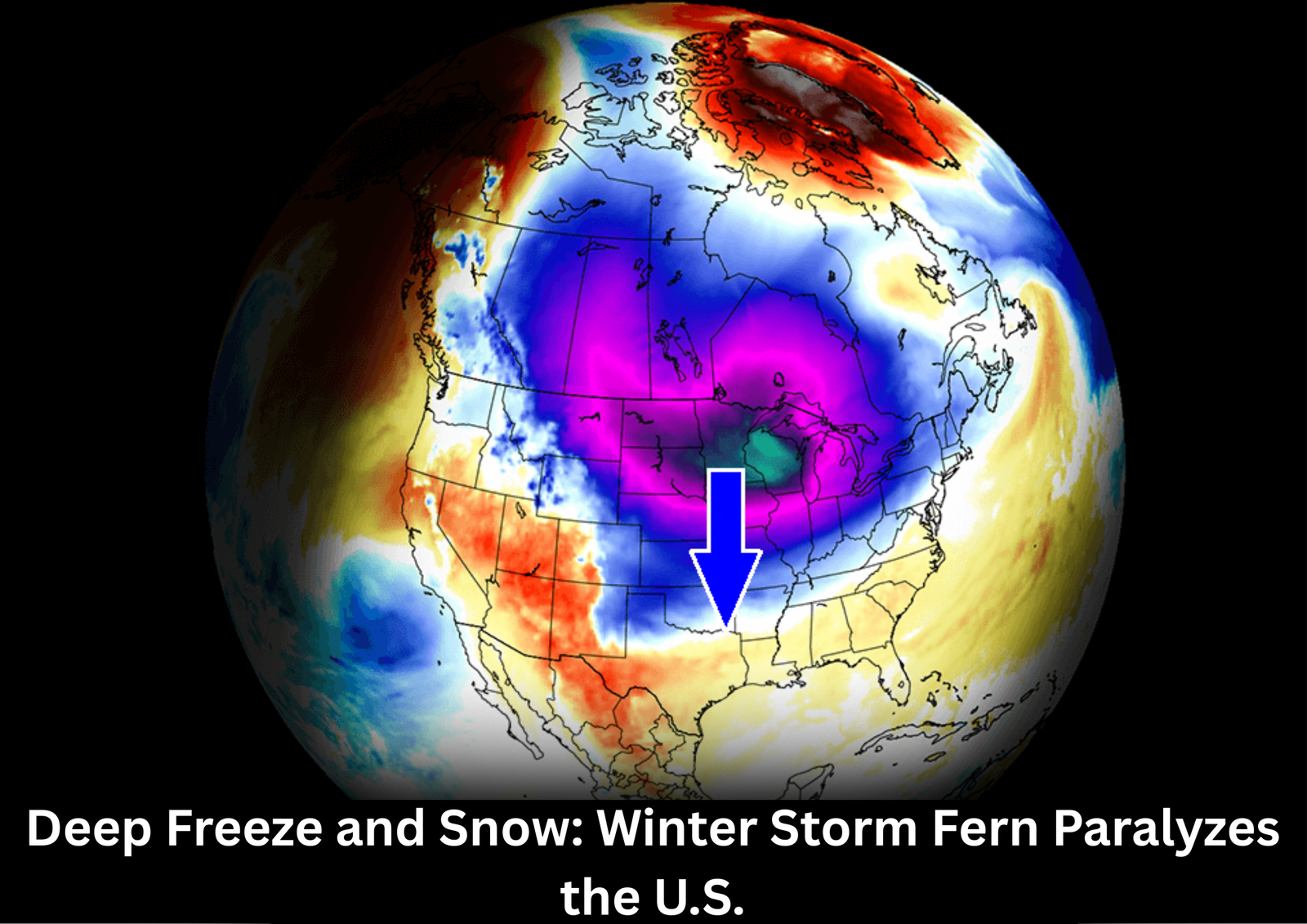
A powerful winter weather system known as Winter Storm Fern is sweeping across large portions of the United States, bringing a dangerous mix of heavy snowfall, widespread ice, and exceptionally cold air. From the Southern Plains through the Midwest and into the Northeast, millions of residents are facing hazardous travel conditions, growing power outage risks, and serious health concerns tied to extreme cold.
A Widespread and Dangerous System
Winter Storm Fern began intensifying on January 21 and is expected to continue impacting much of the country through January 23. Unlike typical winter systems, this storm combines multiple threats at once. Heavy snow is falling across central regions, while freezing rain and ice are creating treacherous conditions farther south. At the same time, an arctic air mass is pushing temperatures to levels that can become life-threatening in a matter of minutes.
Meteorologists warn that the overlapping hazards make Fern particularly disruptive, as even areas accustomed to winter weather may struggle with the severity and duration of the cold and ice.
Snowfall and Ice Create Major Travel Risks
Snow accumulation is expected to be significant from the southern Rockies into parts of the Midwest. Some locations could see totals approaching or exceeding a foot, making road travel extremely difficult and increasing the likelihood of flight delays and cancellations.
The more serious concern in the southern states is ice. A large zone stretching across Texas, Oklahoma, Arkansas, and the Tennessee Valley is under threat of freezing rain. Ice accumulations of a quarter-inch or more can weigh down power lines and tree branches, increasing the risk of widespread outages and blocked roadways. Even a thin layer of ice can make roads nearly impassable.
Extreme Cold Amplifies the Danger
Behind the storm, bitterly cold air is spreading across the central and eastern United States. The coldest conditions are expected in the Northern Plains, Great Lakes region, and interior Northeast. Daytime highs in these areas may remain in the single digits or teens, while overnight temperatures fall well below zero.
Strong winds are further intensifying the cold, producing wind chill values that could drop to between minus 30 and minus 50 degrees Fahrenheit in some regions. At these levels, exposed skin can develop frostbite in just minutes, and prolonged exposure significantly raises the risk of hypothermia.
Regional Impacts Vary Widely
In the South, major metropolitan areas are bracing for ice-driven disruptions that could shut down highways and strain local infrastructure. The Midwest is dealing with heavy snow combined with blowing winds, reducing visibility and creating near-blizzard conditions in some locations. Farther east, the Northeast is expected to see a complex mix of snow, sleet, and freezing rain, with coastal areas potentially changing to rain while inland communities receive heavier snow totals.
Alerts and Public Safety Warnings
National Weather Service offices across the country have issued a wide range of alerts, including winter storm warnings, ice storm warnings, and wind chill warnings. Emergency officials are advising residents to avoid unnecessary travel, prepare emergency kits, and ensure access to safe heating sources.
Officials also emphasize checking on vulnerable individuals, including the elderly and those without reliable heating, as extreme cold poses a serious threat even indoors if power outages occur.
A High-Impact Winter Event
Winter Storm Fern stands out as a high-impact weather event due to the scale and intensity of its hazards. The combination of heavy snow, damaging ice, and dangerous cold is expected to disrupt daily life, commerce, and transportation across multiple regions. As the storm continues to unfold, residents are urged to stay informed through local forecasts and follow guidance from emergency authorities to remain safe during this severe winter episode.
As Carney Sounds Alarm Over Global Power Shifts at Davos as U.S.–Europe Clash Over Greenland Intensifies, this blog unpacks the stakes-read on to understand why global leaders are paying close attention now.