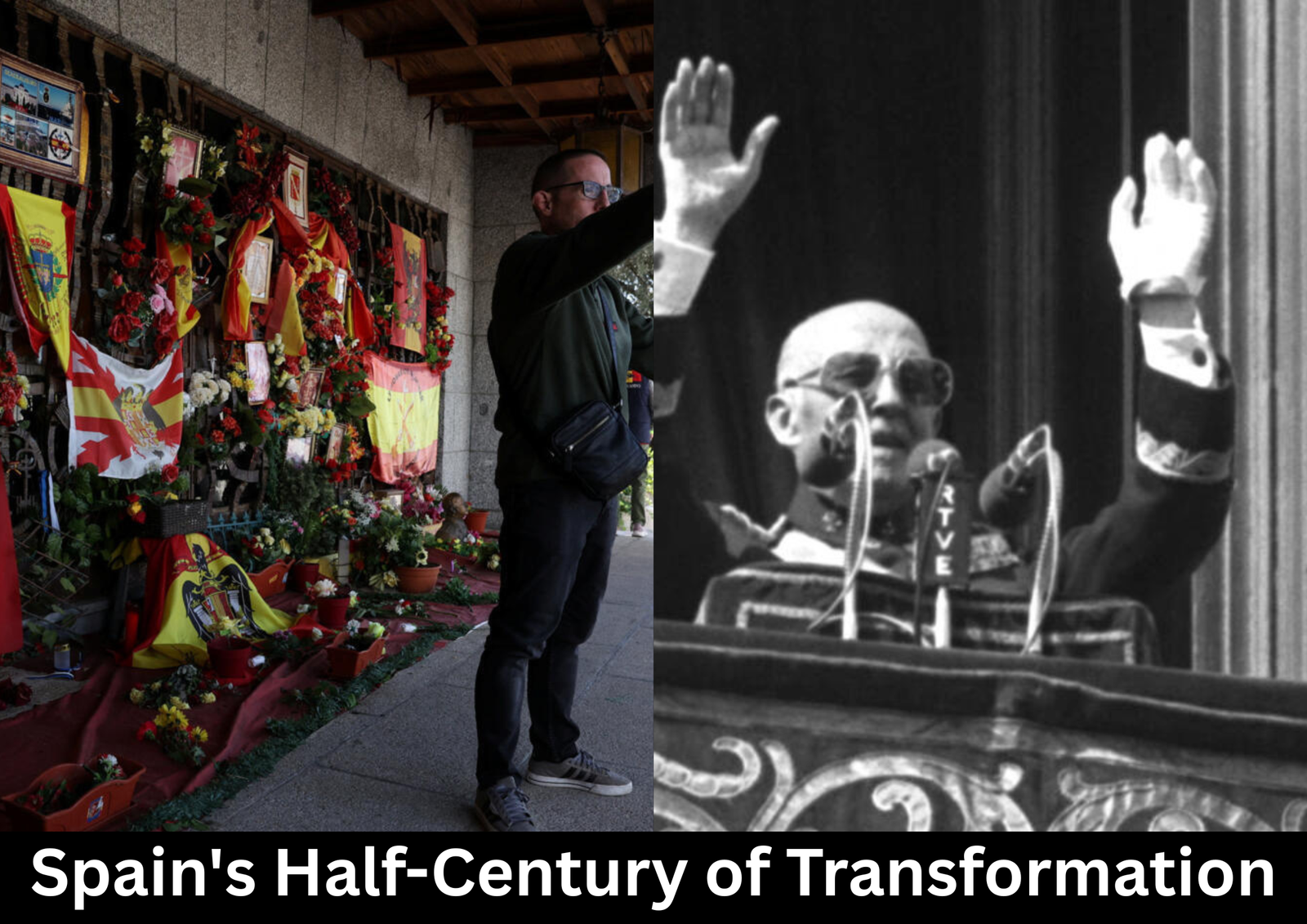
Fifty years after the death of General Francisco Franco, Spain is once again reflecting on the unresolved legacy of the dictatorship that shaped the nation for nearly four decades. The anniversary has revived debates about memory, justice, and national identity – discussions that continue to divide politics, families, and communities across the country.
A Political Divide That Hasn’t Faded
During a commemorative event in Madrid, Prime Minister Pedro Sánchez urged Spaniards to “remember the cost of losing freedoms” and warned against any attempt to soften the darker chapters of the past. His remarks come at a time when political tensions over Franco’s legacy are increasingly visible, particularly as some conservative voices accuse the government of reopening historical wounds for political gain. Meanwhile, far-right groups have been criticized for portraying the Franco era as more orderly and stable than historians describe.
A Changed Nation With Unfinished Business
Franco ruled from the end of the Spanish Civil War in 1939 until his death in 1975, overseeing a period marked by repression, censorship, and the suppression of regional cultures. Today’s Spain is a transformed country – a democratic constitutional monarchy with a strong economy and deep integration into the European Union. Yet historians note that many issues inherited from the dictatorship remain unsettled, especially regarding official recognition of victims and the need for comprehensive documentation of wartime abuses.
Memory Work That Continues Across Generations
Thousands of families are still searching for the remains of relatives who disappeared during or after the Civil War. Volunteer groups continue to excavate mass graves, often working with limited government resources. These efforts underscore how deeply personal the legacy of the dictatorship remains for many citizens. The debate around the Valley of Cuelgamuros – formerly the Valley of the Fallen – also persists, even after Franco’s removal from the site in 2019. Critics argue that the monument still fails to properly honor the victims buried there.
Culture and Public Debate Collide
A recent video game featuring a storyline set during the Civil War has intensified public debate. Supporters say it offers a way to engage younger generations with history, while opponents argue it risks glorifying authoritarianism. The government has expressed concern that entertainment media could distort public understanding of the brutality of the period. Cultural critics point out that movies, books, and digital media have become key battlegrounds for defining how the dictatorship is remembered.
A Nation Progressing While Looking Back
Half a century after Franco’s death, Spain remains a country striving to balance remembrance with reconciliation. Its democratic institutions are strong, its global presence significant, and its society far more open than at any time in its modern history. Yet the conversation surrounding Franco shows no signs of fading. Instead, it continues to evolve, shaping political alliances, cultural debates, and the way future generations will understand one of the most pivotal chapters in Spain’s story.