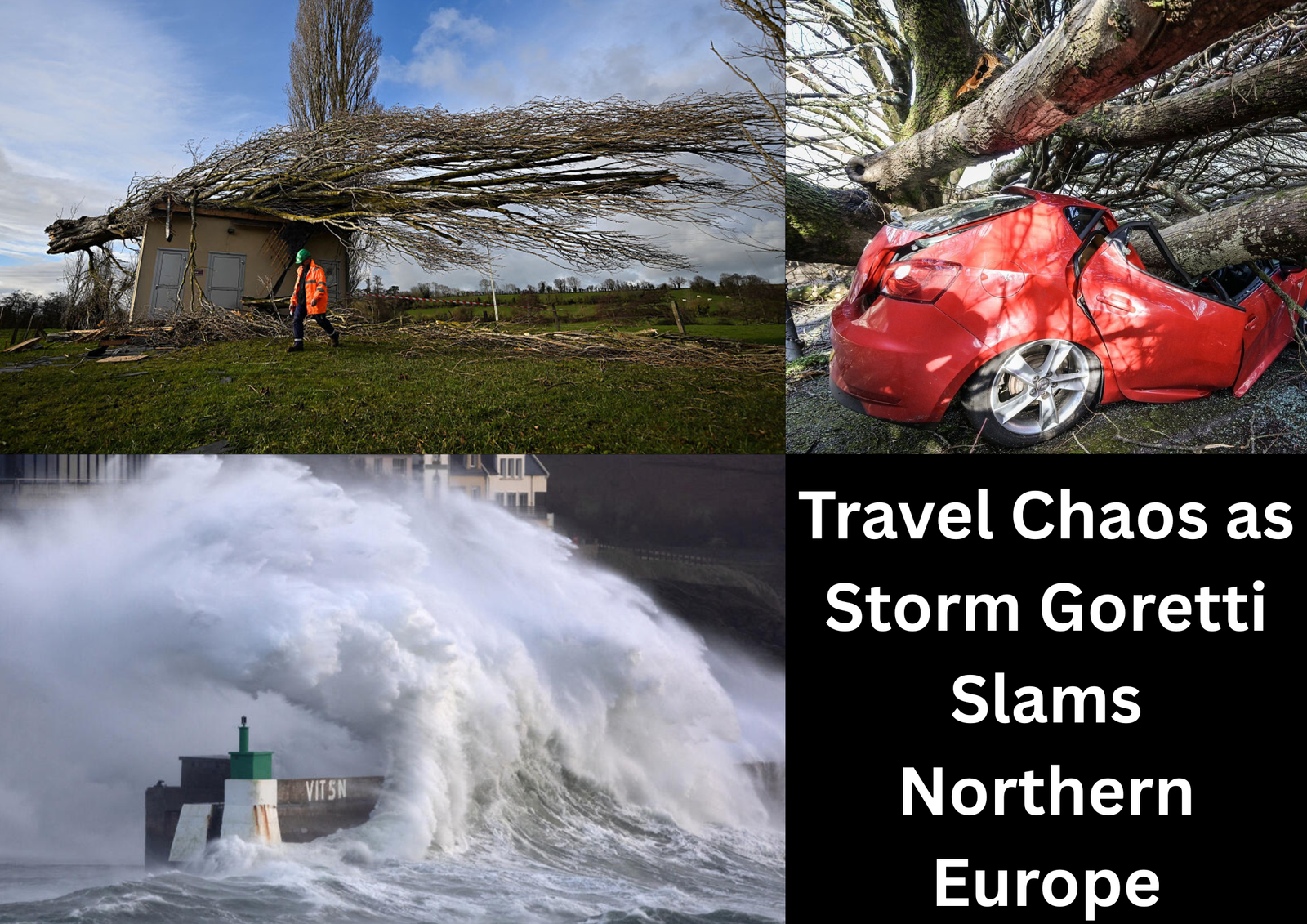
Storm Goretti, the first named storm of 2026, has torn across the UK and several northern European nations, producing severe weather conditions that damaged infrastructure, crippled transportation networks, and left hundreds of thousands without electricity. Authorities across multiple countries issued continued warnings for snow, ice, and hazardous travel as cleanup operations began.
Power Outages Hit Hundreds of Thousands
In France’s northwest regions, power grids faced the heaviest disruption, with approximately 380,000 homes losing electricity as fierce winds toppled trees and severed major lines. By mid-day Friday, over 300,000 properties remained without service, and crews were deployed to restore supply amid difficult conditions. A gust exceeding 200 kph was recorded at Barfleur in Normandy – one of the highest seen there in decades.
The UK also experienced significant outages from Cornwall to Wales, where more than 57,000 homes temporarily lost power. In Cornwall’s Redruth community, the storm ripped roofing from houses, and flying debris crushed a parked vehicle. Engineers worked through the night to repair lines, restoring service to most affected regions by Friday afternoon.
The violent weather also forced two reactors at the Flamanville nuclear facility in France offline as a precaution after high-voltage grid disturbances were detected. Meanwhile, in Guernsey, a man was hospitalized after being struck by airborne debris.
Roads, Railways, and Airports Snarled by Storm
Storm Goretti dealt a blow to transport across Europe as aviation, roads, maritime services, and rail networks all experienced shutdowns or cancellations.
In the UK, meteorologists issued a rare red wind warning for the South West, cautioning of a “danger to life.” Major rail operators urged the public not to travel due to track blockages and overhead line failures. Passenger services between northern English cities and across Wales were temporarily suspended, while Birmingham Airport halted flights during heavy snow.
Rail operations in northern Germany were also disrupted as Deutsche Bahn stopped all long-distance services, calling the weather event one of the most severe seen in years. French regional operators suspended routes in Normandy, and services between Paris and coastal cities were halted until conditions improved.
Aviation faced widespread cancellations as airlines grounded flights in Amsterdam, Hamburg, and other northern hubs. Ferry links to Germany’s North Sea islands were paused, while in Hamburg, a Bundesliga football match was postponed and Volkswagen shut two of its manufacturing plants due to the ongoing disruption.
Historic Wind Gusts and Bitter Cold
Meteorologists say Goretti formed as Arctic air descended over the British Isles, producing a rare combination of destructive wind gusts and intense snowfall.
On the Isles of Scilly off southwest England, wind speeds reached 159 kph – the strongest recorded since the early 1990s. Scotland saw snow depths of more than 25 cm in rural communities, and overnight temperatures in Aberdeenshire plunged to −13°C. Warnings for snow and ice were extended into the weekend across Scotland, northern England, the Midlands, and Northern Ireland.
Further east, heavy snowfall hit Prague, where flights were delayed and roads gridlocked, and in Germany several fatal accidents were reported on icy highways. Authorities in Scotland also warned of potential flooding due to snowmelt as temperatures begin to rise later in the week.
International Emergency Measures
The storm’s impact rippled far beyond the British Isles. Albania reported one storm-related death linked to widespread flooding, while Turkey’s northeastern provinces saw buildings damaged as strong gusts peeled roofs from homes.
In Hungary, the military was mobilized to assist motorists stuck on highways. In the UK, local councils activated Severe Weather Emergency Protocols to move rough sleepers into temporary accommodation, and opposition lawmakers urged the government to convene its emergency COBRA committee over the deteriorating situation in the South West.
Schools in Scotland remained closed throughout the week, with more than 250 campuses affected. In Cornwall, lifeboat crews described hurricane-force conditions during rescue operations. British courts also postponed hearings in Birmingham due to an inability to safely transfer detainees.
With temperatures still low and cleanup efforts ongoing, authorities across Europe warned residents to remain cautious through the weekend.
Israeli Airstrikes in Gaza Leave 13 Dead Following Misfired Rocket, Officials Say – read my full breakdown in the latest blog for crucial context and updates.