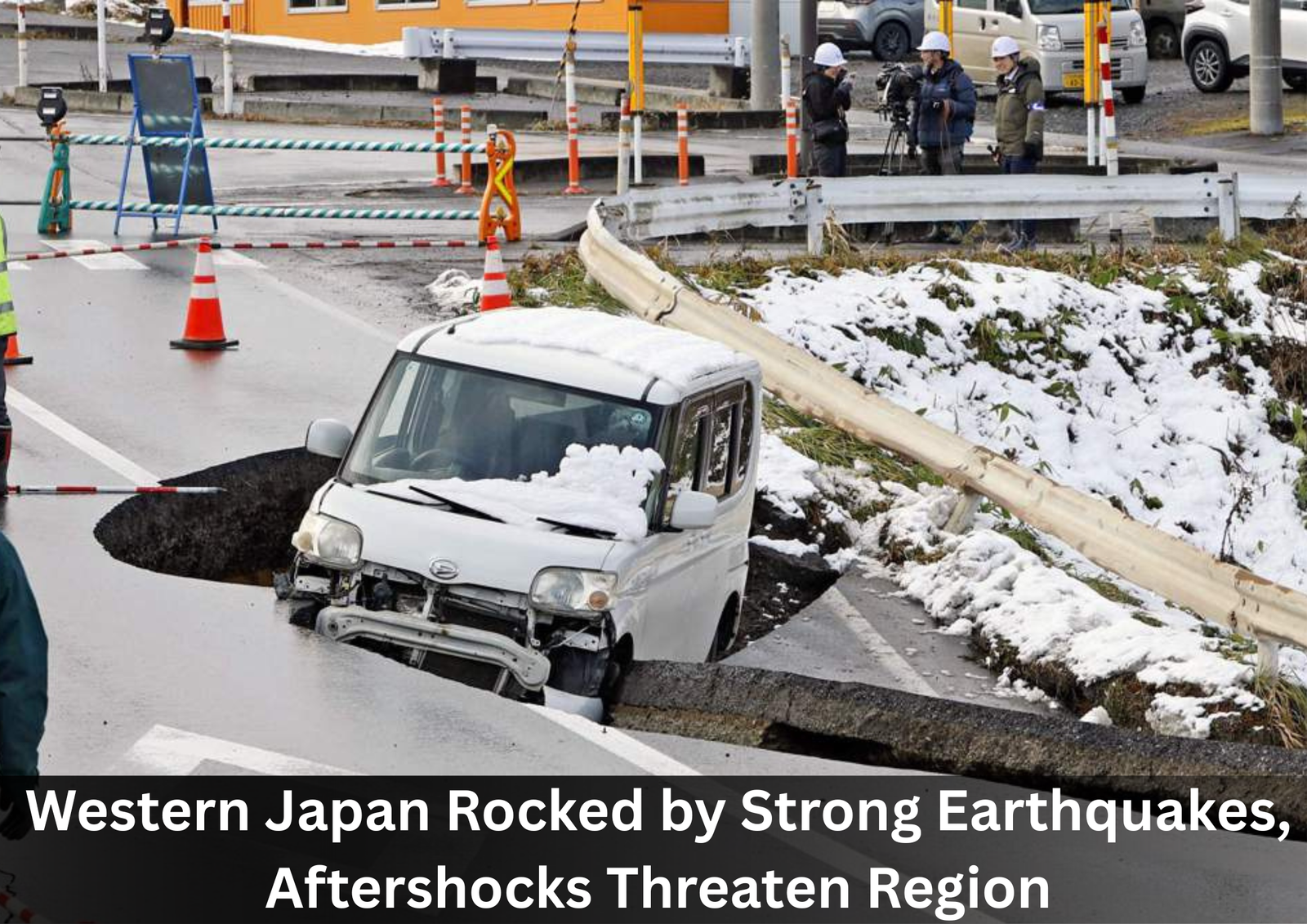
A cluster of powerful earthquakes struck western Japan on Tuesday morning, shaking parts of Shimane and Tottori prefectures and prompting officials to warn residents to remain alert for further seismic activity. Despite the intensity of the tremors, authorities confirmed there was no tsunami threat and no immediate reports of large-scale damage.
The strongest quake occurred shortly after 10 a.m. local time, with Japan’s Meteorological Agency (JMA) later assessing its magnitude in the mid-6 range. The epicenter was located inland in eastern Shimane Prefecture, south of the city of Matsue, at a shallow depth that amplified ground shaking across the region. International monitoring agencies recorded slightly lower magnitude estimates but confirmed the event as a significant seismic occurrence.
Ground motion reached an “upper 5” level on Japan’s seven-step seismic intensity scale in several communities, indicating shaking strong enough to damage vulnerable buildings. Residents in Matsue, Yasugi, Sakaiminato, and nearby towns reported prolonged swaying, while lighter tremors were felt across neighboring prefectures including Hiroshima, Okayama, Kagawa, and Ehime.
Multiple aftershocks followed within minutes, including several exceeding magnitude 5. Officials from the JMA cautioned that similar earthquakes could continue over the coming days, with the highest likelihood in the next 48 to 72 hours. Seismologists noted that the area has a history of clusters of strong quakes occurring in close succession.
No tsunami advisories were issued, as the earthquakes originated inland. However, local governments warned of heightened risks such as landslides, falling rocks, and weakened slopes in areas that experienced the strongest shaking.
Initial safety checks indicated no injuries in Tottori Prefecture, and operators of the Shimane nuclear power facility reported no irregularities. Regional power companies also stated that their infrastructure remained unaffected.
Transportation networks experienced temporary disruptions. Portions of the Sanyo Shinkansen bullet train line were halted due to a power interruption, with services resuming later in the day after inspections. Several expressway sections were closed as a precaution while engineers assessed road conditions.
In response, the national government activated a coordination office at the Prime Minister’s residence to oversee information sharing and emergency readiness. Prime Minister Sanae Takaichi emphasized that authorities would continue monitoring the situation closely and take all necessary measures to protect public safety.
According to seismic records, this event marks the strongest shaking recorded in the region in several years, underscoring Japan’s ongoing vulnerability to inland earthquakes and the importance of continued preparedness.
For deeper insight into “U.S. Operation Against Maduro Sparks Venezuela Bond Surge and Rekindles Debt Overhaul Debate,” don’t miss this detailed blog-read it now for full context and expert analysis.