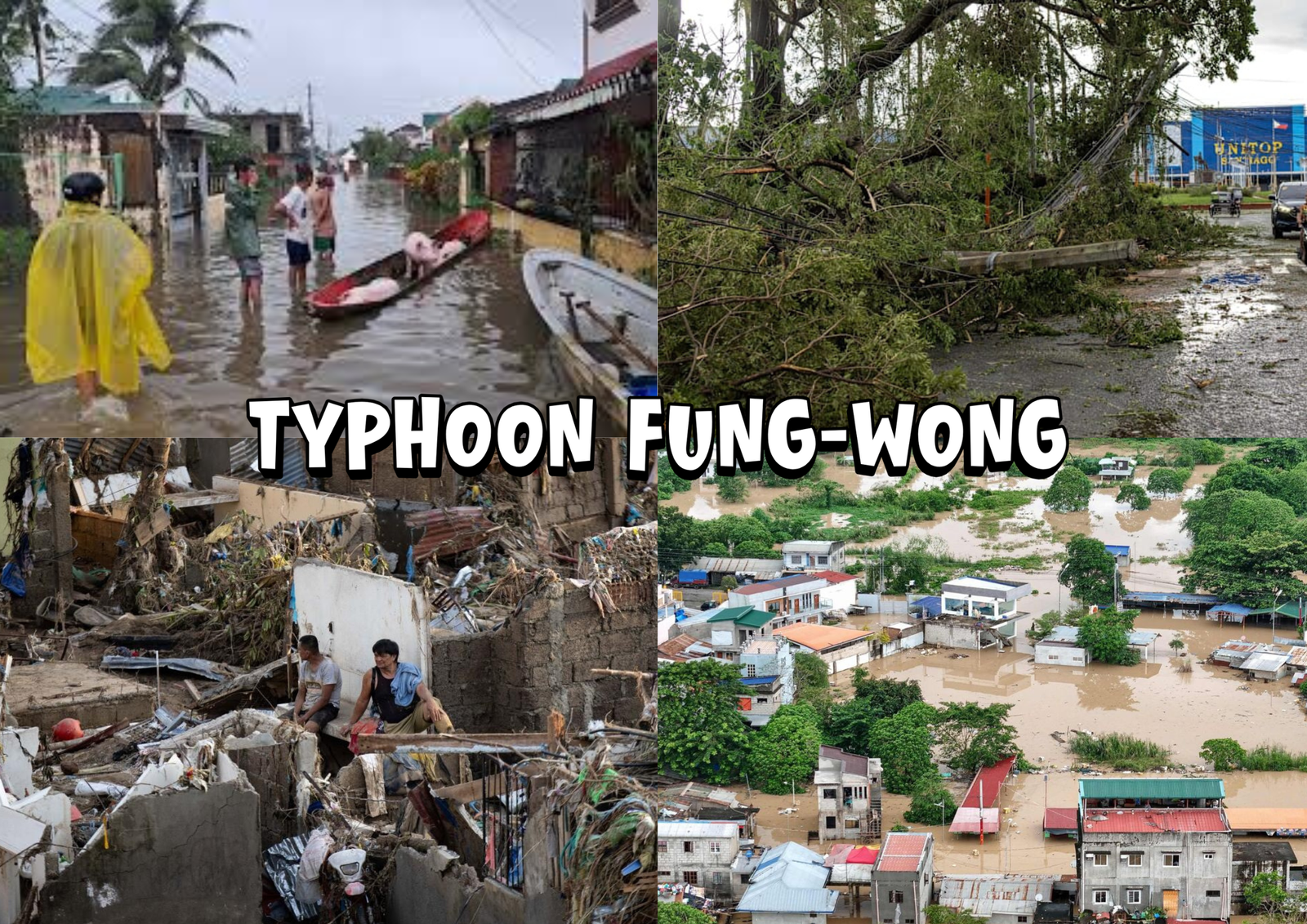
Super Typhoon Fung-Wong, known in the Philippines as Typhoon Kiko, unleashed fierce winds and relentless rainfall across northern Philippines and Taiwan, forcing thousands to flee their homes.
The Joint Typhoon Warning Center (JTWC) reported sustained winds nearing 115 mph (185 km/h), with gusts exceeding 143 mph (230 km/h), classifying Fung-Wong among the most powerful storms of the year.
In the Philippines, the typhoon made its first landfall over the Babuyan Islands, bringing widespread power outages and flooding to the Cagayan Valley and Ilocos regions. Local authorities swiftly ordered the evacuation of low-lying communities, while the Philippine Coast Guard suspended all maritime operations to prevent accidents. Ports across Luzon were filled with stranded travelers and halted shipments.
Schools and government offices in the northern provinces were closed, and emergency shelters were readied to accommodate evacuees. “We are prioritizing safety above all,” said NDRRMC spokesperson Maria Santos, adding that preemptive measures likely saved lives as the storm intensified overnight.
Across the Taiwan Strait, the Central Weather Bureau issued sea and land alerts as Fung-Wong’s outer rainbands began lashing northern Taiwan. Forecasters warned of potential flash floods, landslides, and coastal surges, particularly in Taipei, Yilan, and Hualien. Emergency crews worked round-the-clock to clear drains and reinforce embankments in preparation for the storm’s closest pass.
Meteorologists expect Fung-Wong to skirt Taiwan’s northern coastline before curving toward southeastern China late Tuesday. Regional governments remain on high alert, monitoring possible secondary landfall and heavy rainfall in Fujian Province.
Fung-Wong marks the 14th typhoon to enter the Philippine Area of Responsibility this year – a number experts say underscores the increasing frequency and intensity of tropical cyclones. Scientists point to rising sea surface temperatures as a major factor, warning that climate change continues to amplify the destructive power of such storms across the Pacific.
Despite the destruction, early warnings and coordinated evacuations were credited for minimizing casualties. Recovery efforts are now underway as authorities assess the full extent of the damage across affected areas.