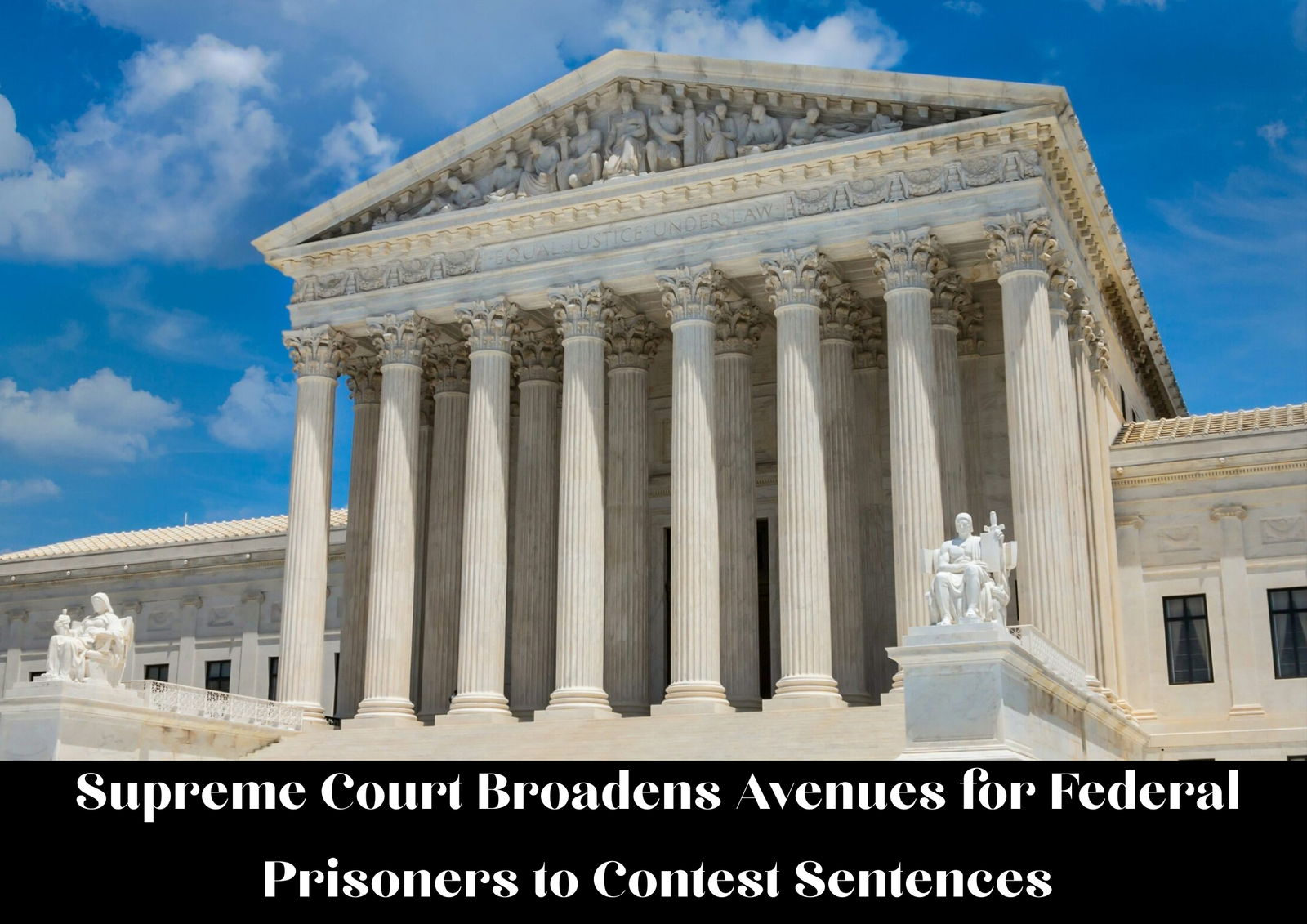
The U.S. Supreme Court opened the new term with a significant ruling that strengthens federal inmates’ ability to challenge their sentences when later judicial decisions reinterpret criminal statutes. The decision, which arrived Friday, establishes a uniform national standard for post-conviction relief requests and resolves years of conflicting opinions among federal appellate courts.
Justice Sonia Sotomayor authored the 5–4 opinion, marking her first major decision of the October 2025 term. Justices Samuel Alito and Clarence Thomas dissented, while Justice Ketanji Brown Jackson did not take part in the case.
The dispute centered on the interpretation of a key component of federal habeas corpus law: the so-called “savings clause” found in 28 U.S.C. § 2255(e). The majority concluded that the clause permits inmates to pursue additional legal challenges in narrow circumstances, particularly when later Supreme Court rulings reshape the legal foundation on which they were convicted or sentenced. Supporters of the ruling argue that the Court recognized both fairness and constitutional safeguards in allowing prisoners an avenue to benefit from updated legal interpretations.
The case originated with Marcus DeAngelo Jones, who received a federal conviction for unlawful firearm possession. Years later, the Supreme Court’s 2019 decision in Rehaif v. United States raised the legal threshold for such prosecutions by requiring proof that a defendant knew they fell within a prohibited category. Jones had already exhausted his first post-conviction petition before Rehaif, prompting a broader legal question: could he file again due to the new rule? Circuit courts issued conflicting answers, ultimately pushing the dispute to the Supreme Court.
Justice Neil Gorsuch concurred with the outcome but wrote separately to criticize the federal sentencing framework more broadly. In a sharply worded opinion, he described the system as “labyrinthian,” arguing that complicated laws routinely leave defendants, lawyers, and judges unable to identify clear standards. He suggested that Congress may eventually need to simplify the criminal code to prevent further injustices.
Justice Sotomayor’s majority opinion emphasized that Congress designed the federal post-conviction review process with a balance in mind-ensuring finality in criminal cases while still respecting constitutional protections. She noted that allowing claims based on judicial developments was consistent with that intent and critical to maintaining credibility in the justice system.
The ruling immediately settles a longstanding circuit split and provides federal courts with a consistent framework for addressing similar claims moving forward. Legal experts say the decision could prompt a wave of review petitions from inmates whose convictions may now conflict with more recent Supreme Court interpretations.
With this opinion, the Court signals a renewed willingness to engage with the complexity of federal sentencing and post-conviction law-an area that has grown increasingly influential as judicial rulings continue to reshape criminal statutes long after sentencing takes place.
reaking news: “550-Pound Bear Removed From Altadena Home After Month-Long Standoff Using Unusual ‘Stinky Pile’ Method,” make sure to check out the full blog on my other page!