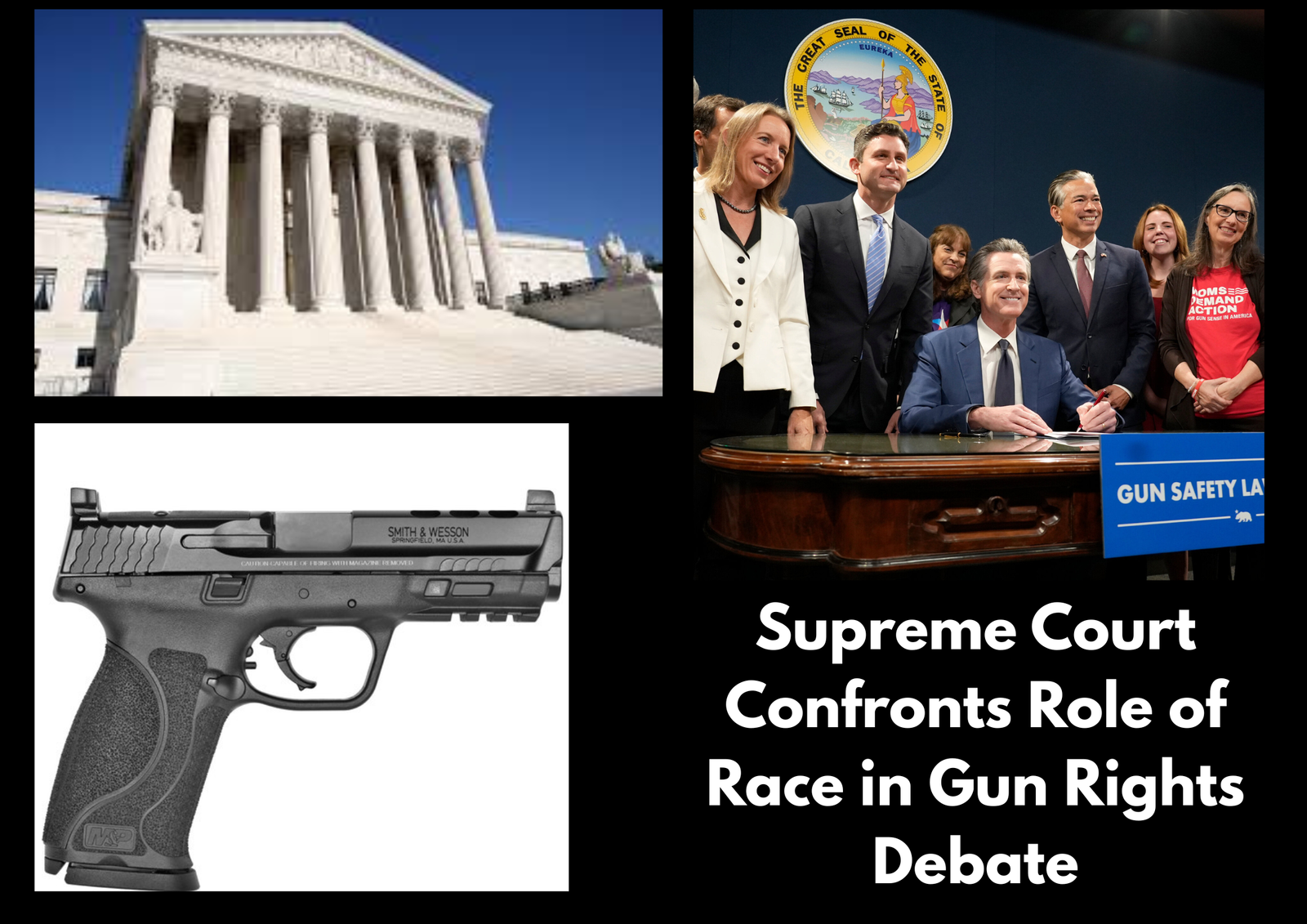
The U.S. Supreme Court appears ready to upend two major state gun regulations after a conservative majority showed deep doubt over California’s sweeping limits on where firearms may be carried and agreed to review Hawaii’s rarely granted concealed-carry permits. The developments point to another expansion of gun rights under the Second Amendment, building on the 2022 Bruen ruling that reshaped America’s legal framework for firearm regulations.
Justices heard arguments Monday on California’s SB 2 statute, which bars concealed-carry permit holders from entering most commercial businesses and a long list of designated “sensitive places,” such as grocery stores, restaurants, churches, parks, and other venues open to the public. The restrictions, enacted in 2023, effectively prohibited routine public carrying for many residents, according to challengers.
During oral arguments, several conservative justices pressed the state’s solicitor general to justify the sweeping list of prohibited spaces. Justice Samuel Alito criticized the restrictions as treating lawful permit holders as “second-class citizens,” while Justice Clarence Thomas questioned the lack of historical precedents to support such broad geographic bans. Justice Amy Coney Barrett also expressed concern that the measure prevented permit holders from making everyday stops, calling the approach “very restrictive.”
The Court’s three liberal justices defended the state’s authority to modernize gun laws for crowded environments and new security threats. Justice Ketanji Brown Jackson argued that the country’s current conditions differ dramatically from those in the 18th century and that states should retain the ability to define new “sensitive places” to protect public safety.
In a separate move, the Court voted to take up a challenge to Hawaii’s concealed-carry permitting process, which for decades has required applicants to show an exceptional need for armed self-defense. The Ninth Circuit Court of Appeals had upheld the requirement, but critics noted it closely resembled the New York standard overturned in Bruen for imposing discretionary hurdles that effectively denied most residents the ability to carry firearms in public.
Justices Sonia Sotomayor and Elena Kagan dissented from the Court’s decision to hear the Hawaii case, suggesting the lower court ruling should have been allowed to stand.
Both cases will test the boundaries of the Bruen standard, which requires modern gun regulations to align with the nation’s historical tradition of firearm laws. Legal analysts say the Court’s actions strongly indicate a coming defeat for both state measures and another victory for gun-rights advocates.
Final rulings on the California and Hawaii cases are expected by late June 2026, potentially reshaping the regulatory landscape for states seeking to impose concealed-carry restrictions.
Minnesota Officials Face Dual Federal Probes as Immigration Tensions Deepen, making this unfolding political drama a must-read – don’t miss the full details in my latest blog.