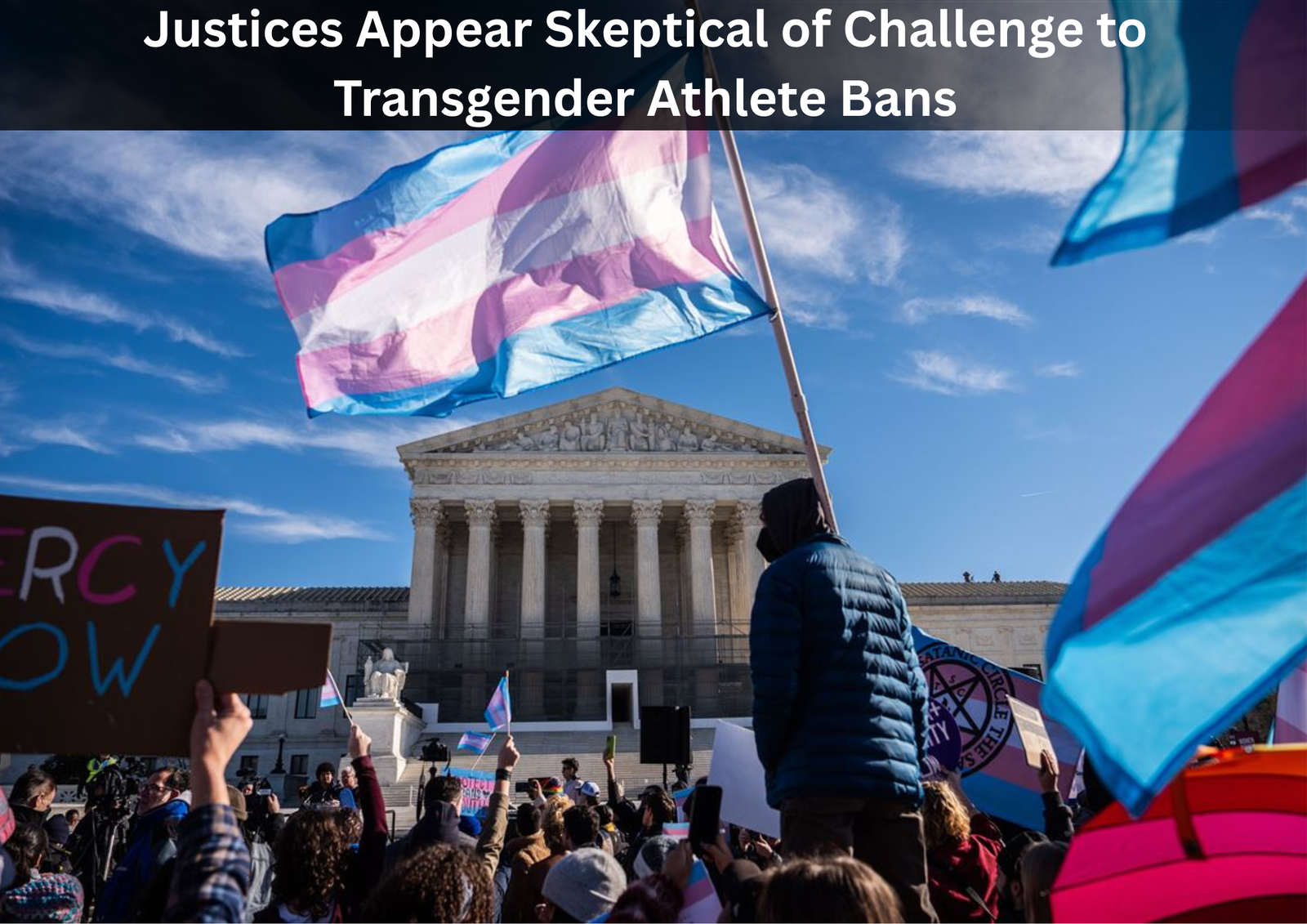
The U.S. Supreme Court on Tuesday appeared inclined to uphold state-level restrictions preventing transgender girls and women from joining female athletic teams at public schools. During a lengthy session of oral arguments, several members of the Court suggested that decisions on eligibility rules should be left to states, not federal agencies or nationwide judicial mandates.
Cases at the Center of the Debate
The justices reviewed challenges involving laws from Idaho and West Virginia, both passed within the last five years.
- Idaho’s legislation, enacted in 2020, was initially contested by Lindsay Hecox, a transgender college student who wished to compete on women’s track and cross-country teams.
- West Virginia’s 2021 statute faced a legal challenge from high school athlete B.P.J. (Becky Pepper-Jackson), who has been treated with puberty blockers and estrogen and has participated in girls’ track since childhood.
State officials defended their policies as safeguards to protect competitive fairness for cisgender female athletes, pointing to biological differences related to muscle development, bone structure, and cardiovascular capacity. Attorneys for the athletes countered that such measures violate the Equal Protection Clause and Title IX, arguing that students undergoing medical transition do not benefit from the physical advantages cited by supporters of the bans.
How the Justices Approached the Issue
The Court’s conservative bloc appeared hesitant to set a national standard, with multiple justices raising questions about whether the judiciary should intervene before broader scientific and policy consensus emerges. Others indicated that the Constitution does not require every state to adopt the same approach to gender identity in school sports.
Several liberal justices pushed back, asking why schools should be allowed to enforce blanket rules that ignore individual circumstances and medical evidence. They also noted the risk that transgender athletes in inclusive states could be affected by a ruling that restricts policy flexibility nationwide.
Lower courts have previously blocked both laws-one on constitutional grounds, the other under Title IX-leaving the Supreme Court resolution as potentially decisive for similar litigation across the country.
A Patchwork of State Policies and Rising National Tensions
Sports eligibility for transgender youth has become a deeply fractured policy area. Twenty-seven states now ban transgender girls and women from joining female school sports teams, while more than twenty others continue inclusive policies. The Biden and Trump administrations have taken starkly different approaches, with the current administration withdrawing funds from schools that allow transgender inclusion and the NCAA banning transgender women from collegiate women’s sports.
Human Stories Behind the Courtroom
Beyond legal questions, the dispute carries significant emotional weight for transgender teenagers and their families. Several young athletes from California described public scrutiny, anxiety, and uncertainty about their futures in sports and in the country. Some expressed fear that exclusionary laws could force families to relocate in search of stability or acceptance.
What Comes Next
Legal analysts noted that the conservative majority gave strong indications of favoring state discretion. A final ruling is not expected until early summer, a timeline that aligns with the Court’s typical release of major decisions.
If the Court upholds the laws, transgender participation in sports could remain subject to state-by-state rules for years to come, shaping athletic opportunities differently across the country and intensifying debates around gender identity, civil rights, and youth sports.
U.S. Ends Temporary Protected Status for Somalia, Raising Concerns Among Immigrant Communities – a development worth understanding further, so make sure you read this full blog for details.