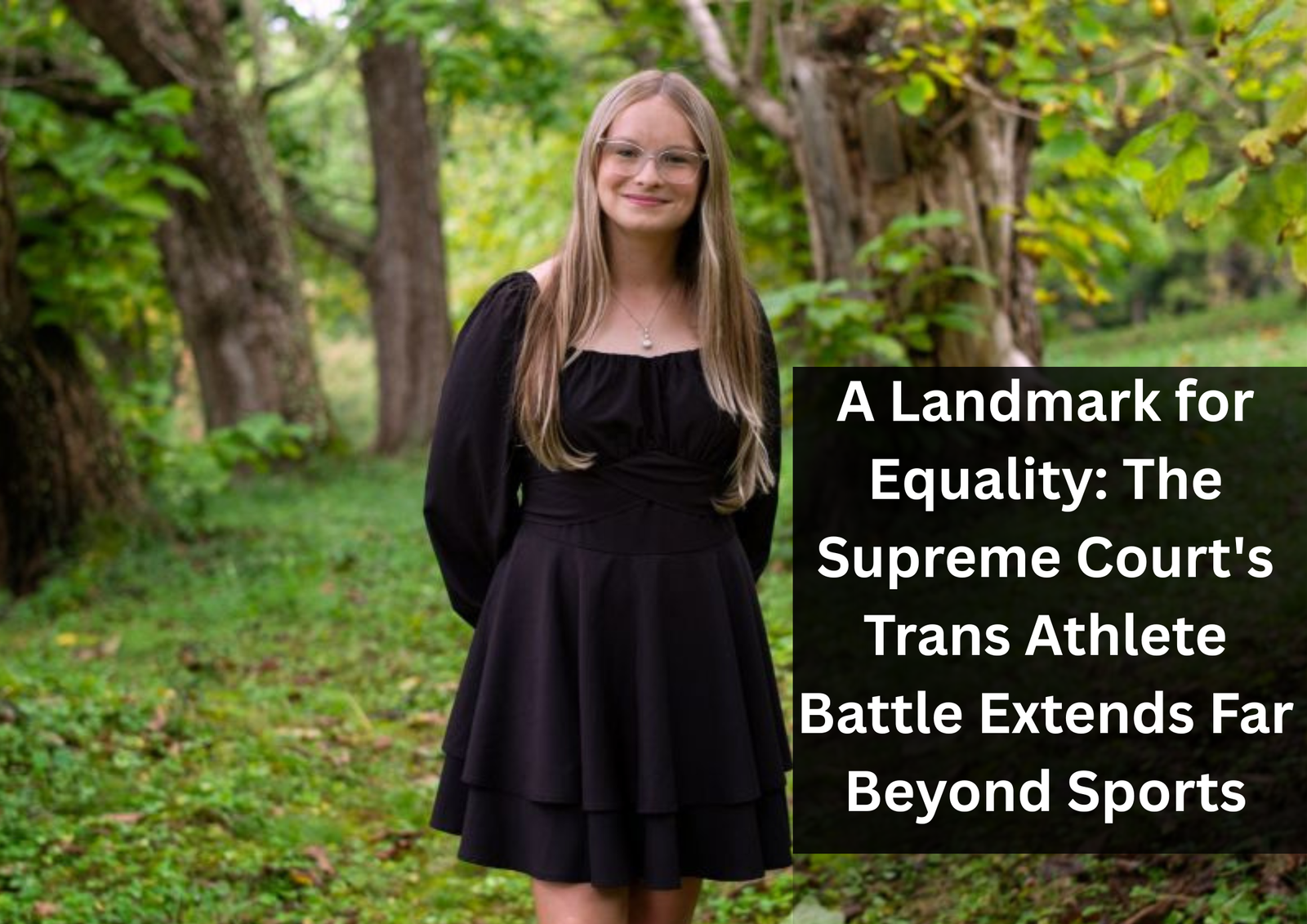
The U.S. Supreme Court on Tuesday heard oral arguments in two consolidated cases that could reshape both transgender rights and the interpretation of federal anti-discrimination law. The cases, which challenge state bans preventing transgender girls and women from participating in female sports divisions, are expected to yield rulings by late June. Legal experts say the decisions could set a precedent extending well beyond athletics, influencing how the Constitution protects transgender people from discrimination in education, healthcare, identification documents, and potentially other aspects of public life.
Cases Centered on Two Transgender Athletes
The justices reviewed challenges stemming from West Virginia v. B.P.J. and Little v. Hecox. The first case concerns high-school runner Becky Pepper-Jackson, a transgender 15-year-old from West Virginia who began transitioning before male puberty. Attorneys argue West Virginia’s sports restrictions violate both Title IX – which bars discrimination on the basis of sex in education – and the Equal Protection Clause.
The second case involves Idaho student Lindsay Hecox, a transgender woman who sought to join the women’s cross-country team at Boise State University after suppression of testosterone for more than a year. Although Hecox has since requested the case be dismissed due to concerns about targeted harassment and setbacks to her academic progress, the Supreme Court opted to hear the case anyway. Both plaintiffs contend the state bans unfairly single out transgender individuals for differential treatment under the law.
State Bans and Conflicting Court Decisions
West Virginia’s 2021 legislation prohibits transgender girls from competing in girls’ school sports at most competitive levels. A federal district court initially upheld the measure, but the 4th Circuit reversed the decision in 2024, concluding the law conflicted with Title IX.
Idaho’s statute, enacted in 2020 as one of the first of its kind nationwide, barred transgender girls and women from women’s sports outright. A federal judge blocked the law shortly after passage, calling it likely unconstitutional, a ruling the 9th Circuit later affirmed. Idaho then petitioned the Supreme Court for review.
Over the past three years, similar statutes have proliferated, with 27 states adopting laws restricting transgender participation in school athletics and 29 states now applying such bans across K-12 and college-level competition.
Legal Questions With National Impact
Central to the arguments are two unresolved constitutional issues: whether these laws should undergo heightened judicial scrutiny and whether discrimination against transgender individuals counts as sex-based discrimination under Title IX and the 14th Amendment.
Advocates for the states argue the restrictions protect fairness and safety for cisgender women, claiming Title IX was created to safeguard female competition rather than redefine it. Attorneys from conservative legal groups say the laws treat students solely based on biological sex and apply evenly to all athletes.
Opponents counter that participation bans target transgender individuals specifically, undermining protections recognized in the Supreme Court’s 2020 Bostock v. Clayton County ruling, which held that firing an employee for being transgender constitutes discrimination “because of sex.” Whether Bostock applies to educational environments now sits squarely before the Court.
Civil Rights Groups Warn of Broader Ramifications
LGBTQ advocates caution that upholding the bans could grant states wide latitude to enact further restrictions affecting transgender students and adults in areas unrelated to athletics. Legal scholars warn it may become difficult to challenge limitations on restroom access, pronoun usage, accurate IDs, healthcare accommodations, or anti-harassment protections if courts decline to apply heightened constitutional scrutiny.
Some advocates also express concern about potential invasive compliance practices, such as “sex verification” checks or demands for medical documentation for girls who do not fit traditional gender expectations.
Politics and Public Debate Surround the Cases
Supporters of athletic bans, including prominent activist Riley Gaines and the Alliance Defending Freedom, argue that biological distinctions cannot be ignored in competitive sports and that transgender inclusion undermines the intent of Title IX. Opponents argue that the issue has been used strategically as a wedge in national politics, noting that the number of transgender athletes competing at the collegiate level remains extremely small.
Recent policy shifts have added urgency to the Court’s review. Following a 2025 executive order, both the NCAA and U.S. Olympic Committee instituted rules automatically excluding transgender women from female divisions, signaling broad institutional support for strict category separation.
Decision Expected to Shape National Law
The Supreme Court’s final ruling, expected by the end of June 2026, is likely to determine the legality of similar statutes across the country and define the scope of federal protections available to transgender students in educational environments. The cases mark one of the most consequential tests of how far civil rights law extends in addressing issues of gender identity in the United States.
Iran declares protests contained as international pressure builds and Washington reviews options. For deeper analysis, read the full post on my blog.