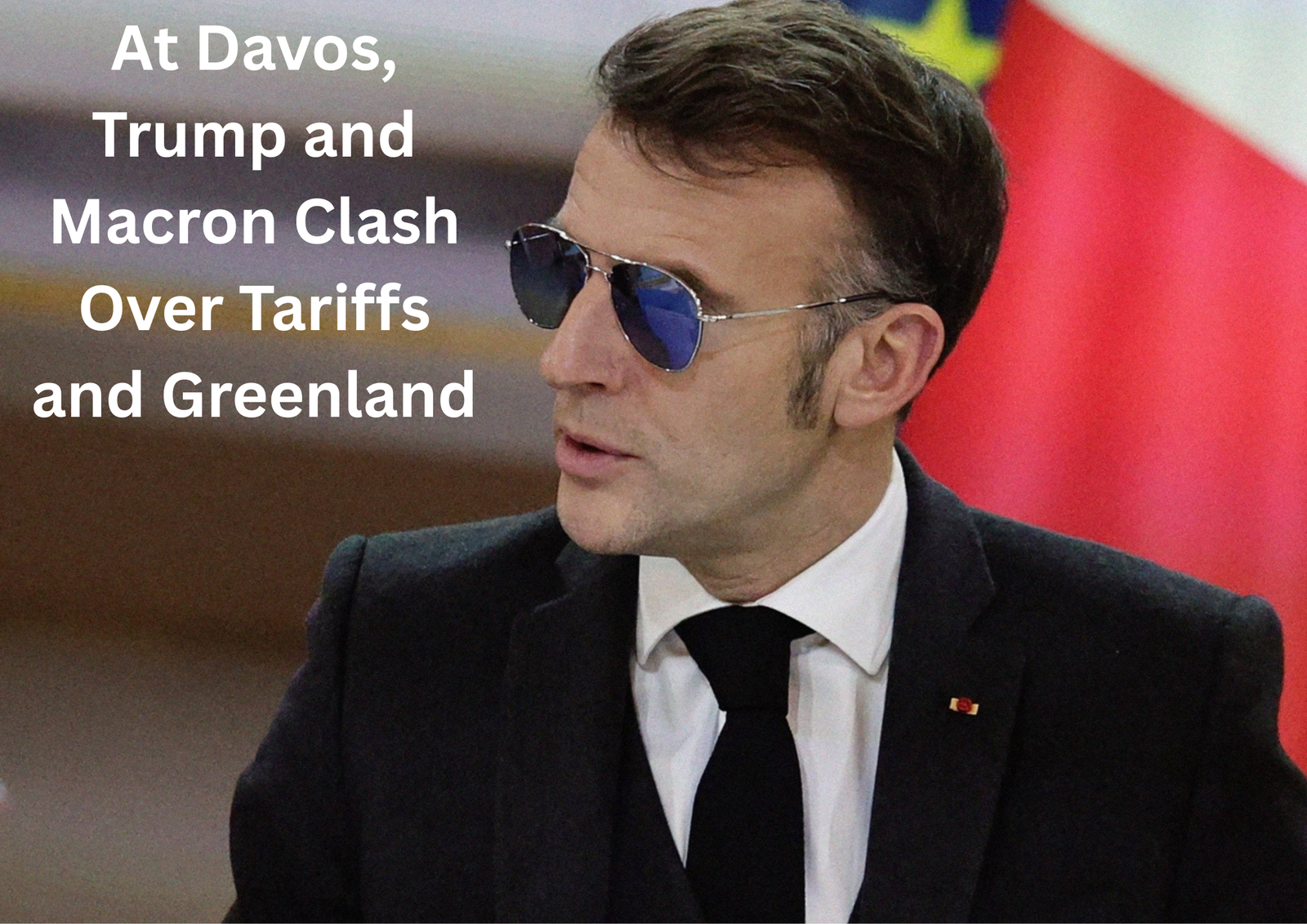
Diplomatic tensions between the United States and France took center stage at the World Economic Forum this week, transforming what is typically a showcase for global cooperation into a stage for escalating disputes over trade policy, diplomatic protocol, and Arctic strategy.
The dispute intensified after French President Emmanuel Macron delivered a speech warning that major powers were increasingly abandoning restraint in favor of coercive tactics. Although he avoided naming U.S. President Donald Trump, Macron condemned what he called “new forms of imperial pressure” and insisted European nations must be prepared to defend their interests in an unpredictable international environment.
The confrontation spilled into the open on Monday when President Trump threatened steep tariffs targeting French wine and champagne, telling journalists he was considering duties as high as 200 percent. The threat appeared to be linked to Macron’s refusal to participate in a Trump-backed “Board of Peace” initiative – a project Trump has promoted as an alternative to the United Nations.
The feud grew more personal after Trump published excerpts of private messages from Macron on social media. In the leaked exchanges, Macron questioned U.S. activity in Greenland and floated the idea of hosting an expanded diplomatic meeting in Paris. Analysts noted that publicizing confidential diplomatic conversations is highly unusual and widely regarded in foreign policy circles as a serious breach of trust.
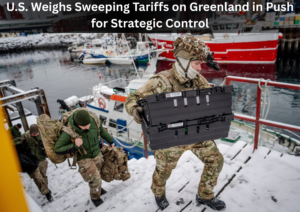
Greenland continues to be a major flashpoint. Trump has repeatedly described the territory, which is part of the Kingdom of Denmark, as strategically vital and has signaled interest in acquiring or otherwise securing influence over the island. European governments have reacted sharply, labeling the idea a relic of colonial-era thinking. French officials stated that additional military resources would be positioned to signal that Arctic territory is not “up for negotiation.”
The conflict has widened to involve other NATO partners. According to reports, Trump recently sent a sharply worded letter to Norwegian Prime Minister Jonas Gahr Støre linking his grievances over Greenland to Norway’s failure to award him the Nobel Peace Prize, prompting clarifications from Oslo that the prize is selected by an independent committee.
In response to the tariff threats, French officials indicated they would call upon the European Union to activate its anti-coercion mechanism – a tool designed to restrict market access for foreign companies deemed to be pressuring EU member states. A special EU summit is scheduled for Thursday to determine next steps.
Macron also announced plans for substantial increases in military spending through 2030, declaring that nations must possess “credible strength” to deter external pressure. His government outlined €36 billion in additional defense allocations aimed at aerospace, cyber operations, and Arctic capabilities.
President Trump is expected to address the forum on Wednesday, accompanied by a sizable U.S. delegation including senior diplomatic and trade officials. Observers say the standoff may test whether Macron’s years-long attempt to manage Trump through personal diplomacy has reached its limits, as once-private disagreements are now unfolding in full public view.
U.S. Considers Broad Tariffs on Greenland Imports as Washington Renews Strategic Island Bid – read the full story in my latest blog for important insights you shouldn’t miss.