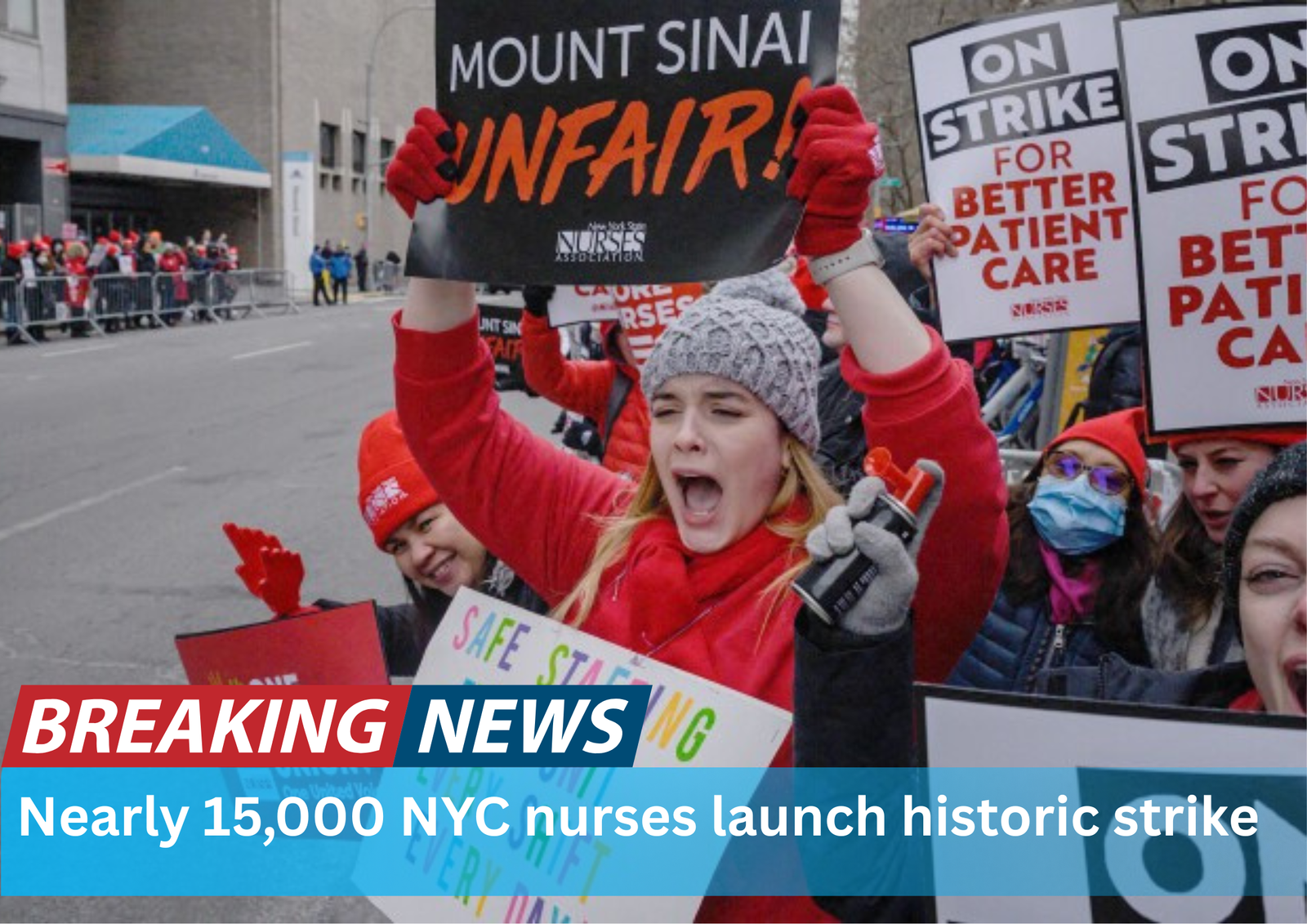
Nearly 15,000 registered nurses from several major New York City hospital systems walked off their jobs on Monday, marking what labor organizers are describing as the largest nursing strike the city has ever experienced. Picket lines formed outside Montefiore Medical Center, NewYork-Presbyterian Hospital, and multiple Mount Sinai locations shortly after sunrise as contract negotiations between hospital executives and union leaders broke down overnight.
The New York State Nurses Association (NYSNA), which represents the striking workers, said the dispute centers on pay increases needed to keep pace with rising living costs, along with protection for staffing ratios and expanded contract language addressing violence in healthcare settings and the growing use of artificial intelligence. The previous labor agreements expired at the end of 2025 and months of bargaining failed to close the gap between the two sides.
Union President Nancy Hagans said nurses had no desire to strike but claimed hospital management refused to meaningfully address patient-safety concerns. “Nurses have been sounding the alarm for months,” she said on the picket line. “We want safe staffing, respect for our profession, and contracts that recognize the realities inside our hospitals.”
Hospital leaders meanwhile argue that the union’s demands would impose massive financial burdens, especially as hospitals brace for potential cuts to federal healthcare funding. Industry representatives claimed the wage proposals alone could cost billions over the next three years, a projection union officials dispute as exaggerated.
The current walkout dwarfs a 2023 strike involving some of the same hospitals. That earlier action resulted in enforceable nurse-to-patient ratio agreements, which have since led to millions of dollars in penalties against hospitals found to have understaffed units-penalties the union says prove the need for stronger contract protections.
To maintain operations during the walkout, hospital networks have turned to expensive contingency plans. According to the Greater New York Hospital Association, more than $100 million has already been spent to prepare for potential staffing shortages, including the hiring of travel nurses and reserving hotel rooms for temporary staff. Some facilities have warned that elective surgeries, routine appointments, and non-urgent admissions may be delayed until the dispute is resolved.
The strike also places newly inaugurated New York City Mayor Zohran Mamdani in the center of his first major political test. He appeared with nurses Monday morning, calling the situation a struggle for “dignity and fairness” and criticizing high executive compensation packages within major hospital systems. He has directed city agencies to monitor patient care and coordinate with emergency services.
New York Governor Kathy Hochul issued a state of emergency and signed an executive order temporarily loosening licensing rules to allow out-of-state medical professionals to practice in New York. Hochul said her priority is ensuring continuity of care during what has been one of the city’s most severe flu seasons in recent years. Health department officials reported more than 128,000 confirmed flu cases tied to a new circulating variant, raising concerns that emergency departments could become increasingly strained without a resolution.
Notably, while negotiations collapsed in the city, three Northwell Health hospitals on Long Island narrowly avoided a strike after reaching an eleventh-hour contract agreement with NYSNA, illustrating how fragmented the bargaining landscape has become.
As of Monday evening, both hospital administrators and union leadership expressed willingness to return to talks, though no new bargaining dates have been publicly announced. Central disagreements-staffing ratios, pay scales, and workplace safety guarantees-remain unresolved, leaving one of the nation’s most complex healthcare systems in a state of uncertainty as the walkout continues.
Maryland Issues Measles Exposure Alert After Confirmed Case Travels Through Major Transit Hubs – read the full blog to understand why this matters and stay informed.