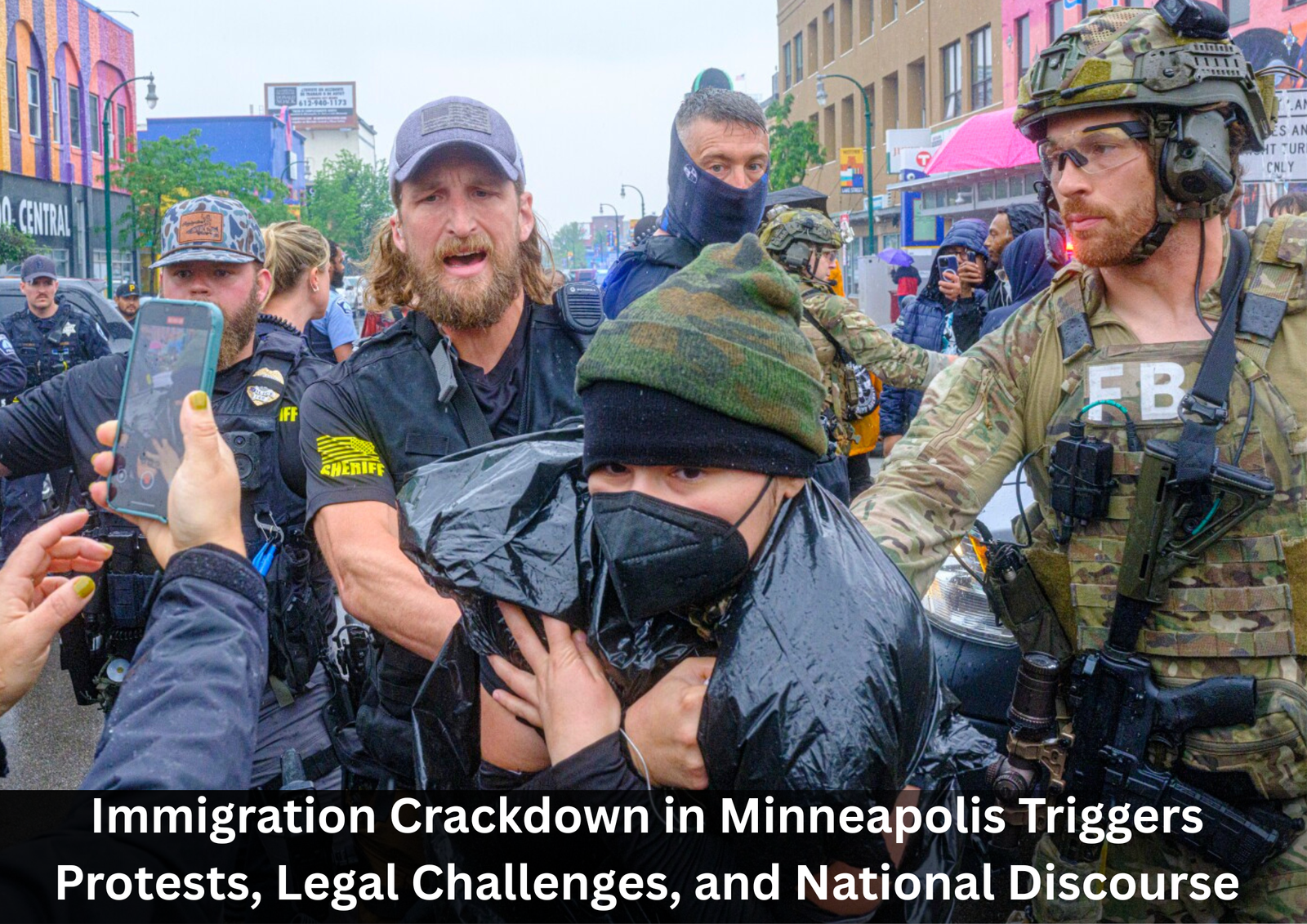
Minneapolis is confronting one of its most volatile weeks in years as an aggressive federal immigration enforcement campaign continues to ignite protests, constitutional disputes, and political fallout far beyond the city’s limits.
Street Confrontations Intensify
On Tuesday, confrontations between federal immigration officers and local activists escalated once again near the intersection where 37-year-old Renee Good, a mother of three, was shot and killed by an agent last week. Witnesses reported the use of tear gas and a bright orange chemical irritant during crowd dispersal, prompting scenes of chaos as demonstrators scrambled for water and snow to wash out their eyes.
The sight of unmarked SUVs and officers in military-style gear has become a daily reality for residents in the South Minneapolis neighborhood. Some have begun carrying orange whistles to warn each other when federal units appear. Students in nearby Brooklyn Park staged a walkout, joining a wave of youth-led demonstrations that have spread across multiple districts this week.
Minnesota and Illinois Sue the Federal Government
The confrontation has now moved into the courts. On Monday, Minnesota, Minneapolis, and Saint Paul jointly filed suit against the Trump administration, accusing federal agencies of violating constitutional protections while deploying what officials described as an “unprecedented paramilitary-style force” into the region.
Minnesota Attorney General Keith Ellison condemned the operation as “a federal occupation that is destabilizing communities rather than protecting them.” Minneapolis Mayor Jacob Frey argued the scale of deployments is far beyond anything seen in recent decades, asserting the influx amounts to “thousands of federal agents altering daily life in an American city.”
Illinois and Chicago filed a parallel lawsuit the same day. Governor J.B. Pritzker accused federal officers of terrorizing neighborhoods and targeting Democratic-led jurisdictions in retaliation for sanctuary policies and migrant support programs.
Both lawsuits name DHS, ICE, CBP, and the Border Patrol as defendants, along with DHS Secretary Kristi Noem.
Legal Claims Highlight Constitutional and Civil Rights Concerns
The lawsuits raise a range of claims including violations of the First and Tenth Amendments, unlawful use of force, racial discrimination, and political retaliation. Minnesota’s filing cites millions in unplanned overtime paid to local police who are being compelled to assist federal operations, arguing the federal government cannot commandeer state law enforcement resources for political ends.
Additional allegations include warrantless arrests, intimidation tactics in schools and hospitals, and disregard for long-standing guidelines restricting enforcement at sensitive locations. One incident described in the Minnesota complaint claims a Somali American man was detained for hours despite repeatedly asking to show proof of legal status.
Federal Officials Defend the Crackdown
The Department of Homeland Security has remained unapologetic. Spokesperson Tricia McLaughlin insisted the administration is obligated to address illegal immigration regardless of local objections, accusing Minnesota and Illinois leaders of enabling lawlessness for political reasons.
Federal officials report more than 2,000 arrests in Minnesota since early December and have pledged to send thousands more officers into the state. DHS has also reiterated that Renee Good’s killing was an act of self-defense, though the FBI continues to investigate and the Justice Department has not opened a civil rights case.
Growing Political and Institutional Fallout
The crisis has begun reshaping national discussion around immigration enforcement and executive power. Five federal prosecutors in Minnesota have reportedly resigned from their posts in protest over Justice Department directives related to the Good shooting, an unusual internal rebuke that underscores the uncertainty surrounding the case.
Multiple vigils honoring Good’s life have taken place across the country, and lawyers are seeking a federal injunction to restrict agents’ use of riot-control weapons on observers who record their activities.
On Capitol Hill, Massachusetts lawmakers introduced a bill that would make it easier to sue federal officers involved in civil rights violations, though its path remains uncertain given the Republican majority in Congress.
In Wisconsin, Lt. Gov. Sara Rodriguez has proposed legislation banning civil immigration enforcement near courthouses, churches, and hospitals. Governor Tony Evers has expressed caution, warning that such measures could provoke an even harsher federal response.
Community Tension Captured on Video
Social platforms have been flooded with footage documenting the crackdowns. A widely circulated video from a Target store in Richfield showed federal agents detaining a young worker in a reflective vest who repeatedly shouted that he was a U.S. citizen. State Representative Michael Howard confirmed the man was released later that evening, while DHS alleged the arrest stemmed from obstruction and resisting orders.
Local leaders say such scenes have produced a climate of fear, with some residents avoiding public spaces or delaying medical appointments. Chicago’s lawsuit similarly argues that residents now feel unsafe seeking public services for fear of encountering federal officers.
For a deeper look at why Six Minnesota Federal Prosecutors Step Down Amid Dispute Over DOJ Orders in the ICE Shooting Case, don’t miss my full blog – it’s a must-read!