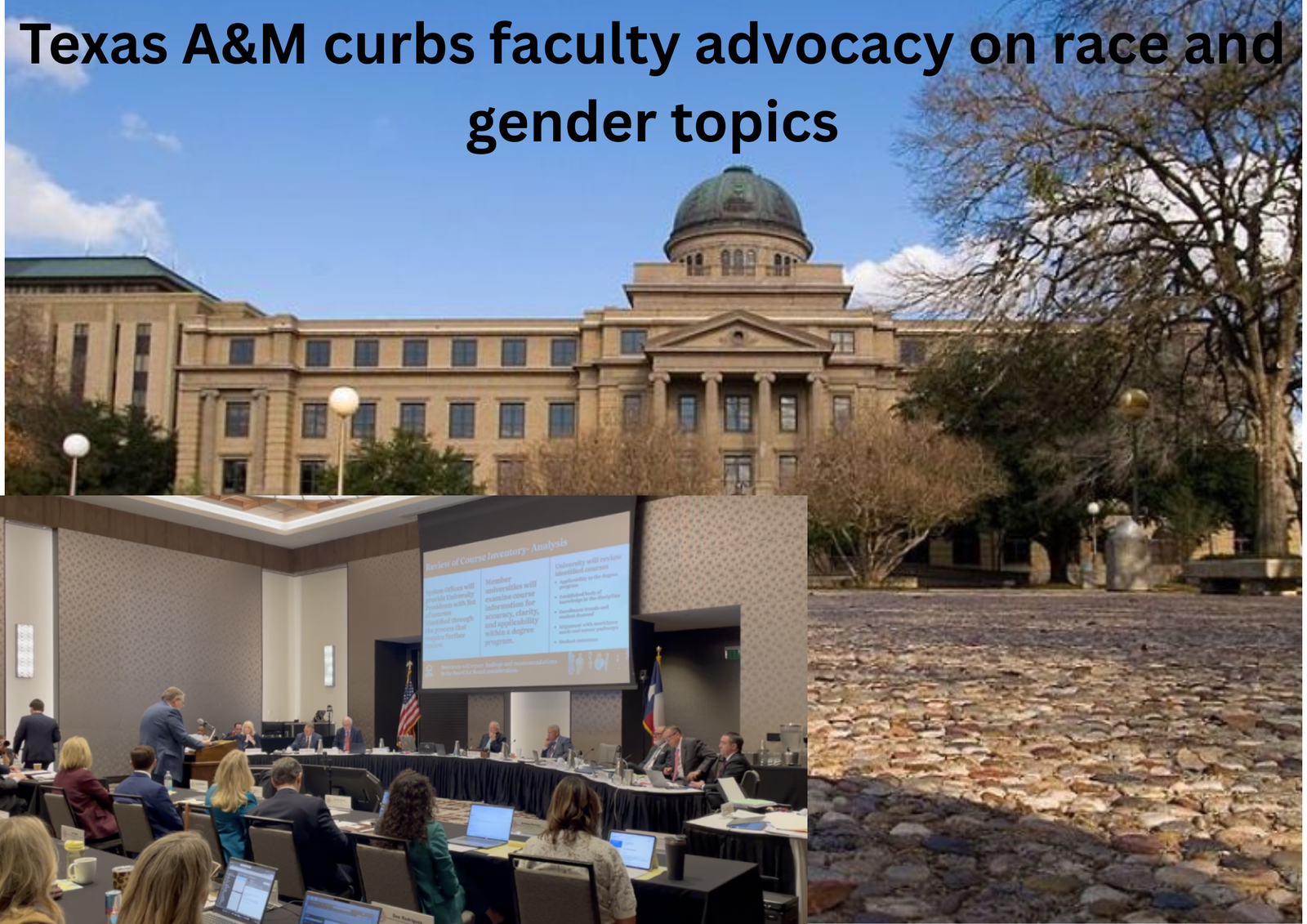
The Texas A&M University System has introduced a wide-ranging rule that bars professors from requiring students to agree with or declare support for any belief related to race or gender as part of their coursework. The policy, approved unanimously by the Board of Regents on November 13, marks one of the strongest actions taken by a public university system on academic content in recent years.
Under the new guidelines, instructors are prohibited from pressuring students to adopt particular viewpoints or ideological positions in order to complete assignments or earn academic credit. System Chancellor James Hallmark said the measure aims to reaffirm the university’s commitment to open dialogue and prevent classrooms from being used to promote political agendas.
A major feature of the initiative is a comprehensive review of all syllabi and teaching materials across the system’s 12 universities and health science center. Administrative teams and faculty panels will conduct the audit, which must be finished as quickly as possible, according to the directive.
Hallmark emphasized that the rule does not restrict educators from teaching about complex or controversial issues. Instead, he said, its purpose is to ensure students are free to analyze and debate ideas without being compelled to personally support them. The decision aligns with broader debates in Texas and several other states over how topics like race, discrimination, and gender identity should be addressed in classrooms.
The policy quickly generated pushback from faculty members and academic freedom organizations. Critics argue the language is ambiguous and could cause uncertainty about what instructors are allowed to discuss, potentially discouraging lessons on historical inequality or social justice. Supporters, including several state lawmakers, praised the change as a necessary safeguard against ideological pressure in public higher education.
The A&M System includes 12 universities that collectively serve about 175,000 students. The sweeping audit of academic materials is expected to be one of the most significant content reviews ever undertaken within a major U.S. university network.