
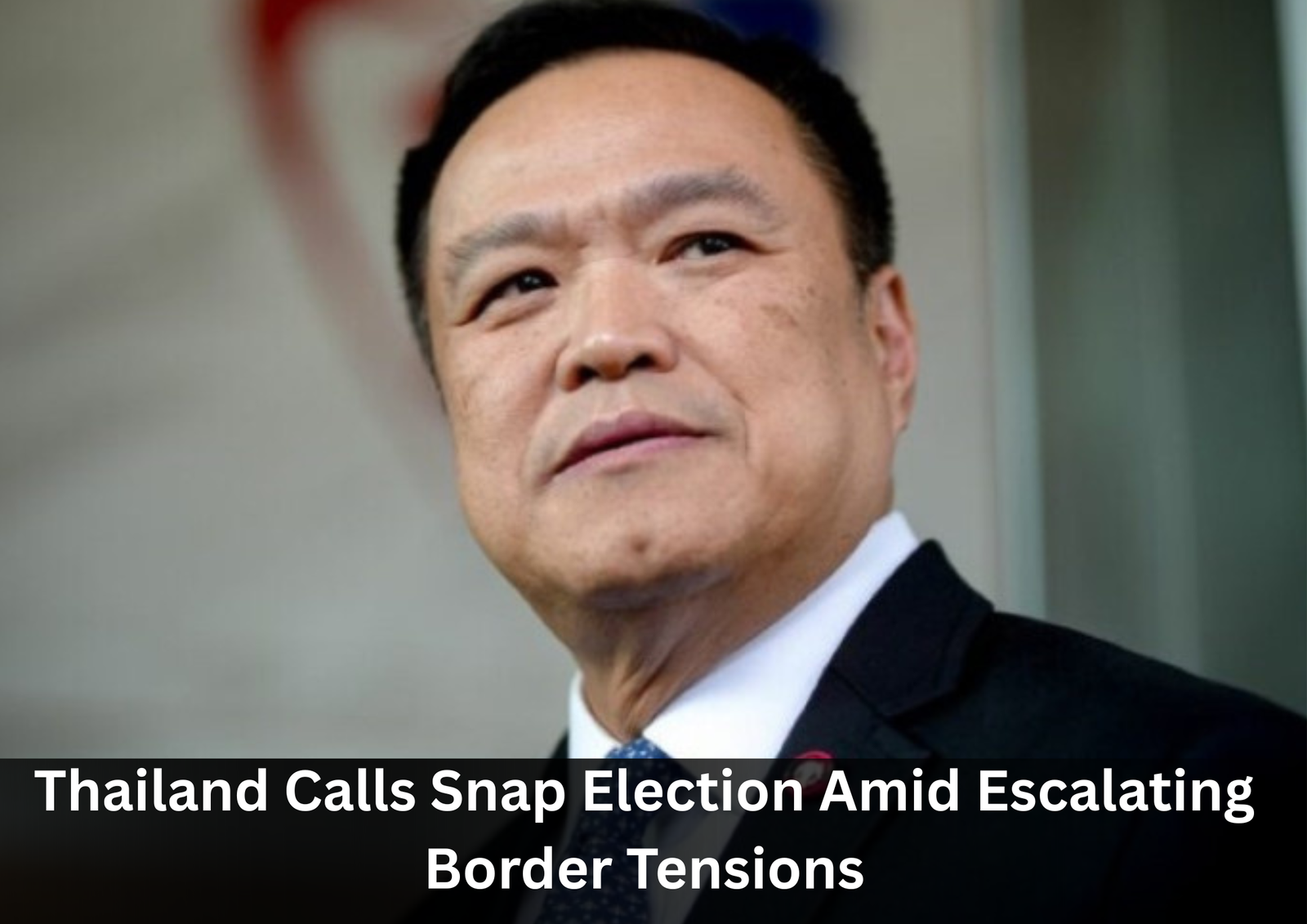
Thailand entered a new phase of political uncertainty on Friday after Prime Minister Anutin Charnvirakul formally dissolved parliament, triggering an early general election at a moment when the nation is confronting both domestic turmoil and intensifying clashes along its border with Cambodia.
Returning Power to Voters
In a royal decree announced early Friday afternoon, Anutin framed the dissolution as a necessary reset for a government that has struggled to advance legislation since taking office several months ago. He described the move as “a return of decision-making authority to the people,” citing a prolonged political gridlock that had stalled key policies.
Government spokesperson Siripong Angkasakulkiat said the decision reflected a fundamental impasse in parliament, noting that “the administration simply could not move forward under the current arrangement.”
Breakdown of Coalition Support
The immediate catalyst for the dissolution was a split between the ruling Bhumjaithai Party and the People’s Party, which holds the largest number of seats in parliament. The opposition bloc had initially supported Anutin’s rise to power but accused the government of failing to follow through on commitments to constitutional reform and a clear election timeline.
People’s Party leader Natthaphong Ruengpanyawut said the prime minister’s decision validated their stance, stating that the ruling party “did not honour the terms that formed the basis of cooperation.” The opposition had been preparing a no-confidence motion for Friday and had publicly urged Anutin to dissolve parliament “as an act of accountability.”
Caretaker Government Takes Over
Anutin, Thailand’s third prime minister since 2023, now leads a caretaker administration with limited authority. His government cannot pass new budgets or launch major new policies while the election commission prepares a nationwide vote expected within 45 to 60 days.
The early election announcement accelerates a timeline Anutin previously set, in which elections were anticipated in March or early April 2026.
Border Conflict Heightens Pressures
The political shake-up arrives as Thailand faces a surge in violence along its border with Cambodia. Heavy exchanges of fire, including artillery shelling and reported air operations, have taken place over the past four days. Officials from both countries have confirmed dozens of casualties and significant civilian displacement.
Despite the dissolution of parliament, Anutin said military operations would continue uninterrupted until “national sovereignty and the security of Thai citizens are fully ensured.”
A Year of Turbulence
Thailand’s political arena has been marked by a succession of rapid leadership changes. Two former prime ministers were forced from office within the past year over ethics violations, deepening public frustration and weakening investor confidence. Anutin, who previously served in one of those governments, withdrew from the coalition earlier this year amid disputes related to cross-border incidents.
Economic Strains Add to Instability
The political volatility comes as Thailand confronts several economic challenges, including widespread flooding that devastated southern provinces last month, high household debt levels, shrinking consumer activity, and continued pressure from U.S. trade policies.
U.S. President Donald Trump, who previously intervened during border clashes in July, has again urged restraint and warned that Thailand could face increased tariffs if regional tensions escalate further.
Election Countdown Begins
Following the dissolution, the election commission has begun preparations for an early national vote. The People’s Party issued a brief but pointed message on social media: “See you at the polling stations.” The group reiterated its call for a national referendum on constitutional changes-one of the key demands that triggered its break from the government.
Thailand now moves into a swift and closely watched campaign season, as voters prepare to decide the country’s direction amid conflict, uncertainty, and a rapidly shifting political landscape.


