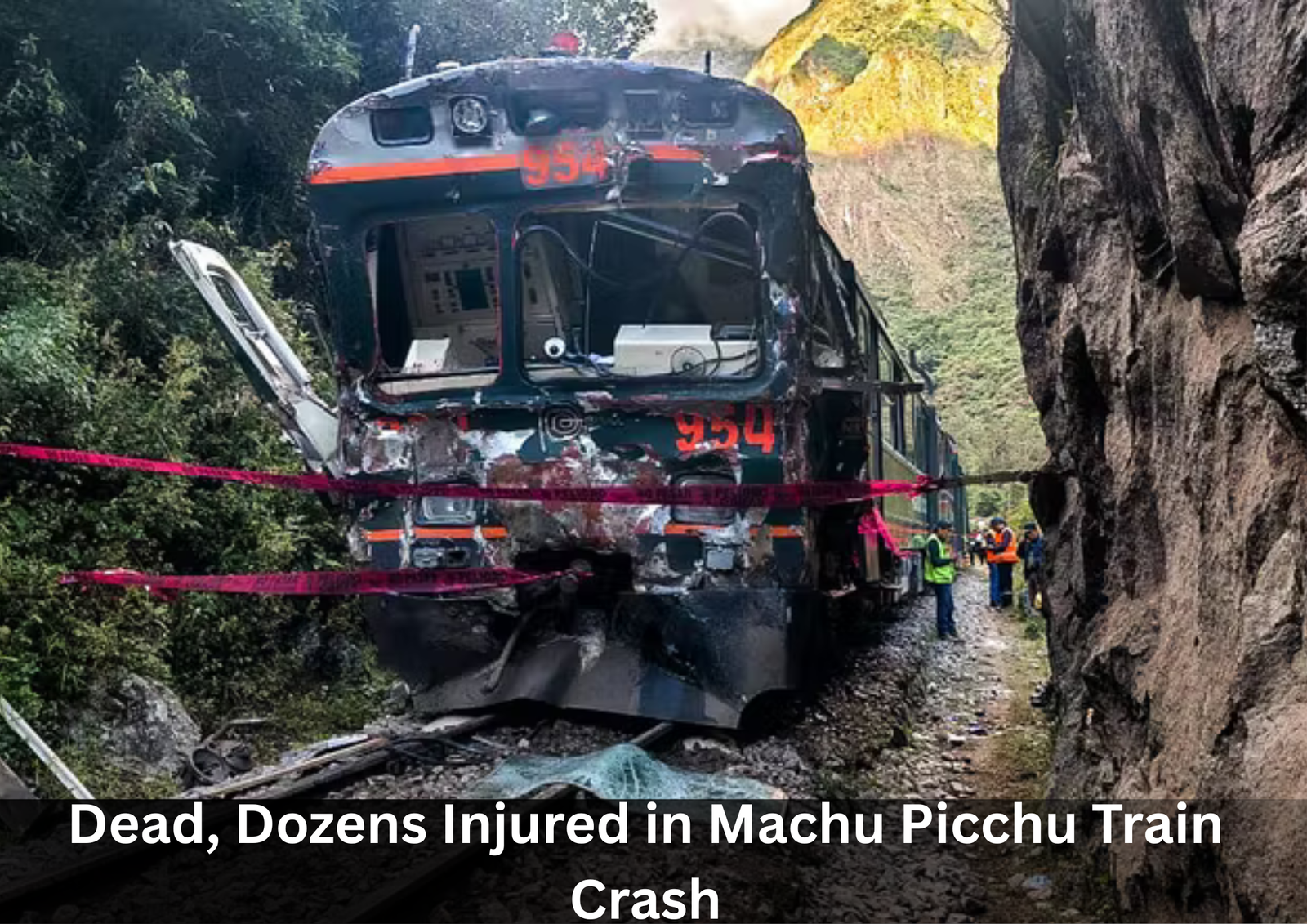
A deadly railway accident on the route to Peru’s world-renowned Machu Picchu site has raised renewed concerns about safety along one of South America’s most heavily traveled tourist corridors. A head-on collision between two passenger trains on a single-track line left one dead and at least 40 passengers injured, according to local authorities.
The crash occurred Tuesday afternoon on the narrow rail stretch connecting Ollantaytambo and Aguas Calientes, the gateway town for Machu Picchu. Officials confirmed that the victim was a train conductor who was working onboard one of the locomotives at the time of impact. Rail services along the route were immediately suspended following the incident.
Collision on a Critical Tourist Lifeline
The railway involved is the primary means of access to Machu Picchu, a remote mountaintop citadel nestled deep within the Andes Mountains. Millions of visitors rely on this single-track system each year, making operational coordination essential.
Preliminary information indicates that the two trains were operated by different private companies authorized to run on the same line. One train was traveling away from Machu Picchu while the other was heading toward the site when they collided near Qoriwayrachina, an isolated area surrounded by steep terrain and dense vegetation.
Investigators have not yet released an official cause, but the incident has intensified scrutiny of scheduling systems, communication protocols, and oversight on shared railway infrastructure.
Rescue Efforts Complicated by Terrain
Emergency response teams faced significant challenges reaching the crash site due to the lack of road access. More than a dozen ambulances and rescue units were dispatched, while injured passengers were evacuated by rail and then transported to hospitals in Cusco.
Health officials stated that while many injuries were moderate, at least 20 individuals were reported to be in serious condition. Among the injured were foreign tourists, including U.S. citizens, though authorities declined to release details regarding nationalities or identities.
Eyewitness videos shared by local broadcasters showed damaged railcars, shattered windows, and passengers receiving medical attention along the tracks. Rescue workers were seen navigating narrow pathways between rock faces and forested slopes to reach victims.
Rail Operators Respond
One of the rail companies involved issued a public statement expressing condolences to the victim’s family and confirming that onboard staff provided immediate first aid before emergency responders arrived. The company also stated that it is cooperating fully with government investigators.
Operations along the affected stretch remain suspended as officials assess track conditions and review safety measures. Authorities have indicated that services will only resume after a full technical inspection is completed.
Machu Picchu Tourism Under the Spotlight
Machu Picchu, a 15th-century Incan citadel and UNESCO World Heritage Site, attracts approximately 1.5 million visitors annually. Due to its remote location, rail travel plays a crucial role in sustaining the local tourism economy.
In recent years, visitor numbers have increased significantly, placing added pressure on transport infrastructure. While the government has introduced daily visitor limits to protect the ancient site, access logistics have remained a point of contention among operators, local communities, and regulators.
Disputes over rail concessions and ticket pricing have periodically disrupted services, with critics arguing that limited competition and high demand have created systemic vulnerabilities.
Broader Safety and Infrastructure Concerns
The accident has reignited debate about the long-term sustainability of Machu Picchu’s transport system. Experts say that reliance on a single-track railway for such a high volume of passengers increases operational risks, particularly when multiple operators are involved.
Calls are growing for improved signaling systems, clearer traffic controls, and stronger regulatory oversight to prevent future incidents. Government officials have acknowledged the concerns and stated that a comprehensive review of railway safety standards is underway.
As investigations continue, the tragedy serves as a stark reminder of the challenges facing critical tourism infrastructure in remote regions. For now, travelers are being advised to monitor official updates as authorities work to restore services and ensure passenger safety.
The Saudi Coalition Airstrike on Mukalla Port Highlights Deepening Rift in Yemen Conflict-read this blog for critical context, expert insight, and a clearer understanding of why this moment matters now.