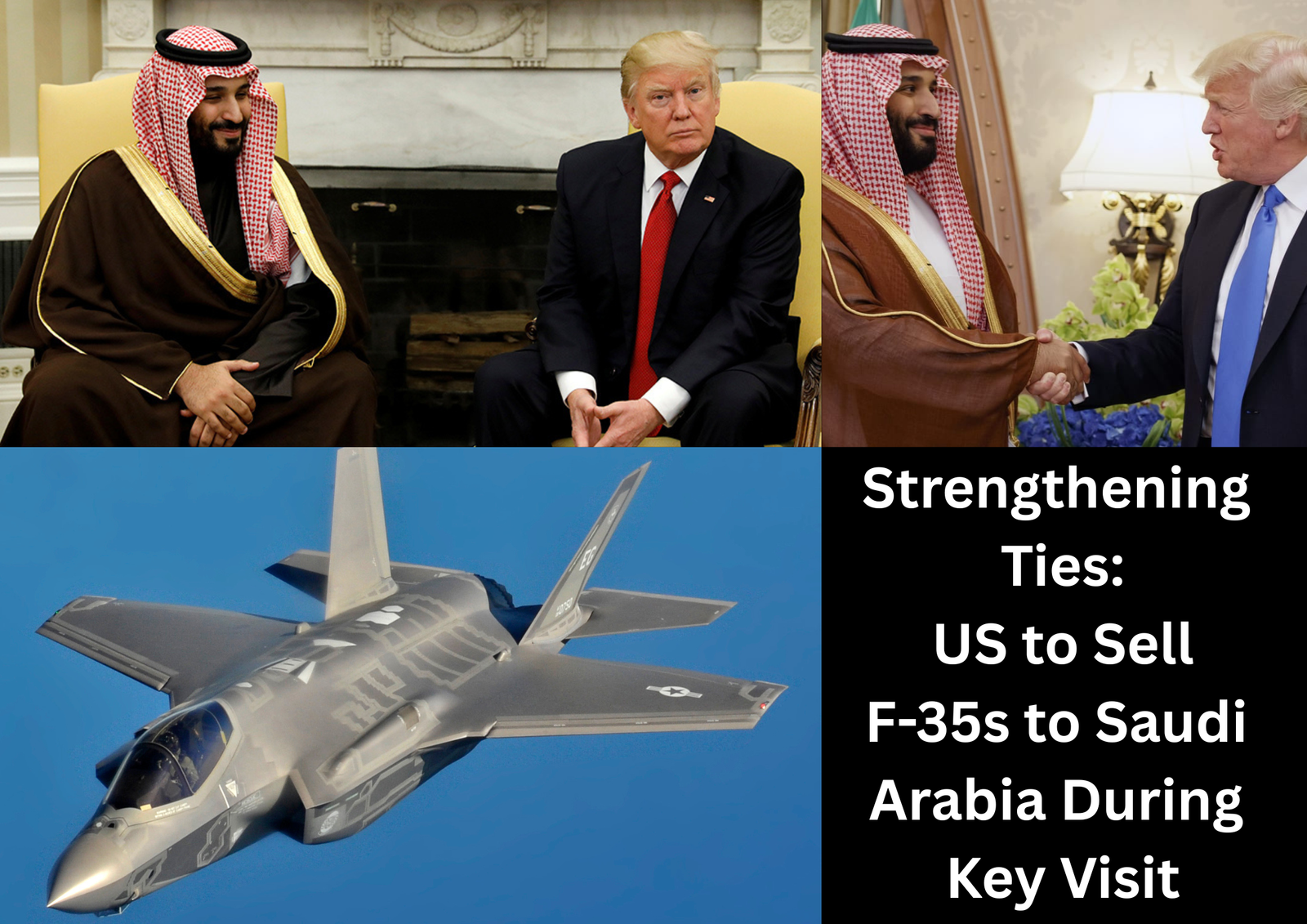
The Trump administration has taken a major step toward approving the transfer of advanced F-35 stealth fighter jets to Saudi Arabia, issuing a formal notification to Congress about a potential multibillion-dollar sale. The proposal represents a notable shift in long-standing U.S. policy, with officials framing the move as part of a broader regional security strategy.
Under the current outline, Saudi Arabia could receive F-35 aircraft. However, U.S. officials say the deal cannot advance unless Washington and Jerusalem finalize a legally binding defense agreement designed to secure Israel’s qualitative military edge – a principle that has guided American policy in the Middle East for decades.
Adviser said the administration believes the sale would strengthen “a key partner confronting shared threats,” pointing specifically to Iran’s regional influence. He described the potential transfer as one element of a “holistic Middle East framework” that the White House envisions, including discussions about a NATO-style security arrangement involving Saudi Arabia, Israel, and several Arab governments.
While the administration portrays the F-35 sale as a stabilizing move, the proposal faces skepticism on Capitol Hill. Lawmakers from both parties have raised concerns about providing cutting-edge U.S. weapons to Saudi Arabia, citing the kingdom’s human rights controversies and its military actions in Yemen. Several critics have signaled that they may attempt to block the sale during the congressional review process.
Israel, the only Middle Eastern nation currently operating the F-35, has adopted a cautious but supportive stance. Prime Minister Benjamin Netanyahu said his government will not oppose the sale as long as the U.S. guarantees measures to preserve Israel’s military superiority. That position has stirred debate within his coalition, where some members fear the introduction of more advanced weaponry into the region.
If approved, Saudi Arabia would become the first Arab state to fly the fifth-generation aircraft. Delivery and integration of the jets would take several years, but analysts say the deal would mark a significant deepening of U.S.–Saudi defense cooperation. The move also reverses a previous decision under President Biden, who halted consideration of the sale early in his term.
The administration’s notification has opened a politically charged debate in Washington, setting the stage for a high-stakes review that could reshape regional military dynamics for decades.