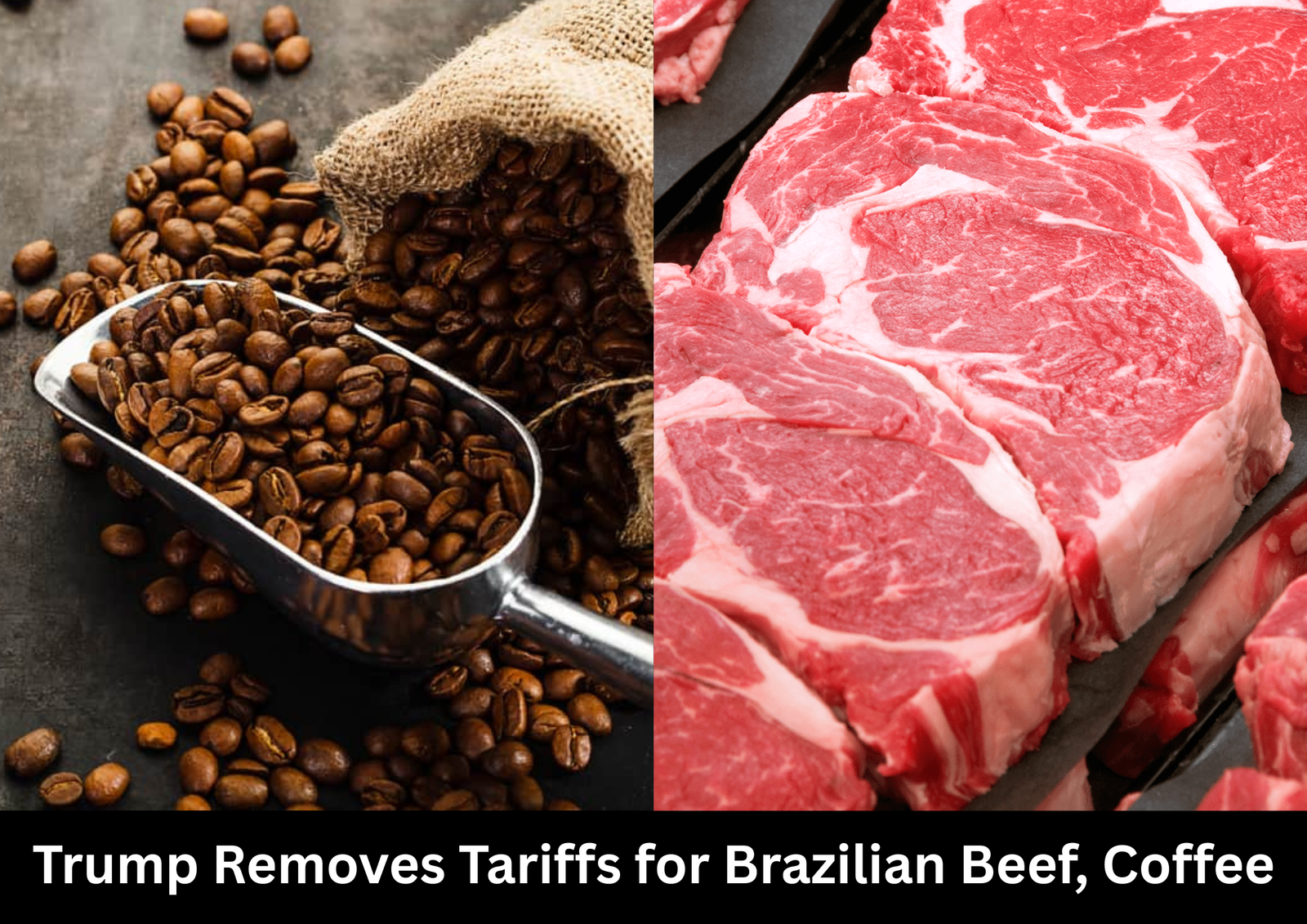
President Donald Trump has issued an executive order rolling back tariffs on a targeted group of agricultural imports from Brazil, marking the first significant revision to the broad trade levies reinstated earlier this month.
Targeted Tariff Relief
The order, released Thursday, outlines exemptions for a specific set of commonly imported Brazilian food products. Items now excluded from the universal 10% baseline tariff include instant and roasted coffee, beef and orange fruit.
White House officials described the measure as a practical response to the sharp increase in food costs across the United States-an issue that has placed pressure on both households and retailers in recent months.
Addressing Rising Consumer Prices
According to the administration, the goal of the exemption is to ease inflationary pressure by widening the supply of key food staples. Economists have noted that tariff reductions on widely consumed products can help stabilize prices more quickly than broader economic interventions.
The decision follows weeks of concern from consumer groups and food industry associations, who have warned that persistent price increases could strain household budgets and fuel broader economic unease heading into the holiday season.
Tariff Framework Remains in Place
Despite the carve-outs for Brazilian agricultural goods, the White House stressed that the overall tariff program remains unchanged. Officials characterized the move as a “targeted adjustment” rather than a shift in trade policy direction.
The administration reiterated that the baseline tariff on global imports remains an essential part of its economic strategy, emphasizing that the new exemptions were designed only to address urgent domestic cost pressures.
Broader Trade Implications
Trade analysts say the decision highlights the administration’s willingness to fine-tune policies in response to inflation without abandoning its core protectionist framework. Brazil, one of the world’s largest exporters of coffee and beef, is expected to see a modest boost in shipments to the U.S. market as a result.
The long-standing economic relationship between the two countries has experienced fluctuations in recent years, but Thursday’s directive suggests space for cooperation when mutual economic interests align.