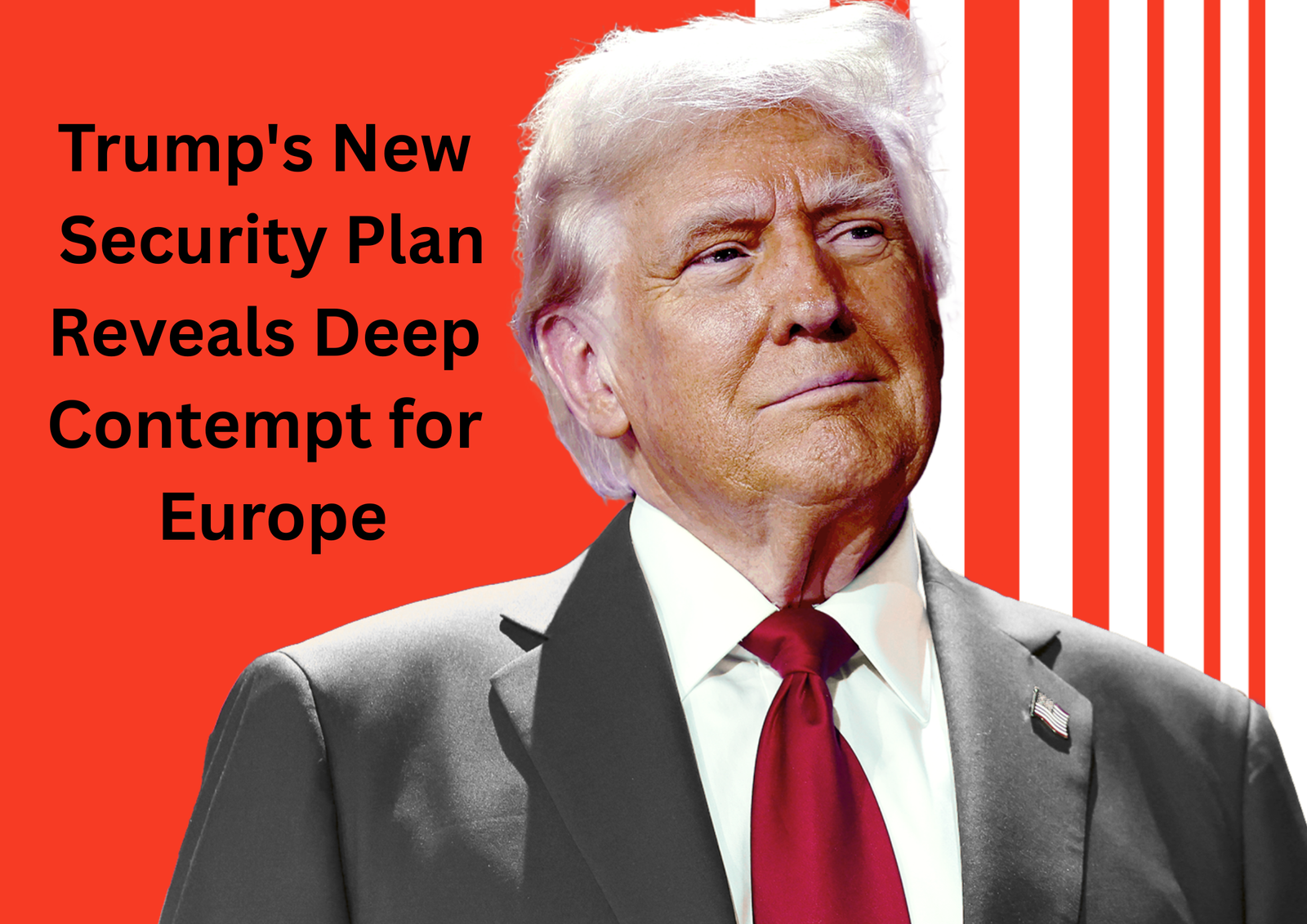
The Trump administration on Friday released a sharply revised national security strategy that signals a dramatic reorientation of American foreign policy, portraying Europe as a growing strategic rival while proposing limited cooperation with Russia to counter China’s expanding global influence.
The new framework, titled the America First Security Strategy, marks the administration’s first major geopolitical doctrine of President Donald Trump’s second term and outlines a vision that breaks with decades of bipartisan foreign policy consensus. Instead of championing the U.S. as the cornerstone of a Western-led security order, the document emphasizes a competitive world in which Washington will prioritize its own interests above alliance expectations.
According to senior officials, the strategy reflects the administration’s belief that the United States has overextended itself by attempting to police international disputes and protect democratic allies that “do not share equal burdens.” European nations, in particular, are criticized for what the document describes as chronic underinvestment in defense and unfair trade practices that disadvantage American industries.
In a striking departure from earlier U.S. strategies, Russia is not listed as a primary threat. Instead, the administration argues that Washington and Moscow share overlapping interests when it comes to limiting China’s economic reach and influence across Eurasia. The strategy suggests exploring “targeted cooperation” with the Kremlin while maintaining vigilance over areas where Moscow’s actions conflict with U.S. goals.
China, meanwhile, is portrayed as the central strategic challenge of the coming decades. The strategy warns that Beijing’s technological growth, military development, and global economic ambitions could reshape world power structures unless countered by a coordinated U.S. response.
The policy document also outlines significant changes to America’s relationship with NATO. While it does not withdraw from the alliance, it states that U.S. support for mutual defense commitments will depend on whether partner nations meet financial obligations and avoid conflicts that could drag Washington into unnecessary confrontations. The conditional language has already triggered anxiety among several European governments, which rely heavily on the continuity of U.S. security guarantees.
The administration’s approach to Latin America also undergoes a notable shift. The strategy declares that the United States will no longer serve as the region’s principal security guarantor, arguing that countries must take greater responsibility for countering organized crime, regional instability, and migration pressures. The move signals a reduced American footprint in a region Washington has historically considered central to its strategic interests.
Early reactions to the policy rollout have been mixed. European leaders privately expressed concern that the strategy creates uncertainty at a time of rising global volatility. U.S. foreign policy experts warn that distancing Washington from democratic allies while seeking limited alignment with authoritarian governments could weaken America’s influence in the long run.
The White House, however, defended the document as a realistic recalibration of U.S. priorities. A senior official described it as “a clear-eyed assessment of the world as it is, not as previous administrations wished it would be.”
The strategy is expected to guide U.S. diplomacy, defense planning, and economic policy throughout Trump’s second term, setting the tone for a more transactional and interest-driven approach to global affairs.