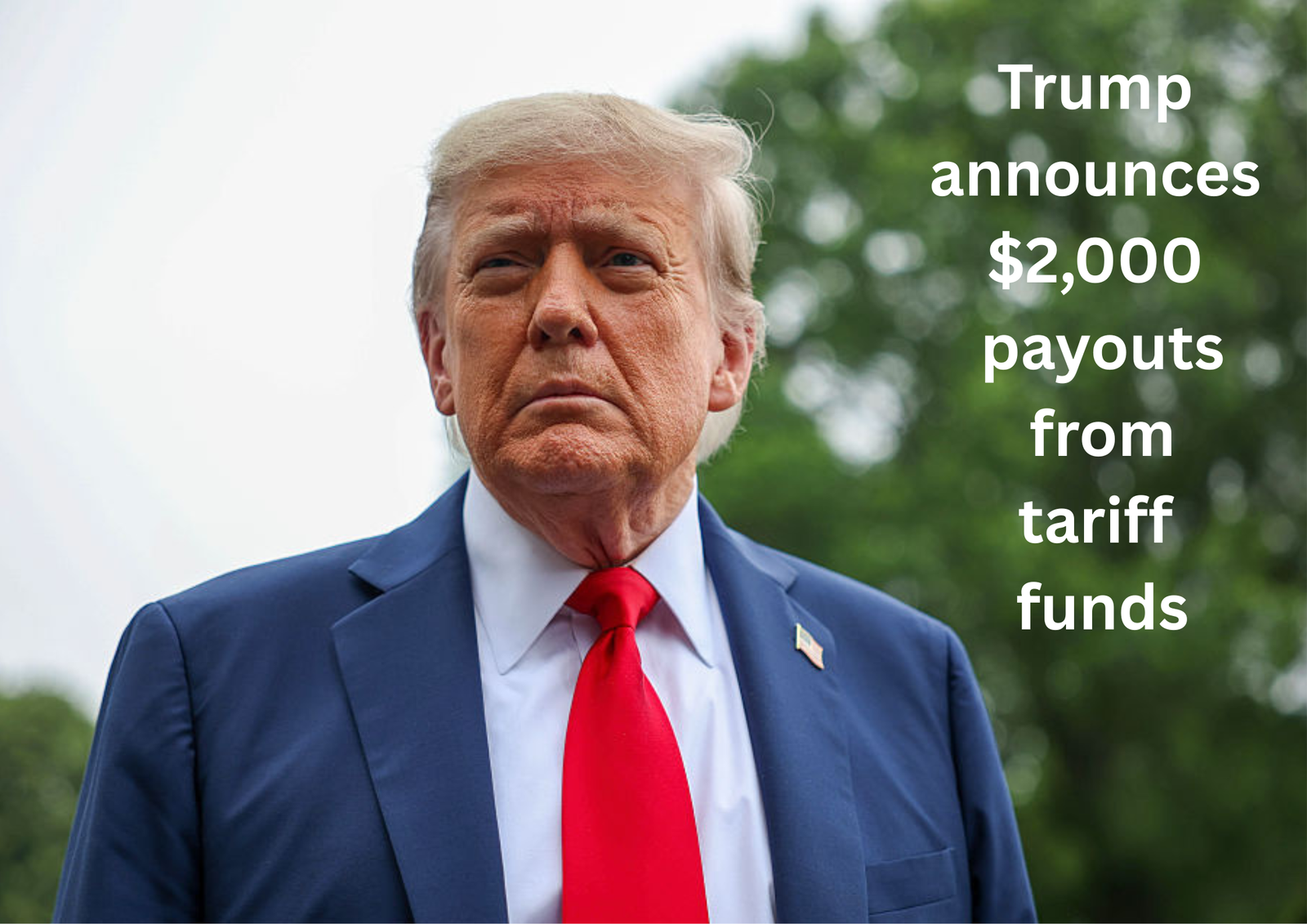
In a move that has stirred fresh debate over economic policy, President Donald Trump has unveiled a new initiative to provide $2000 “Tariff Dividend” checks to most American citizens. The proposal, announced through Trump’s Truth Social account, is designed to redistribute revenue generated from tariffs on foreign imports directly to the American public.
Direct Relief Through Tariff Revenues
According to the administration, the payments would come entirely from funds collected through existing tariffs on imported goods. Trump framed the initiative as a way to ensure that “American families, not foreign nations,” benefit from the revenue created by the country’s trade policies. He characterized the plan as a bold effort to relieve cost-of-living pressures and counteract inflation, which he referred to as “Bidenflation.”
Who Would Receive the Payments
Under the proposal, eligible Americans would receive an annual $2000 payment. While the plan covers the majority of U.S. citizens, higher-income individuals would be excluded from receiving the benefit. Specific income thresholds have not yet been disclosed. The White House emphasized that the payments would function as a recurring “dividend,” reflecting the administration’s view that tariff revenues belong to the American people.
Congressional Path and Key Support
To become law, the measure must be approved by Congress. Trump indicated he intends to collaborate closely with lawmakers to secure support for the initiative, naming Senator Josh Hawley as a likely partner in championing the legislation. Administration officials have framed the proposal as a bipartisan opportunity to return economic value to citizens while strengthening domestic industry.
Treasury’s Role and Oversight
Should the proposal pass, the program would be managed by the U.S. Treasury Department under the direction of Treasury Secretary Scott Bessent. The administration claims that funding for the “Tariff Dividend” would not increase the federal deficit, since it relies solely on tariff revenue rather than new taxes or borrowing.
Broader Economic Context
This announcement marks the latest development in Trump’s renewed emphasis on tariffs as a cornerstone of national economic strategy. During his remarks, the president hinted that future iterations of the plan could expand beyond direct cash payments to assist with healthcare costs or other household expenses.
Analysts say the proposal underscores the administration’s effort to frame tariffs not merely as a trade defense mechanism but as a populist tool for redistributing economic gains to ordinary Americans. While details of the income cap and total fiscal impact remain unclear, the plan has already sparked discussion across Washington and among economists about its feasibility and long-term implications.
As debate continues, the “Tariff Dividend” proposal stands as a defining example of the administration’s approach to fusing trade policy with direct economic relief – aiming to turn tariff revenue into tangible benefits for the nation’s citizens.