President Donald Trump has exercised his veto authority for the first time in his current term, rejecting two significant pieces of legislation tied to water infrastructure and environmental restoration projects in Colorado and Florida. The decisions have sparked debate among lawmakers, state officials, and community advocates who argue the measures were essential for public health and long-term sustainability.
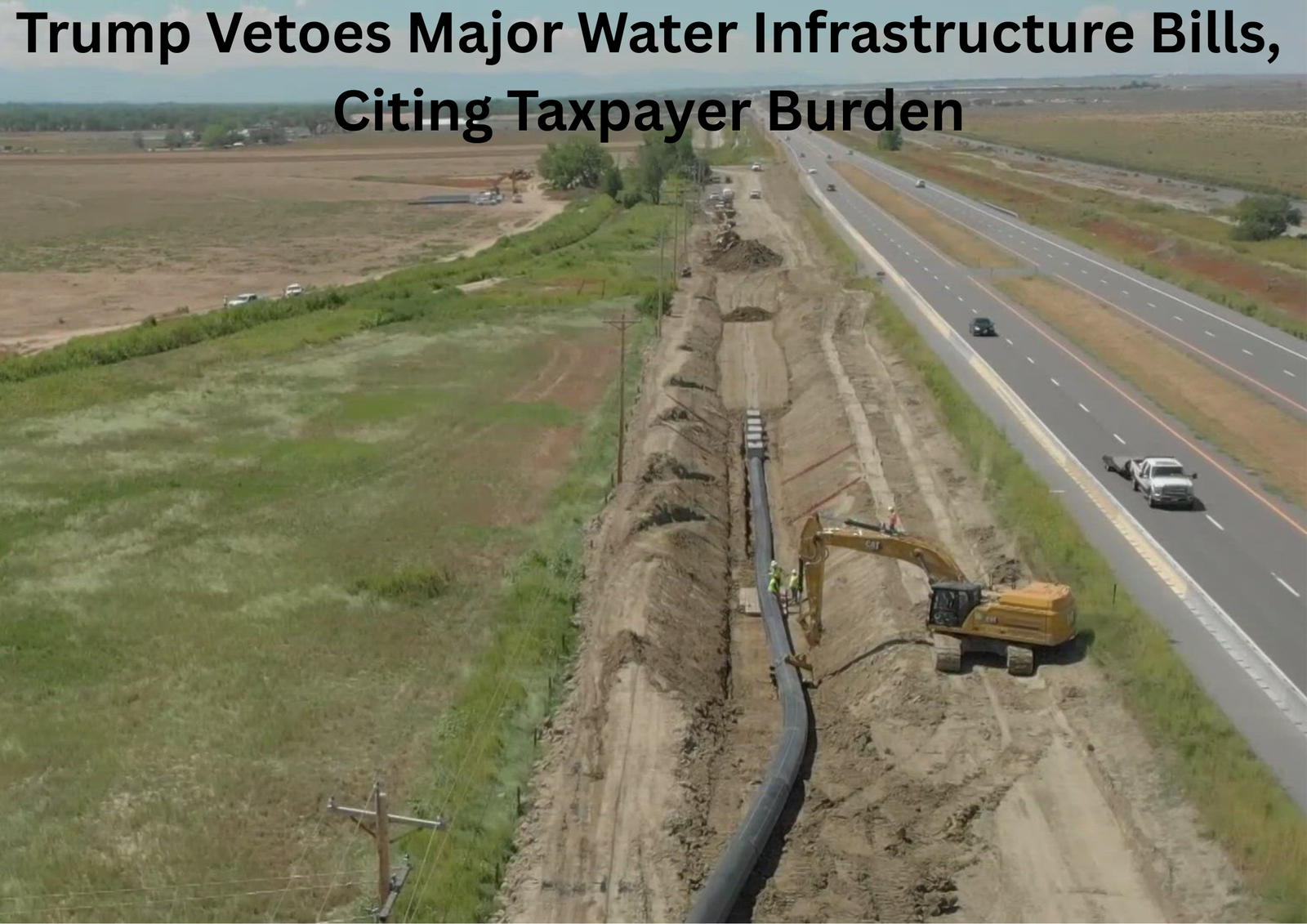
The first veto targeted legislation intended to advance the Arkansas Valley Conduit project in southeastern Colorado. The proposal sought federal authorization for a large-scale pipeline designed to deliver treated drinking water from the Pueblo Reservoir to dozens of rural communities. Many of these areas currently rely on groundwater sources known to contain naturally occurring radioactive elements, which health experts have linked to increased cancer risks over prolonged exposure.
While the project has been discussed for decades and enjoys broad bipartisan support within Colorado, President Trump stated that the bill failed to present a responsible financial framework. In his veto message, the president emphasized that the legislation placed an outsized funding obligation on the federal government without sufficient cost-sharing commitments from the state and local partners. He argued that approving such spending would conflict with his administration’s fiscal priorities.
Colorado lawmakers reacted strongly, warning that the veto delays access to safe drinking water for thousands of residents. Members of the state’s congressional delegation said they plan to explore options for revising the proposal or attempting a congressional override, which would require substantial bipartisan support in both chambers of Congress.
The second veto halted a separate measure focused on water management in Florida. That bill combined two major components: a water supply project for the Seminole Tribe of Florida and adjustments to a central Everglades restoration initiative. Supporters said the legislation aimed to honor long-standing tribal water rights while modernizing environmental plans to reflect updated scientific research.
The White House, however, raised concerns about the potential financial impact and regulatory implications of the bill. According to the administration, changes to the Everglades reservoir project could introduce delays and complicate flood control efforts in surrounding regions, including areas near Lake Okeechobee. Officials also questioned whether the proposed revisions had undergone sufficient evaluation before being sent to the president’s desk.
Environmental advocates and tribal representatives expressed disappointment, arguing that the veto undermines progress on ecological restoration and ignores years of negotiations. They maintain that the projects were carefully designed to balance environmental protection, community safety, and economic responsibility.
These twin vetoes signal a broader approach by the Trump administration toward large federally funded infrastructure projects, particularly those involving long-term environmental planning. With lawmakers indicating potential override efforts, the fate of both initiatives remains uncertain as Congress weighs next steps in the new legislative year.
Don’t miss the full story on “Three Hikers Discovered Dead on Mount Baldy as Severe Winter Weather Halts Rescue Efforts”-read the complete blog to understand the events, risks, and key lessons behind this tragedy.