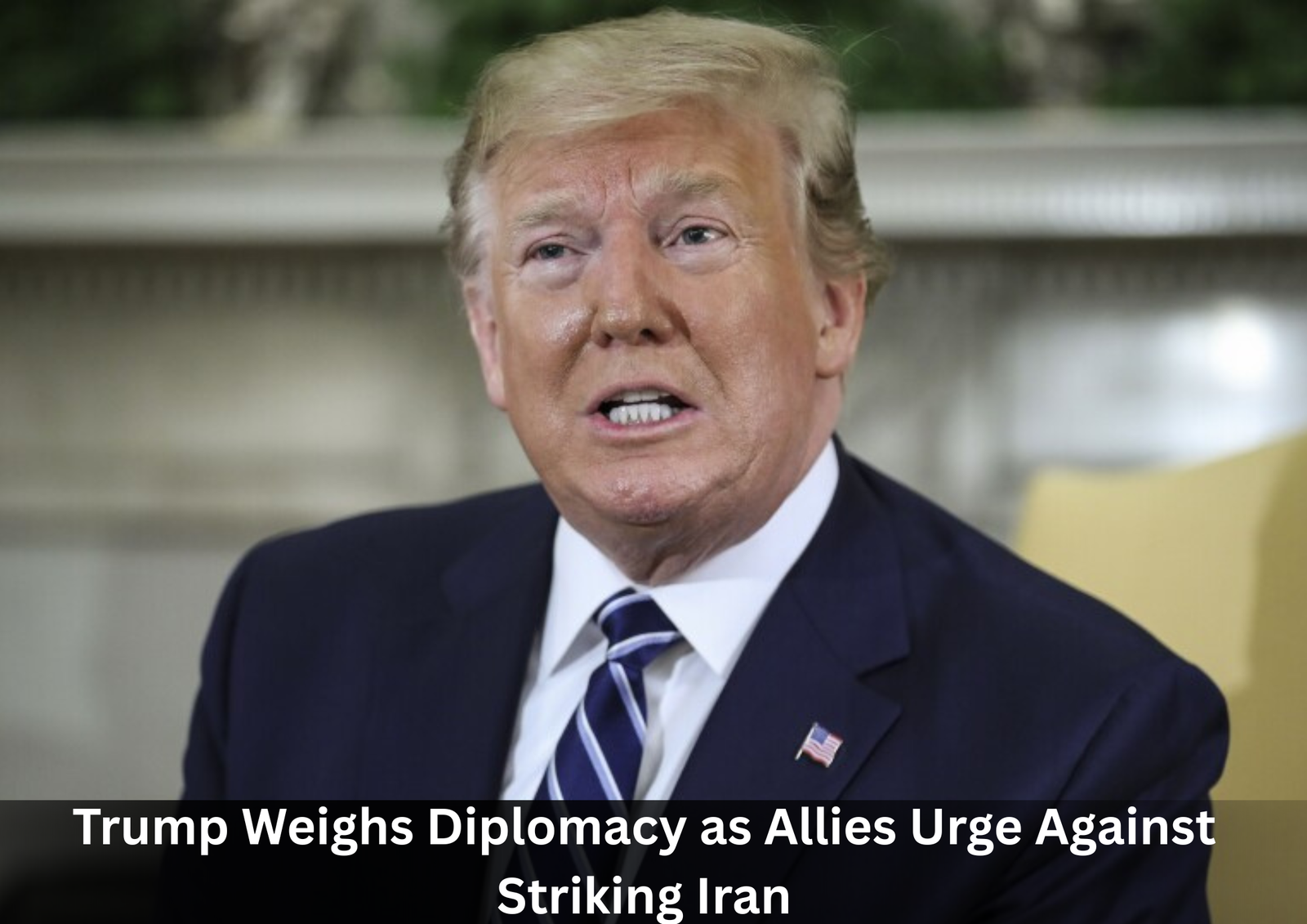
President Donald Trump has temporarily paused a U.S. military response against Iran, choosing to monitor recent developments inside the country as international partners emphasized the benefits of restraint. The decision follows several days of heightened tensions, elevated military readiness, and ongoing protests within Iran that have drawn global scrutiny.
Senior U.S. officials confirmed that the White House received new indications suggesting a slowdown in Iran’s harsh treatment of demonstrators. The unrest, which began late last month over worsening economic conditions, has since evolved into a broader political confrontation with the country’s leadership.
According to multiple sources, Israeli Prime Minister Benjamin Netanyahu held a critical conversation with Trump earlier in the week urging caution. Israeli officials reportedly raised concerns about the country’s defensive posture in the event of retaliation from Tehran and questioned whether a limited U.S. strike would achieve meaningful strategic outcomes. The advice was notable as Israel has historically advocated firmer action on Iran.
Part of the shift in tone inside Washington came after reports that Iranian authorities had postponed the scheduled execution of several protesters, including 26-year-old Erfan Soltani. Iranian state media later signaled that capital punishment cases linked to the demonstrations were “under review.” Human rights advocates confirmed the delay but cautioned that long-term outcomes remain uncertain.
Reacting online, Trump described the news as “a positive step” and suggested that further violence inside Iran could prompt decisive U.S. measures. White House Press Secretary Karoline Leavitt reiterated that all military options remain available and stressed that the administration would continue to track events in real time.
Pentagon officials disclosed that the United States had repositioned aircraft and naval assets in recent days as a precaution, including elements of a carrier strike group and support aircraft. Intelligence assessments suggest Iran may target U.S. facilities in Iraq or Syria if attacked, prompting broader discussions within the National Security Council.
In addition to the military dimension, the U.S. expanded economic pressure on Iranian power brokers. New Treasury sanctions were announced Thursday targeting senior security officials and financial channels alleged to support internal crackdowns and covert economic activity. Treasury Secretary Scott Bessent stated the U.S. was monitoring cross-border financial movements by Iranian elites.
Regional governments also played a significant role in discouraging further escalation. Officials in Saudi Arabia, Qatar, and the United Arab Emirates reportedly engaged Washington in urgent diplomatic talks, warning that a direct confrontation would carry unpredictable consequences for the Gulf. On Thursday, U.S. commanders reduced alert status at Al Udeid Air Base in Qatar, a move interpreted as recognition of a temporary easing in tensions.
Whether the current calm holds remains unclear. Analysts note that internet disruptions throughout Iran have obscured the full picture of ongoing protests, and opposition groups abroad continue to report fatalities and detentions. Trump has signaled an interest in a negotiated resolution but insists that any future engagement would require cooperation from Iran’s Supreme Leader.
For now, U.S. officials say the administration will continue observing developments while maintaining readiness for rapid action if conditions deteriorate.
“Trump Introduces New Healthcare Blueprint Highlighting Consumer Payments and Drug Price Reform – discover the full details and impacts in this must-read blog for anyone following U.S. policy changes.”